Sebastian Owlesby
HomunculusSebastian Owlesby’s notebooks turn him from a name attached to a secret history into its most intimate witness: a scientist who believed he could master decay, and who recorded how that ambition drew him into increasingly terrible acts. His research linked the Homunculus to the reanimation of the dead, but the surviving account also reveals a man intermittently aware that he was losing his way, and unable to stop.
Identity and Research
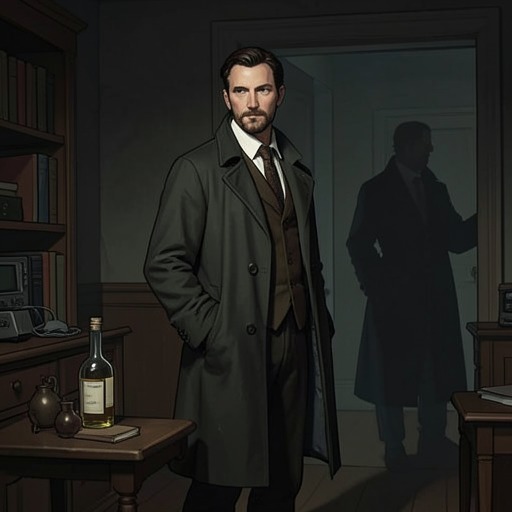
Owlesby was a scientist whose interests included vivisection, corpse animation, and the possibility of arrested decay. He believed the Homunculus could halt entropy, at least in outward appearance, and sought to use that power in pursuit of eternal life. The notebooks, roughly 150 pages of closely written papers, document his experiments day by day and show that his work was not merely theoretical: he and his associates repeatedly sought cadavers and the ingredients they believed necessary to animate them.
A recurring requirement was a fresh carp gland. In an earlier theft, Owlesby cut up roughly half a dozen arm-length carp obtained from the oceanarium after Bill Kraken drove the wagon. The fish were divided on Baker Street, and a beggar woman later sold them at Billingsgate Market. Kraken recalled the affair as a criminal undertaking that nevertheless brought some benefit through the sale. Owlesby’s later notes likewise treat the carp and its gland as essential to the experiments, making the animal a practical link between his scientific ambitions and the illicit procurement that sustained them.
Collaboration and Escalation
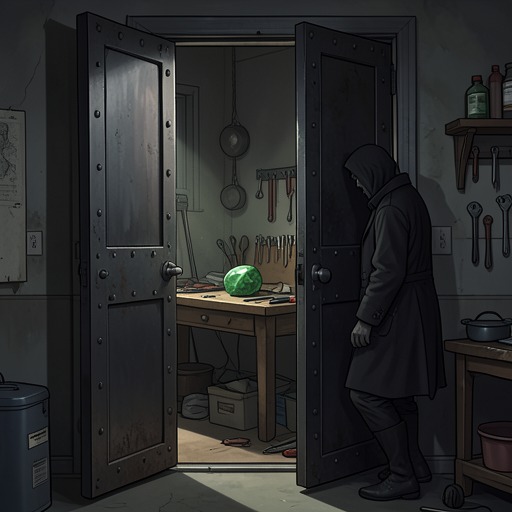
Ignacio Narbondo was a decisive influence on Owlesby’s work. Langdon St. Ives, reading the notebooks, understood Narbondo’s self-interest and influence as part of the circumstances surrounding Owlesby’s death. Owlesby’s own entries describe the experiments worsening under Narbondo’s encouragement. By late May 1861, their work had reached the point of requiring the brain of a living man; Owlesby and an unnamed accomplice took one from a sleeping indigent in St. James’ Park.
The notes reveal the gap between Owlesby’s declared scientific purpose and what his methods had become. At one point he reports that a cadaver taken from the gallows remained lifeless despite being filled with fluids; without a carp and a fresh gland, he feared it would decompose before they could use it. He recognizes that the undertaking may lead only to murder and horror, then admits that he has already gone too far to find his way back. In another entry he describes a Limehouse outing with Narbondo, whose laughter defeated Owlesby’s attempt at disguise, and rationalizes the death of a costerlad as a service. The same passage returns to the promise of eternal life, exposing how readily he turns moral failure into justification.
Decline and Family Ties
The notebooks record Owlesby’s decline as a sequence rather than a single break. His rational moments came and went, and he feared that he would lapse again into madness. During a brief period of lucidity, he asked his sister, Nell Owlesby, to kill him if that happened. The record describes his deterioration as only partly understood even by Owlesby himself; St. Ives later interpreted it as the destruction of Owlesby’s moral self through his slide into deviltry, rather than as a consequence he could fully explain.
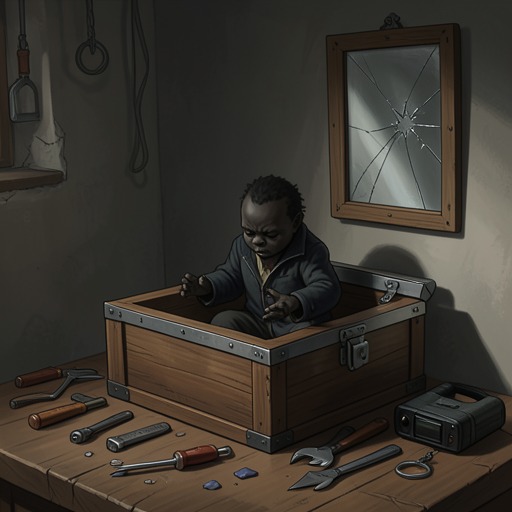
Owlesby’s relationship with his son, Jack Owlesby, shaped one of his last practical decisions. He withdrew his interests in the West African Gem Company as a great emerald intended for Jack’s inheritance. He then asked William Keeble, his close friend, to build a box for the emerald, almost identical to the lead-lined cube used to contain the Homunculus. The two boxes made his legacy materially ambiguous: one was associated with his son’s inheritance, the other with the being at the center of his research.
His friendship with William Keeble was described as close as brotherhood. The relationship joined personal loyalty to practical assistance: Keeble not only built the emerald box but later became part of the mystery surrounding the boxes’ whereabouts. Nell was also bound to the Keeble family; St. Ives recalled that she and Winnifred Keeble had been inseparable since childhood. These connections place Owlesby’s scientific history inside a network of friendship and family obligations that his experiments could not leave untouched.
The Notebooks and Their Aftermath
The papers surfaced in London after having been lost for fifteen years and were delivered to St. Ives. Their final pages continue the account of Owlesby’s irrationality: they mention another murder, trouble with Scotland Yard, and Bill Kraken’s departure. The entries end with Owlesby still intent on obtaining youthful glands and with a recollection of Narbondo being thrown into the Thames and swimming to the opposite shore. The account does not resolve every episode, but its abrupt end makes clear that the experimenters’ pursuit continued even as Owlesby’s ability to judge it collapsed.
A note in a woman’s hand at the end of the papers says that she gave a box to Dr. Randal Birdlip. St. Ives cannot tell whether it was the emerald box or the one containing the Homunculus, and the uncertainty gives Owlesby’s old arrangements a new consequence: the research has passed beyond his control but remains a matter of immediate interest to Narbondo and others. The notebooks thus function both as a record of Owlesby’s decline and as a clue in the later contest over what he left behind.
Legacy and Significance
Owlesby’s legacy survives in two connected forms: the research that Narbondo continues to pursue and the boxes through which Owlesby tried to contain or transfer what mattered to him. The carp-gland procedure recurs in Narbondo’s later work, although those later experiments are Narbondo’s, not Owlesby’s. Their resemblance shows how Owlesby’s methods outlasted him and became part of a continuing practice of reanimation.
His history also remains subject to competing judgments. Bill Kraken recalled helping with the carp affair and with the procurement of a cadaver, but insisted that Sebastian was not responsible for the worst crimes, assigning that distinction to another man. St. Ives, by contrast, reads the notebooks as evidence that Owlesby’s moral collapse was inseparable from his scientific ambition and Narbondo’s influence. Neither account makes Owlesby simply innocent or simply monstrous: the notebooks preserve his recognition of the danger, his efforts to prepare for his own possible madness, and the repeated choices by which he pressed on.