Theophilus Godall
HomunculusTheophilus Godall is a tobacconist and an independent investigator whose attentiveness makes him an important witness to the book’s overlapping mysteries. A friend of Captain Powers, he moves between quiet observation and direct intervention: he recognizes Willis Pule’s association with Ignacio Narbondo, watches Narbondo attempt to animate a corpse, and repeatedly acts when Shiloh and others threaten people or objects he is trying to protect. His composure, disguises, and willingness to improvise make him more than a commentator on the action; he becomes one of its most capable participants.
Identity and Public Persona
Godall is associated with the Bohemian Cigar Divan in Rupert Street, Soho. His appearance carries an air of nobility, but he is identified as a tobacconist, and his old meerschaum pipe, carved with the arms of the royal family of Bohemia, suggests an object with a history of its own. The pipe and its heraldic decoration lend him a distinctive presence without displacing the practical identity through which he moves among the other characters.
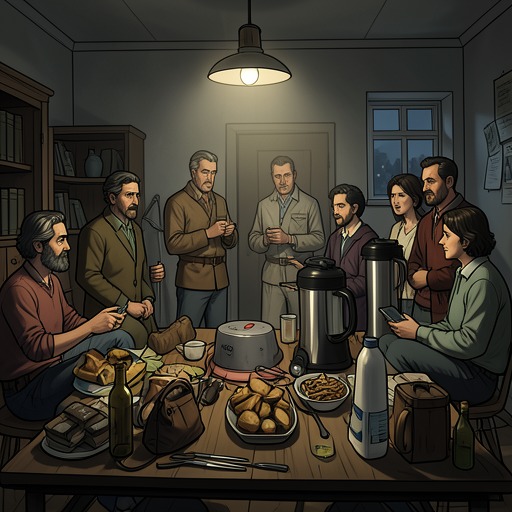
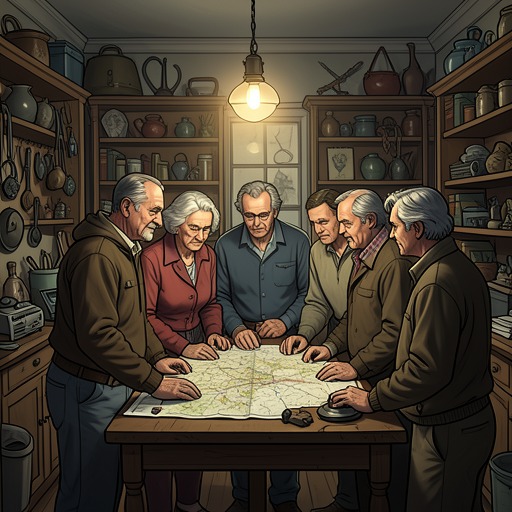
His friendship with Captain Powers gives him a place in the circle gathered at the Captain’s shop. Godall participates in the group’s private discussions, but he is not merely an agreeable companion. He pays close attention to visitors and to the connections between people outside the room. When Willis Pule claims to know Dorothy Keeble and speaks of Sebastian Owlesby’s research, Godall interrupts the encounter with a question about what Pule thinks the gathering is. Pule identifies the group as a scientific organization and presents himself as a student of alchemy and phrenology. Godall answers by describing the Trismegistus Club as a society devoted to biology and moths, redirecting the conversation while the others see Pule out. Once Pule has left, Godall explains that he has reason to distrust him.
Godall’s manners are part of his method. When he returns, he apologizes for having hurried Pule out, presenting the explanation in the language of a gentleman’s regret. He then reports that he had seen Pule in the company of Narbondo two days earlier and had followed him to Haymarket, where the two men met and left together by hansom cab. His apology does not weaken his judgment: he believes Pule meant the group no good, and he had acted quickly because he considered the situation increasingly serious. This combination of social tact and suspicion recurs throughout his investigations.
Observation and Investigation
Godall’s strongest investigative resource is sustained observation. After Langdon St. Ives discusses Sebastian’s account of reanimation, Godall concludes that the men seen at the Blood Pudding were dead. He bases that conclusion on what St. Ives has learned from the narrative: Sebastian had claimed to animate corpses, and the work involved enormous carp. The homunculus, by contrast, was not necessary to the process described in the manuscript. Godall’s questions bring the scientific implications of the account into the group’s discussion, while his caution leaves room for the mystery to deepen rather than pretending it has been solved.
He later watches Narbondo’s laboratory from a rented room opposite it, using a view through his window to follow the activity inside. Near two in the morning, during rain, he first notices a dead fish thrown into the street from a lit window. He then returns to his room and watches the laboratory. Shiloh is there with Narbondo and Pule. Godall observes Narbondo use a hand-held device supplied by a coiled tube to direct yellow mist at a body on a slab. He also sees a tiny object kept in a glass jar, herbs burning in a stone chalice, and Narbondo press the object into the corpse’s mouth. The body moves briefly, raises itself onto an elbow, and then collapses. Godall’s account preserves the limits of what he can know: he witnesses an apparent attempt at animation, but the corpse does not remain upright or become a functioning living person.
The laboratory scene also brings Godall into view of a woman who tries to reach the window. He remains at his own window rather than withdrawing from sight, tipping his hat as she looks out. When the men in the room pull her back, he opens his window slightly and continues to watch. The woman breaks free and kicks Pule as he reaches for her. Godall’s observational position thus gives way to an immediate awareness that the experiment is entangled with a struggle over a living captive, not just a scientific demonstration.
Intervention and Alliances
When Shiloh leaves the laboratory with the woman and two men, Godall follows them into the street. He recognizes the urgency of the situation and acts before the group can disappear: he takes a revolver from the turbaned man, moves past the two men, and confronts Shiloh with the weapon, demanding the woman’s release. The episode establishes a pattern that marks Godall’s later actions. He does not rely on formal authority; he uses what is available, assesses the immediate obstacle, and takes a risk to interrupt another person’s control of events.
Godall remains allied with Captain Powers and works alongside St. Ives, though the evidence presents him as an investigator with his own observations and decisions. After the laboratory events, he recounts what he saw to Powers and Nell Owlesby at the Royal Academy. His story includes Narbondo animating a skeleton, the experiment’s failure, Shiloh and Pule struggling on the floor, and Narbondo fighting Bill Kraken with a shovel. Godall had seen the Captain’s box, or one very like it, atop a piano and had been trying to work out how to retrieve it. His plan failed when Kraken, apparently a prisoner, escaped; Godall pursued him across London, lost him in Limehouse, and returned without the box. He and Powers nevertheless agree that they will have to go in after it, since the emerald it contains is Jack and Dorothy’s livelihood and Jack’s inheritance.
During the later disturbances, Godall and Powers appear together again. They have attempted to stop Shiloh’s brougham and arrive after it escapes, with Powers’s shoulder grazed by a bullet. In the aftermath, Godall explains that he had known many bodies were being brought into Narbondo’s house and suspects Narbondo used the passage as a storehouse. This account connects the sudden gathering of animated corpses to the hidden movements and storage that preceded it. Godall also learns that Kelso Drake left an odd device with William Keeble and asked him to build a hundred copies. Godall immediately recognizes the implication as troubling, even though the purpose of the device remains unclear to the others.
Disguise and the Struggle for the Boxes
When Dorothy’s rescue becomes a priority, Godall announces his intention to confront Shiloh because he believes the evangelist has one of the boxes. He distinguishes this aerator box from the other valuable objects at Drake’s: the box containing the little man and the one containing the clockwork alligator. The distinction matters because the boxes are repeatedly mistaken, coveted, or carried away by people who do not understand what each contains.
At Regent’s Park, where crowds fill the roads, Godall adopts a disguise suited to the confusion. He wears a suit bought in Houndsditch for a shilling, dirties and shreds it, and adds a putty scar to make himself appear like a disreputable former gambler. He carries a tract and moves among Shiloh’s followers with the vacant expression of a believer. When Shiloh takes him for a corpse and addresses him as a son who might testify, Godall plays along. Shiloh then cranks the aerator box, releasing green vapors before the crowd. Godall uses the resulting spectacle to seize the opportunity: he displaces Shiloh’s attendant, takes control of the wagon, and drives away with Shiloh and the evangelist’s collected props aboard.
Godall takes the wagon out of the crowded area and into quieter countryside, where he confronts Shiloh with a pistol. The disguise has brought him close enough to the evangelist to turn Shiloh’s own public performance into a means of separation and capture. Godall’s intervention is tactical rather than triumphant: it removes Shiloh from the immediate crowd and gives him a chance to challenge the man directly, but it does not end the wider contest over the boxes or the people involved.
At the final struggle on Hampstead Heath, Godall again acts as an ally in the contest for a Keeble box. As Jack Owlesby approaches Shiloh, Godall uses his pistol to keep the parishioners from stopping him. Jack takes the box and moves away; Godall then places the Marseilles Pinkle in Shiloh’s hands. Shiloh throws it, notices the device too late, and turns toward the commotion it causes in the brush. The diversion gives Jack a path clear of the evangelist. Godall’s contribution is precise: he does not take the box himself, but creates the opening for Jack to recover it.
Character and Narrative Role
Godall’s part in the story is built from the difference between seeing and acting. He repeatedly watches from a window, questions a suspicious visitor, or reports what he has witnessed; but observation is not an excuse for passivity. When the woman is taken from the laboratory, when Shiloh’s public performance gives him an opening, and when Jack faces resistance on the Heath, Godall crosses from witness to participant. His actions are practical and opportunistic, shaped by the immediate circumstances rather than by a claim to scientific or religious authority.
His disguises and performances also contrast with the certainty of the figures he opposes. Shiloh interprets crowds, corpses, and devices as proof of his religious mission; Narbondo pursues reanimation through experiment; Godall instead treats what he sees as evidence to be assessed and acted upon. Yet his knowledge remains partial. He can identify relationships, track movements, and infer the use of the hidden passage, but the mysteries do not yield to him all at once. The final Heath sequence keeps him within that unsettled world: after he helps Jack recover a box and checks Drake’s advance by aiming his pistol, he is among the witnesses when the corpse in the chair begins to stir. Godall’s importance lies not in mastering the uncanny events, but in remaining alert, resourceful, and willing to intervene while their consequences are still unfolding.