Beyond this world's reality and meeting after death
MayaThe possibility of a reality beyond this one, and of meeting again after death, is both a metaphysical proposition and a language for grief. Ana María Maya believes that death does not end existence; later, the narrator who mourns Sheila finds himself unable to dismiss that belief, even while acknowledging how little he can know. The novel keeps the question open: hope draws force from love and consciousness, but never becomes proof.
Ana’s faith and the manifesto
Ana’s conviction takes shape against the prospect of a sharply curtailed life. After a heart condition is discovered, she and José come to treat each second together as a gift. Doctors forbid her to dance flamenco and advise her against having children because of the risk. Ana understands the prohibition on dancing as a warning that she is near a precipice, yet she believes with absolute confidence that this life is not the only one. Their response is not withdrawal: she and José search together for words that can express their intensified experience of being alive.
That practice grows into a personal manifesto, assembled from phrases associated with each card in a deck. They retain some of Comodín’s formulas and reject others, shaping inherited sayings into language of their own. The manifesto is intended as a spiritual testament, something the two of them create together that may outlast them. Belief in another life is thus joined to a concrete act of making: words become a form through which a shared experience might survive its authors.
The País de la Nada and the urgency of meeting
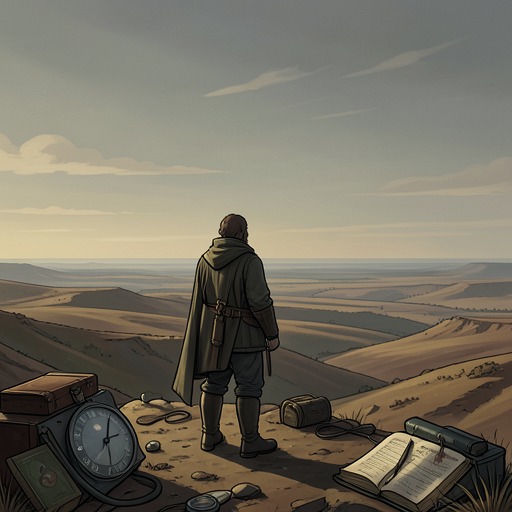
In a discussion of Comodín, the image of departure gives the afterlife a more unsettling form. Comodín is described as only half present in the world of the elves: he has settled his accounts because he knows he is leaving, and is already half gone because he will disappear completely. He comes from everything and goes nowhere; on reaching his destination, he will not even be able to dream of returning. His destination is the País de la Nada, a country where not even sleep exists.
When asked whether she is certain that this country exists, Ana answers that, unfortunately, she is—so far as nothing can be said truly to exist. The exchange does not make the idea reassuring. It gives absence a name while exposing the difficulty of treating nothing as a place or state. The prospect of such a final departure sharpens the practical point that follows: their years are too few, so seeing each other matters. The manifesto, in the other speaker’s view, is precisely about that finitude; Ana describes it instead as a record of their participation in something important. The two accounts converge on the value of shared life without resolving what, if anything, lies beyond it.
Grief as an ongoing bond
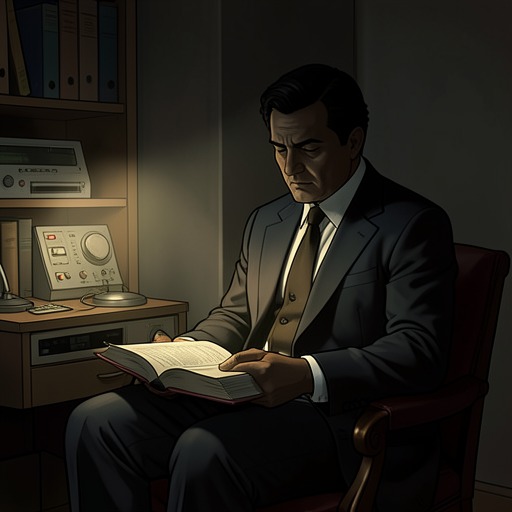
The narrator’s reflections on Sheila show how continued attachment can persist without certainty about survival. Three years after her death, the photograph of her still makes the impossibility of seeing her again feel almost unbelievable. He is nearly sure that reunion will not happen, but not entirely sure. The sheer improbability of the existing world unsettles his confidence in what is impossible: if this world exists, he wonders, why should another world after it be excluded?
His argument does not deny the body. Frank’s imagined reply—that human beings are flesh and blood, like toads and bats—acknowledges the material life that the narrator himself inhabits. Yet he resists reducing the soul to a biochemical by-product, comparable to a giraffe’s neck or an elephant’s trunk. Consciousness, as he experiences it, can apprehend the universe; that capacity makes a spiritual dimension difficult for him to dismiss, though it does not establish one.
The possibility of successive levels of reality extends that uncertainty. Other galaxies are known to exist, and the narrator notes that many astronomers believe there may be other universes. He asks why a transition from one level of reality to a meta-level should be less conceivable than transitions through time and space, and compares the possibility to waking from a dream. His reasoning opens a door rather than claiming to have crossed it: the boundaries imposed by the current level of reality may make alternatives hard to imagine, but the world itself remains unknown. He finally adds that Ana had not died, a statement that unsettles the preceding discussion without explaining its terms.
Conflicting accounts and narrative uncertainty
A later account of Ana’s speech makes clear that the question of an afterlife is also a question about how testimony changes as it is remembered and retold. One version gives her three direct assertions: that another reality exists; that she herself will not be dead when others believe her dead, and that they will soon meet elsewhere; and that human beings are passing, fleeting spirits. In this telling, she connects general belief in life after death to her own death and funeral.
The narrator corrects that emphasis. He accepts that Ana spoke in similar terms but says that, more than a year later, exact words cannot be recalled with certainty. He remembers her expressing a more general faith in another reality and an afterlife, and connects her remarks to a topic Laura and he had raised: perhaps they would meet again elsewhere and remember this life as a dream. He also thinks Frank may be right that Ana compared a funeral to a birth, and confirms that José wept while she spoke. He wonders whether José’s tears were related to Ana’s sudden indisposition the next day, but leaves the connection unresolved. The competing recollections preserve the force of Ana’s belief while withholding a definitive, stable version of what she said.
Objects, memory, and what remains
The novel also places the hope of survival beside acts of mourning that do not depend on certainty about an afterlife. After rereading a letter to Vera, the narrator can finally sort Sheila’s clothes for collection by the Salvation Army. The empty nest offers his image for this late act of clearing: the birds have been gone for years, yet removing the nest still marks a change. His grief has altered, not vanished; he can look at Sheila’s large color photograph with less of the shock he once felt.
Nor does the possibility of a magical reunion make his loss something he can simply set aside. He says he would have taken Vera’s magic drink without hesitation, even without knowing whether he could find someone to share its other half. It is too late for Sheila, whose last year brought little beyond chemotherapy. The contrast is severe: speculative hope may persist, but it cannot reverse the particular deprivation of the life already lost.
Sheila’s presence continues through shared language and remembered habits. The narrator hears her familiar turns of phrase in other people’s speech and sometimes answers aloud to what he knows she would say. Their companionship remains active in memory, including his recollection of her playing solitaire: the pastime that once helped make him fall in love with her, and that he later resented when she spent whole afternoons at it or cheated to make the game come out. Now he misses even those irritations, and misses being asked to shuffle the cards. This continuing bond is neither offered as evidence that Sheila survives nor dismissed as mere absence. It shows how the dead remain part of the living person’s world through memory, habits, and inward conversation. Across Ana’s faith, the manifesto’s hoped-for endurance, and the narrator’s unresolved questions, reunion remains possible in thought but unconfirmed in fact.