Possession and Being Possessed
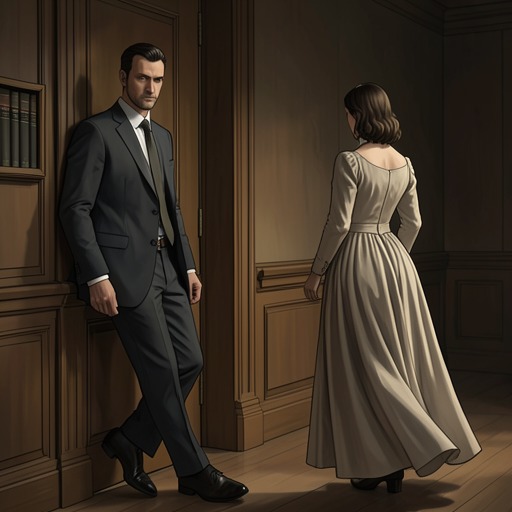
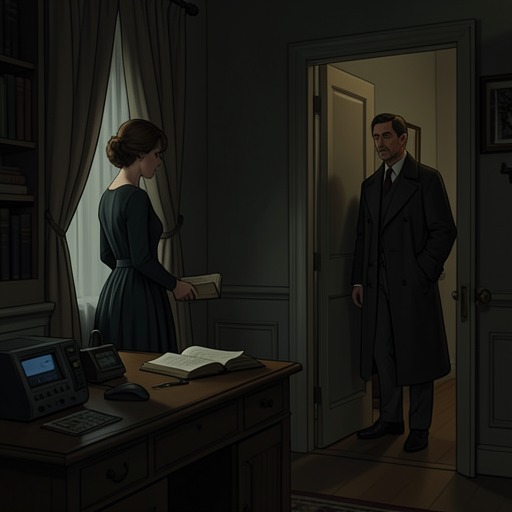
PossessionPossession and Being Possessed names a central tension in the novel: the past can be acquired, classified, and displayed, yet its objects and meanings also claim those who handle them. The tension is clearest in Mortimer Cropper’s pursuit of Ash’s papers and relics, but it extends to the laws governing letters and to Ellen Ash’s effort to protect what she regards as intimate memory. Possession is never simply ownership; it is a relation that can become devotion, responsibility, or an act of violation.
Collecting and the Biographer’s Claim
Mortimer Cropper approaches Randolph Henry Ash’s papers as both a scholar and a collector. In ordinary circumstances, he would have been willing to wait for Sir George to yield access, returning to the dilapidated mock-castle and attending to the family’s circumstances while he waited. At night he would have examined the letters individually, looking for hints and secrets, and recorded them with his black box. The prospect of James Blackadder’s competing claim changes that patient method: Cropper feels pressed to obtain the papers before his rival does. His desire is described as a kind of hunger, suggesting that the archive has become more than material for research.
That appetite is bound up with Cropper’s public defence of biography. In a lecture titled “The Art of a Biographer,” he presents the desire to know how other people lived as a modern spiritual need, and describes biography as a form of ancestor worship. The language grants scholarly inquiry a quasi-religious seriousness, while also exposing how easily the biographer’s claim to knowledge can approach the claim to possession. Cropper’s attention is not merely to Ash’s published work: he seeks private papers and intimate traces that promise access to a life.
The lecture also reveals that Cropper values representations of objects as well as the objects themselves. He presents a hologram of Ash’s snuff-box, emphasizing how projected light can make a relic available to viewers around the world without moving the original. His argument is that fragile objects should remain safely preserved, while institutions with appropriate skills and resources circulate their representations. In this account, possession becomes less important than custody and access. Yet the confidence of the argument sits beside Cropper’s unmistakably personal attachment to Ash’s things, complicating the distinction between disinterested stewardship and private desire.
Ash’s Watch and the Collector’s Attachment
The gold watch condenses that contradiction. Cropper bought it with his own money, but he recognizes that his own argument could be used to say it should be stored in the Stant cabinets. He once considers displaying the watch beside a hologram of itself, turning the relation between original and representation into a public exhibit. He ultimately keeps his feelings about the object separate from his public appeal for conservation: his attachment, he understands, is private.
Cropper believes the watch came to him as if it had been meant for him, and experiences it as a personal connection to Ash. Its presence near his heart gives the object an intimacy that his lecture’s universal language of cultural access cannot absorb. At the close of the lecture, he uses it to time his own performance, checking it against the talk’s exact duration of fifty minutes and twenty-two seconds and then setting it on the pulpit while he answers questions. The watch is at once a relic, a possession, a measure of time, and a token through which Cropper imagines a bond with the poet. His wish that he had been a poet further blurs the line between studying Ash’s legacy and desiring a share in it.
Letters, Copyright, and Material Ownership
The novel also treats possession as a legal and archival problem. When Roland Michell asks whether Maud Bailey’s family owns the copyright in Christabel LaMotte’s poems and stories, Maud explains that the family believes it does, while LaMotte’s manuscripts have been deposited at the Women’s Studies Resource Centre at Lincoln. The collection includes Melusina, The City of Is, two fairy-tale books, and scattered lyrics. The family’s papers and the institution’s custody are distinct from the questions raised by correspondence, for which the relevant rules distinguish the right to reproduce a letter from the ownership of its physical sheet.
The history Maud recounts traces LaMotte’s papers through women in the family. After LaMotte’s death in 1890, her sister Sophia sent papers and poems to her daughter May, Maud’s great-great-grandmother, in keeping with LaMotte’s expressed wish that her work pass through the female line. The transfer took place against family tensions: the then Sir George disapproved of a marriage between first cousins, and the families did not get along. Sophia’s accompanying letter described the papers as entrusted for safekeeping and passed on the view that LaMotte was a better poet than she had yet been acknowledged to be. The inheritance is therefore not merely a transfer of property; it carries a claim about women’s literary continuity and the proper custody of a neglected writer’s work.
The correspondence raises a separate question because physical ownership and copyright do not necessarily belong to the same person. Euan explains that copyright in unpublished letters belongs to their writer, while the physical letters belong to their recipient, unless they have been returned. This distinction makes the fate of Ash’s letters consequential: according to Toby’s account, they include a letter from Ash saying he returns the letters to LaMotte’s possession. The legal explanation does not dissolve the moral and personal dimensions of the archive; it clarifies why the history of transfer matters and why possession cannot be inferred simply from who holds papers now.
Being Possessed: Systems, Desire, and Memory
Possession also describes a way of understanding the self. Roland has learned to regard himself theoretically as a crossing-place for loosely connected systems rather than as a unified, self-determining essence. His sense of self is framed as an effect of desires, ideological beliefs, responses, language, and bodily processes. He is comfortable with this account and resists strenuous claims of Romantic selfhood, yet he wonders what his unspoken pleasure in Maud might become. The question is not answered by treating either person as an object to be known or possessed; their relation remains uncertain, capable of continuing or changing.
That uncertainty takes shape against the social divisions Roland perceives between them. Maud has a secure job and an international reputation, while he feels the pressure of class distinctions that he rejects intellectually but still experiences as a force. He recognizes that romance itself is another system through which people interpret desire, and sees himself as being inside a Romance. In this context, being possessed does not mean being controlled by another person alone. It can mean finding one’s feelings and expectations already shaped by social structures and inherited narrative forms.
Protection, Burial, and the Ethics of the Archive
Ellen Ash’s handling of the letters offers a different response to possession. During Randolph’s final illness, he asked her to burn what others should not see, and she promised to do so. She regarded the intrusive treatment of private lives by modern biography as a violation, and remembered the argument that publishing private letters betrays the intimacy of their writers. She did burn some things and intended to burn more, acting on the belief that the private life they had shared should not be turned into idle curiosities or falsehoods for strangers.
But Ellen distinguishes between the things she can destroy and those she cannot make herself a party to burning. The letters of the years of separation are among the latter. She cannot leave them to be buried with her, yet does not trust them to remain safe from betrayal. Her solution is to lay them to rest with Randolph, for the earth to keep until her own death. The burial does not settle who may ultimately claim the letters; it suspends access and gives protection a physical form. Against Cropper’s wish to uncover, reproduce, and circulate the traces of Ash, Ellen’s choice asserts that love and memory can entail a duty to withhold.
The contrast does not make every form of preservation equivalent. Cropper’s hologram promises wide access while protecting fragile originals; Ellen’s burial denies access in order to protect private meaning. Between these positions, the novel asks who can claim the past, what responsible custody requires, and whether a person’s papers remain only objects once they have become evidence of a life. The archive preserves connections, but it also exposes the difference between possessing a document and having the right to make its secrets public.