Private Archives, Biographical Ethics, and the Possession of Knowledge
PossessionPrivate Archives, Biographical Ethics, and the Possession of Knowledge is a central conflict in the novel: the papers that could transform literary history are also the private remains of lives whose owners and custodians sought to control their afterlife. The struggle is not simply between concealment and disclosure. It turns on distinct claims to physical documents, literary copyright, family inheritance, scholarly access, and the ethical consequences of making intimate records public.
The Archive as Object and Evidence
At the London Library, Roland Michell discovers that Randolph Henry Ash’s copy of Vico’s Principi di una Scienza Nuova contains previously unnoticed notes. The volume appears to have been undisturbed for generations. When its bindings are undone, faded blue, cream, and grey papers spill out: notes on Vico written on the backs of book-bills and letters, in Ash’s recognizable hand. Their soot-black edges preserve the exact positions in which the fragments had lain. The physical arrangement is itself evidence, and the librarian cautions Roland not to disturb the sequence before the pieces have been listed and described. The scene establishes an archival principle that recurs throughout the novel: documents have histories not only in what they say, but in where they were kept, how they were arranged, and who was permitted to handle them.
That discovery also exposes the archive’s vulnerability to individual action. Asked where the original papers are, Roland admits to Maud Bailey that he found them in a book and took them. His confession is not merely a revelation about custody; it marks the moment when scholarly curiosity becomes a breach of the rules governing access. The papers may yield important knowledge, but their importance does not automatically authorize the researcher to remove them. The novel keeps the intellectual value of discovery in tension with the material fact of possession.
The same tension shapes the surviving LaMotte archive. Maud explains that the papers placed in the Women’s Studies Resource Centre at Lincoln were essentially the contents of Christabel LaMotte’s desk when she died. They include manuscripts of the Tales, undated lyrics on loose slips, a commonplace book, a few letters, and multiple revisions of Melusina, which LaMotte rewrote at least eight times. The archive also holds one three-year diary by Blanche Glover, acquired separately and secretly at a Sotheby’s sale. Maud knows that the collection is incomplete: it was not carefully preserved, and no further material has surfaced. The surviving record is therefore not a transparent portrait of LaMotte’s life. It is a limited, contingent remainder, shaped by loss as much as by preservation.
Biography, Publicity, and the Hunger to Know
Mortimer Cropper turns biography into a public argument for access. In his lecture “The Art of a Biographer,” he imagines waiting patiently for access to the papers Sir George holds, but James Blackadder’s competing activity makes patience feel intolerable. Cropper describes biography as a kind of spiritual hunger: people want to know how others lived because that knowledge helps them live. He compares biography to ancestor worship and invokes the Gospels as a series of attempts at biographical representation. His rhetoric lends scholarly investigation a public and even devotional purpose, while his private hunger for the letters reveals the personal force beneath that general principle.
Cropper announces that letters have been discovered between Ash and LaMotte, predicting that they will upheave the fields concerned with both writers. He has seen only a small number and cannot quote them, yet he urges that they be made freely available to scholars of all nations. His appeal joins international scholarly exchange to intellectual property and preservation. It also exposes a contradiction: he speaks for broad access while seeking control of the materials himself. His commitment to making the past available does not erase the competitive desire to possess its most consequential evidence.
His proposed answer is technological. Cropper argues that fragile originals should be protected where air and human breath cannot damage them, while holographic reproductions can carry their images around the world. In this vision, possession of the original matters less than the expertise and resources needed to preserve it and circulate vivid representations. Yet the novel complicates the distinction between an object and its image. Cropper’s attachment to Ash’s gold watch is private and intense; he believes it has somehow come to him and feels that he holds something of Ash himself. The watch’s material presence cannot be reduced to the information a reproduction conveys. His own relation to it makes visible the emotional claim that his public argument for disinterested preservation cannot entirely contain.
Custody, Copyright, and Inheritance
The novel separates ownership questions that characters often treat as though they were one. Maud is asked who owns the copyright in LaMotte’s poems and stories. She answers that her family believes it does, while explaining that the manuscripts have been deposited at the Resource Centre. Depositing papers with an institution does not, by itself, settle copyright; nor does ownership of a manuscript necessarily confer the right to publish its text. Euan MacIntyre makes the distinction explicit: the physical letter belongs to its recipient, while copyright remains with its writer, subject to the relevant inheritance and publication rules.
A will discovered among Sophia Bailey’s accounts sharpens the stakes. Dictated by LaMotte on May 1, 1890, when she was too weak to write clearly, it leaves her money, furniture, and china to Sophia; a bequest of £60 to Jane Summers, if she is alive; and all LaMotte’s books, papers, and copyrights to Maia Thomasine Bailey, in the hope that Maia may eventually become interested in poetry. Euan reports that Sophia found Jane Summers and paid the bequest, then put the will away with her accounts. The document connects present-day scholarly claims to a specific testamentary act and a chain of family custody. Euan believes Maud is the heir to the letters’ physical ownership, while noting that the direct heir would be Maud’s father, who had already given Maud the manuscripts that came to the family through the bequest.
The returned correspondence makes the legal distinction especially consequential. Euan explains that LaMotte had requested the return of her letters and Ash had complied. Her letters therefore came back into her possession, rather than remaining with their original recipient; Euan argues that Maud is their legal heir through LaMotte’s will. Ash’s heirs, by contrast, retain the copyright in his letters. The unopened letter found in Ash’s grave creates a further uncertainty: if it was never received, it is unclear whether it belongs to its sender or to the addressee in whose grave it lies. Ownership is not a single answer but a set of claims that depend on a document’s authorship, delivery, return, inheritance, and physical location.
Destruction, Concealment, and the Ethics of Disclosure
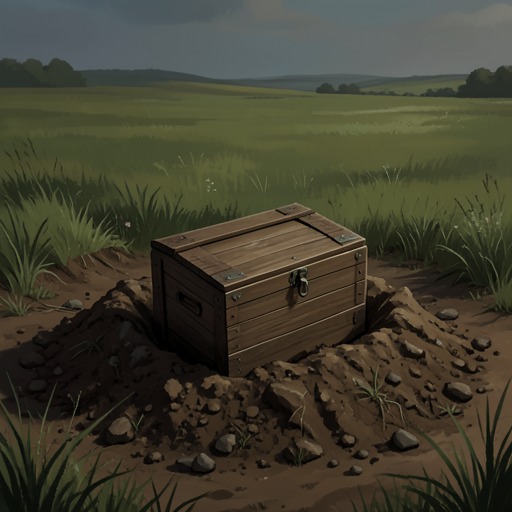
Ellen Ash’s account makes the privacy claim personal. After Randolph’s death, she sits at his desk among his possessions and recalls his injunction to burn what others should not see. She remembers his hostility to biographers who rummaged through the papers of the recently dead and to the publication of intimate letters. Acting under the pressure of grief and urgency, Ellen makes a fire and burns some papers, intending to burn more. She cannot, however, destroy everything: some documents do not belong to her, and she cannot bring herself to burn the letters exchanged during years of separation. She chooses instead to lay them with Randolph, entrusting the earth with what she cannot leave to public scavengers and cannot simply erase.
The novel presents this act neither as a complete success nor as a settled moral answer. Ellen’s destruction is partial and haphazard, and the papers she hides preserve evidence that later scholars can recover. A retrospective account speculates about the box buried with Ash and regrets that those who disturbed his grave in 1896 did not open it and record its contents. At the same time, it acknowledges how little can be known about what was lost. The wish to recover evidence is set against the possibility that disclosure betrays the intimate trust of the people who made it. Grief can motivate concealment and destruction, while later readers can reinterpret the same hidden documents as relics of beloved ancestors.
A fragment attributed to a writer addressing Ellen intensifies that conflict. The writer accuses her of keeping “my Evidence,” insists that keeping it does not make it Ellen’s, and asks her to reconsider an earlier judgment. Maud cannot determine whether the evidence concerns a clandestine correspondence or a Yorkshire journey. The fragment supplies a claim and a sense of urgency but not enough information to resolve its object. As elsewhere in the archive, absence is not a blank that interpretation may fill at will: the missing context preserves several possible histories while limiting what the evidence can establish.
The Archive’s Unresolved Moral Claim
At the later gathering over the recovered materials, Euan argues that Maud can establish legal ownership of the manuscripts of the letters, while the copyright in Ash’s letters belongs to his heirs. He warns that Cropper has induced Hildebrand Ash to promise both letters and copyright, underscoring the difference between a family’s practical control and the separate rights attached to texts and objects. The dispute is not resolved by declaring that scholarship serves the public good, or that privacy must always prevail. It asks who may speak for the dead, who has authority to preserve or publish their words, and whether a legal entitlement settles the ethical question.
When the buried container is finally opened, the archive appears as a material assembly rather than an abstract trove: an oiled-silk bag holds a hair bracelet clasped by two joining hands; a blue envelope holds a finely plaited strand of pale hair; another package contains letters tied with ribbon; and a sealed envelope is addressed to Ash. The recovery makes the earlier arguments over custody immediate. The objects have survived because someone concealed them, but their survival invites new claims, interpretations, and desires to see. The novel’s archival ethic rests in that unresolved double truth: preserving private evidence can protect it from loss, while later disclosure can transform both literary history and the meaning of the privacy that preservation was meant to defend.