Mystery and the limits of reason
PossessionMystery and the limits of reason name a central tension between the wish to explain experience and the persistence of what explanation cannot settle. The concept emerges both in a contemporary conversation about desire and in Randolph Henry Ash’s poetry: the modern speakers suspect that analysis has displaced mystery, while the poems imagine powers that cross human lives and ask how a story can venture into darkness without claiming mastery over it.
Desire Under Examination
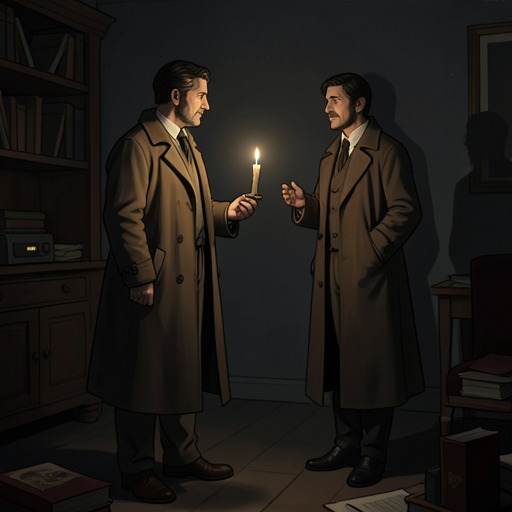
In a conversation about the past and the present, Maud Bailey reflects that her generation knows desire as a subject of analysis but may struggle to imagine the force it held for Randolph Henry Ash and Christabel LaMotte. Their contemporaries, she suggests, could believe in love, in themselves, and in the importance of their actions with an intensity that later habits of skepticism make difficult to recover. The problem is not simply a lack of historical information: it is the distance between knowing about a feeling and inhabiting its possibilities.
Maud extends that doubt to the loss of mystery itself. She invokes Christabel’s line, “Outside our small safe place flies Mystery,” and wonders whether modern understanding has done away with the unknown along with older certainties about love. Looking closely at desire, she adds, may have strange effects on desire; scrutiny does not necessarily clarify or preserve what it examines. Roland Michell responds cautiously that a state without desire might sometimes seem best when he looks at himself. The exchange leaves open whether detachment is liberation, self-protection, or another consequence of the very habit of self-analysis they are discussing.
Powers Beyond the Human
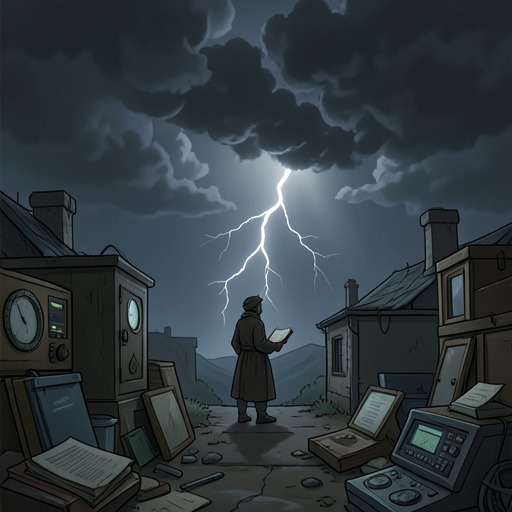
Ash’s poem gives the idea a larger, more elemental scale. Its claim that “Outside our small safe place flies Mystery” makes human security provisional: beyond the imagined shelter, unseen forces move through the world. The poem does not reduce those forces to a single explanation. It gives them material and bodily images, including a whale’s warm milk beneath icy seas, while also declaring, “Inhuman Powers cross our little lives.” Mystery is thus neither merely an abstract intellectual limit nor a synonym for the supernatural; it is the pressure of a world whose processes exceed the human frame.
The contrast between a small safe place and powers crossing individual lives connects vulnerability with scale. The poem’s natural images make the unknown perceptible without making it fully knowable: warmth exists beneath ice, and forces act across lives without becoming objects of human command. Rather than resolving uncertainty into a doctrine, the poetry lets incompatible-seeming conditions coexist, giving the reader images through which to encounter what reason cannot exhaust.
The Fairy’s Tale and the Edge of Speech
That limit becomes an artistic problem when the poem turns toward the fairy. Ash asks, “Shall I presume to tell the Fairy’s tale?” and immediately associates the attempt with meddling in doom and magic. The question acknowledges that telling a story about supernatural agency may itself be an act of trespass: narration can approach what it cannot claim to possess. The fairy’s tale therefore serves not only as subject matter but as a test of the poet’s authority and the limits of representation.
The poem frames its movement into the unknown as a passage between domestic speech and the darkness beyond the hearth. In a moment of invocation, it asks, “Give me wise utterance and safe conduct,” before describing the route from hearthside storytelling into outer dark and back again to sleep. The appeal joins artistic speech to a need for protection: the speaker wants language adequate to the encounter, but does not assume that language alone can make the encounter safe or comprehensible.
Narrative and Thematic Function
Across the conversation and the verse, mystery marks the boundary between explanation and experience. The modern characters can describe how people are made up of conflicting systems and can scrutinize desire, yet such knowledge does not reproduce the felt conviction with which earlier lovers understood themselves. Ash’s poetry likewise supplies vivid images and acts of invocation without converting the unknown into a settled account. In both registers, interpretation advances but does not close the gap between what can be said and what can be lived.
The concept also shapes the novel’s treatment of reading. The poem offers the fairy, the crossing powers, and the dark beyond the hearth as meaningful figures, while its questions preserve uncertainty about whether the poet can speak for such forces at all. Mystery is therefore not an excuse to treat every explanation as equally valid; it is a reminder that close attention can disclose patterns while still encountering limits. The work’s imaginative reach depends on holding that tension open: reason can approach the unknown, but cannot turn it into something wholly safe, transparent, or possessed.