Silence
PossessionSilence is a consequential form of action in Possession: a way of preserving intimacy and privacy, but also of withholding knowledge, delaying recognition, and shaping what can be inherited. Across letters, remembered speech, and the decisions surrounding Randolph Ash’s death, silence is not an empty space in the story. It is something characters choose, suffer, and sometimes discover too late that they have been living inside.
Silence in Communication
The novel places silence beside acts of communication that cannot complete themselves. In an unfinished letter to Randolph, Christabel LaMotte struggles to describe the circumstances that have arisen. She finally writes that his letters have not reached her, and fears they have been taken. The letter records not only a failure of delivery but the moment the failure becomes known: she and another person have snatched at the postman’s papers in a tussle. The broken exchange makes absence material. What has not arrived alters what can be said, and the letter itself preserves a disclosure that its intended recipient may never receive.
A different kind of silence accompanies the letters Randolph writes to a child. He answers Sophia’s drawings with an affectionate letter, praising her observation of a duckling and sending a drawing of an ash tree in return. He explains the tree’s place in Norse belief and hopes Sophia will grow wise, while insisting that childhood is her time for play and delight. In another family’s account, these notes become Grummer’s tree letters: documents passed down through Rodney Wapshott and kept by his widow, who says they are letters to a child about trees. Their modest, personal character contrasts with Mortimer Cropper’s wish to add them to a major collection of Ash’s correspondence. The letters preserve a warm exchange, yet the history of their transmission is incomplete: their keeper does not know exactly how Rodney acquired them, and will not agree to part with them without consulting her daughter, for whom they were intended.
Ellen Ash and the Unwritten Letter
Silence becomes most intimate and costly in Ellen Ash’s response to Christabel’s letter during Randolph’s final illness. Ellen considers what to say, imagining that she cannot give the letter to a husband who is calm and almost happy. She also understands that the knowledge it carries concerns a relationship Randolph had previously disclosed to her. Her imagined reply tries to hold two truths together: that she has known of his love for Christabel, and that she has shared a life with him that is hers as well. When she imagines asking Christabel not to break into the short time remaining to her with Randolph, the appeal is at once a defense of their daily life and an acknowledgment of impending loss.
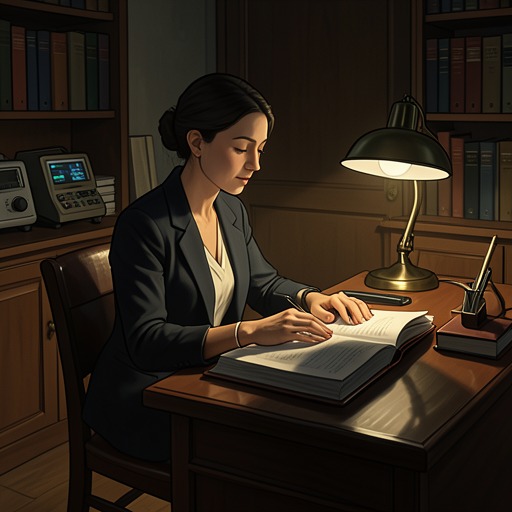
The imagined correspondence remains unwritten. The narration states plainly that Ellen wrote nothing. Instead, she sits beside Randolph and weaves their hair together, attaching it to a band of black silk. At her throat is the brooch he sent from Whitby, its white roses of York carved in black jet. Her material actions give form to a bond that she does not turn into a written answer: shared hair, a remembered gift, and a brooch worn during the hours of his dying. The silence is therefore not a lack of feeling; it accompanies a deliberate concentration on the life and bodily closeness she still has with him.
Randolph speaks of a bracelet of bright hair about the bone and connects the image to a poem he and Ellen have thought of as theirs. The phrase makes the hair they are binding together resonate with death and the future opening of his grave. Ellen’s silence does not erase the connection between them. It places that connection alongside the unspoken knowledge of Christabel and the letter she cannot bring herself to deliver.
Privacy, Avoidance, and the Lie
Ellen’s decision belongs to a longer pattern. She tells Randolph that she does not want to know more and asks that they not speak of the matter again; it is, she insists, not between them. The narration complicates the firmness of that boundary by showing Ellen’s later self-questioning. She wonders whether she has done well or ill and describes her nature as deeply implicated in not knowing, silence, and avoidance. This account does not settle the moral question for the reader. It shows that a choice made to protect a shared life can also become a way of refusing knowledge.
For most of their marriage, Ellen has not read Randolph’s letters or searched his papers out of curiosity. She has answered correspondence from his readers, admirers, translators, and loving women, but has not sorted or classified his own papers. When she eventually looks in his desk during the last month of his life, the act fills her with a superstitious bodily fear. Her habitual distance from the archive makes the brief intrusion more consequential: the letters are not merely documents to her, but a threshold into a part of Randolph’s life she has chosen not to examine.
The discovery changes the meaning of her restraint. As she burns one letter in the attic, turning it with a poker until it becomes black flakes, she thinks that her life has been built around a lie, a house made to hold a lie. She had believed that her approximations and avoidances were kept in check by a rigorous demand for honesty with herself. Now she recognizes that Randolph had also been complicit, while admitting she does not know how their life appeared to him. Their silence has therefore protected a peace that was real in its small kindnesses and also structured by truths left unspoken.
Inheritance and the Shape of What Remains
Silence also governs the afterlife of papers and family memory. Maud Bailey recounts how, after Christabel’s death in 1890, her sister Sophia sent papers and poems to May, Maud’s great-great-grandmother. Sophia’s covering letter reportedly explained that Christabel had wished her papers to pass to May and had believed in handing things on through the female line. The account is itself transmitted through family memory: Maud says she does not remember the letter exactly, and the surviving history cannot establish whether May attended the funeral or took an interest in the papers. What passes across generations is both a collection and a set of gaps around its reception.
This pattern makes silence more than a private response between spouses. It affects which documents survive, who receives them, and how later readers reconstruct lives from incomplete records. Some letters remain in private hands; some are passed on as family property; some are withheld at a deathbed; others are destroyed. The novel’s attention to these uneven transmissions resists treating an archive as a complete account. The absence of a letter or a reply may indicate deliberate protection, interrupted communication, uncertain memory, or the loss of an opportunity to know.
In the present-day academic world, the language of preservation offers a contrast to the intimate reticence of the earlier story. Cropper promises that the Wapshott letters would be kept in controlled conditions and made available only to accredited scholars, while their keeper sees them as her daughter’s inheritance and refuses to make the decision without asking her. The dispute makes visible a tension between scholarly access and personal custody. Silence here is not simply enforced by secrecy; it can also mark a boundary around the right to decide where private writing belongs.
Narrative Significance
Silence links the novel’s epistolary form to its uncertainties about knowledge. Letters promise an encounter between writer and reader, but their routes can be interrupted, their meanings delayed, or their intended exchanges left unfinished. The reader may encounter a message that the person addressed never receives, or learn of a reply that was composed only in thought. Such gaps make private writing a fragile form of evidence: it can preserve an otherwise inaccessible voice, but it cannot guarantee that the voice will be heard or answered.
The repeated contrast between writing and withholding also prevents silence from having one fixed moral meaning. Christabel’s letter names the taking of correspondence; Ellen refuses to deliver a message while Randolph is dying; a family preserves papers through uncertain chains of inheritance; later scholars seek access to documents held as private property. In each case, the silence has different causes and consequences. The novel asks the reader to attend not only to what a document says, but to who could send it, who received it, who held it back, and what could no longer be said afterward.
Ellen’s unwritten words give this theme its sharpest personal expression. Her choice protects the final hours of a marriage grounded in daily kindness, yet she later recognizes the lie those years contained. That unresolved conjunction—care and concealment, peace and avoidance—keeps silence from being either an uncomplicated virtue or a simple failure. It becomes one of the means by which Possession represents love and historical knowledge: both depend on what is preserved, but neither can be made whole from what remains.