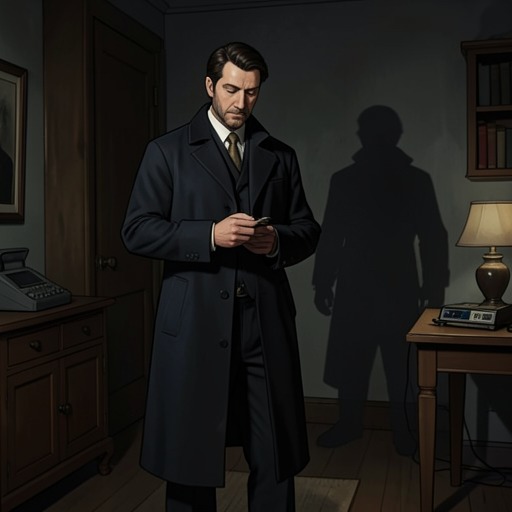
L’emprise satanique sur Aurelio
SatanAurelio’s enslavement to Satan is a gradual passage from religious manipulation to abuse and complicity, followed by a desperate escape and an uncertain struggle for spiritual freedom. The narrative makes the bondage both inward and concrete: Aurelio believes his will has been commandeered, while his memories of the sect’s violence return as he risks his life crossing the Florida Straits. His rescue is not presented as a clean release. It begins a continuing effort to seek forgiveness, resist evil, and trust in God.
Recruitment and Initiation
Aurelio first becomes entangled in the plot through a newly founded Masonic lodge in Cuba. Its founders, who apparently had protection within the Castro regime, press him to join and offer possible advantages, including the chance to leave Cuba and travel to the United States or elsewhere. They assure him that Yoruba religious service and Freemasonry can coexist, citing other initiates who supposedly hold high ranks. That reassurance helps overcome his hesitation; the lodge’s demands are presented as an attractive opportunity as well as an increasingly forceful pressure.
The initiation’s decisive test is the theft of the cameo. The lodge’s members tell Aurelio that the jewel is bewitched by malevolent powers and threatens society and the world unless the brothers’ collective spiritual force neutralizes or redirects it. They cast the theft as a mission for humanity’s salvation. The explanation turns a crime into an apparent sacred duty and recruits Aurelio’s religious authority to serve the lodge’s purposes. The cameo thus becomes the material link between his initial recruitment and the more extensive spiritual captivity that follows.
Through this Masonic network, Aurelio is able to cross into the United States. There he is gradually drawn into a group whose members practice strange rituals, and the account describes his experience as a thorough brainwashing. His religious life shifts from Santería into Palo Mayombe, which invokes the dead and forces of nature and uses powers understood as both light and darkness. Over time he becomes a sorcerer, seeks human blood for rituals, and acquires a reputation that makes others respect and fear him. The change is not simply a new affiliation: the practices and status of the group deepen his involvement and help make its power seem his own.
Captivity, Abuse, and the Turn
Satan comes to occupy the place of Aurelio’s god and, in his emotional understanding, of the father he never had. Yet the appearance of power coexists with helplessness. When doubts surface at night, he feels an invisible force pressing on him; he cannot cry out or defend himself. The narrative’s contrast is stark: the man increasingly feared for his ritual power experiences himself as powerless before the force he serves.
Aurelio later recounts ceremonies resembling black masses on altars dedicated to Lucifer. Rodrigo Lerbier relays the account of animal torture and human sacrifice, including the killing of children and babies and the spraying of their blood over participants. In Aurelio’s memories of the flight, these scenes return in flashes: knives, blood on the altars, and the people present, whom he had seen as respectable figures from entertainment, finance, politics, and contemporary art. He also says that he was repeatedly raped and drugged without his knowledge so that he would take part in the rituals. Many participants concealed themselves beneath hoods or masks. The abuse and secrecy remain with him as a pursuing shadow, even when he is physically escaping the group.
The turning point is not a new discovery about the group. Aurelio overhears a conversation between a satanic-sect leader and a high-ranking Freemason, but he already knows and accepts the ideas being expressed. This time, however, he seems to hear and understand them fully. Something changes in his recognition: he spontaneously calls on Jesus Christ for help, and the narrative marks that moment as the start of an inner revolution. He concludes that he must escape at any cost. His account describes his will as having been taken over, as though the devil had put it on like a glove, and himself as having supplied Satan to the group through the cameo.
Flight Across the Florida Straits
Aurelio escapes the sect’s facilities near Miami at night by using subterfuge, then flees on foot, keeping away from the main roads until he reaches Key West. There he finds an abandoned boat and sets out for Cuba rather than risk returning to the place he has fled. The crossing is about 150 kilometres. He has only a rotten piece of board with which to row, and the boat is at the mercy of the water and wind. The narrative casts the crossing as both physical danger and an image of his damaged inner life: the vessel is tossed about as he is, burdened by remorse and the memory of what he has done and suffered.
During the night, exhaustion draws him into brief sleep, but the sea brings back visions and memories of the sect’s rituals. He imagines the dead and the devil pursuing him, and the spray seems to carry the contamination of the past. At dawn he finds himself surrounded by water, with no land visible and the wind gone still. The apparent abandonment sharpens his appeal to God rather than resolving his fear. Later, recreational sailors find him adrift and tow his boat to the boundary between the United States and Cuba. He eventually reaches a deserted shore near Varadero, exhausted but alive. The passage from the sect’s enclosure to Cuba is therefore an escape in fact, but not yet an escape from memory or spiritual dread.
Confession and the Continuing Struggle
After returning, Aurelio goes to confession before the priest of New Gerona, his mother’s confessor. He asks God’s pardon and absolution and seeks to break the chains that, as he understands them, still bind or might again bind him to evil. His warning to Rodrigo is that one cannot easily free oneself from Satan after allowing him to take possession; escape requires holding fast to God and praying to Jesus Christ for redemption. He also cautions that a person may believe he is serving God while unwittingly serving the devil. The account thus makes conversion a continuing act of vigilance, not a simple reversal of allegiance.
Aurelio’s experience also shapes Rodrigo Lerbier’s own reckoning. Rodrigo, a babalao who introduced Aurelio to Santería, is deeply shaken by the confession and faces the question of how he might leave that religious role without becoming a social outcast in Cuba. He tells Laurence and Loïc that his sole alternative for spiritual and social salvation may be to become a Catholic priest or monk. Rodrigo does not disclose that Aurelio’s example has helped lead him toward this conclusion, but his account makes the connection clear: the escape from satanic control becomes a challenge to the mentor who first introduced Aurelio to the religious path from which he later turned.
Aurelio further tells Rodrigo that people may contain an apparently normal self and a demonic one, with the passage between them beyond conscious control; only God, he believes, can save a person from the self drawn toward evil. The story presents this as Aurelio’s interpretation rather than an independently established rule. Its force lies in the tension between outward flight and inward uncertainty: he has left the sect and confessed, yet understands freedom as something that must still be sought through prayer, humility, and resistance.