I Can Think, I Can Wait, I Can Fast
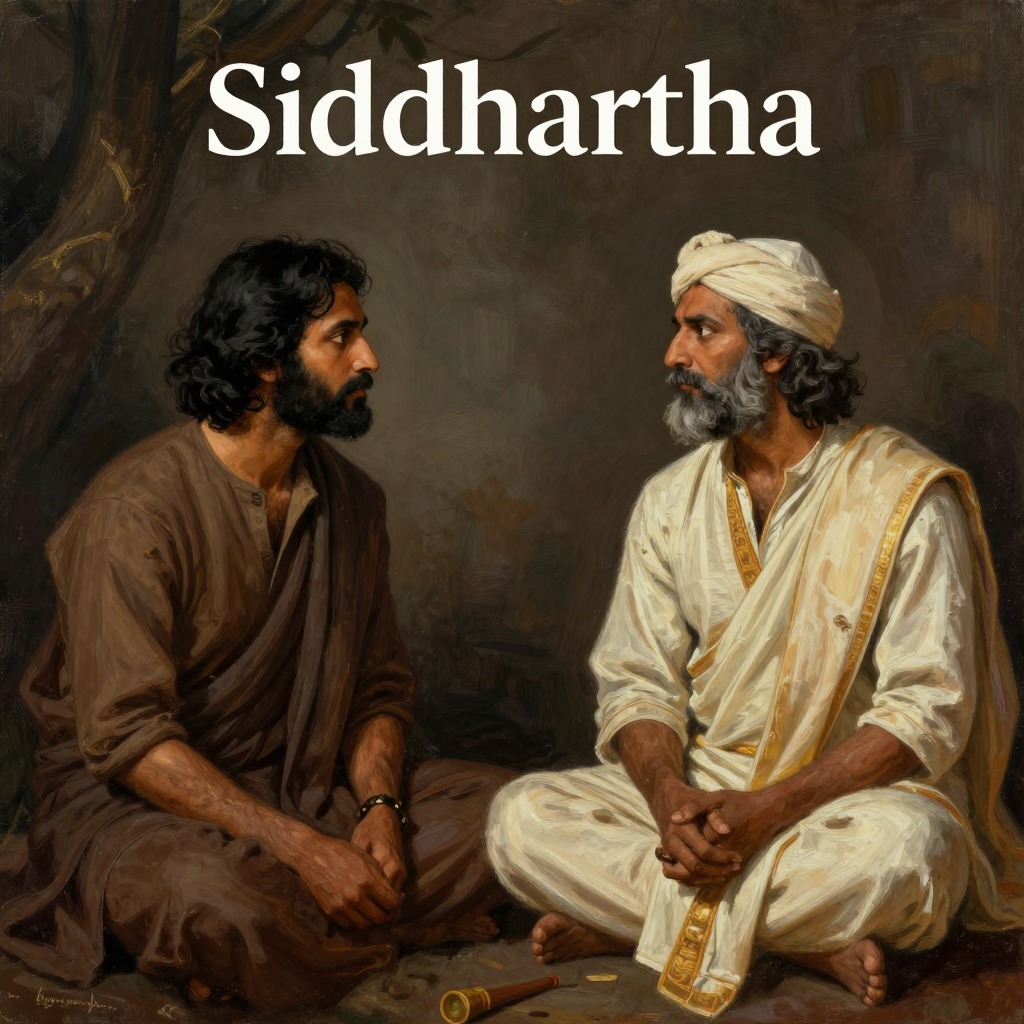
SiddharthaThe declaration "I Can Think, I Can Wait, I Can Fast" functions as a concise, almost mantra-like summary of the inner disciplines Siddhartha cultivated during his years as a Samana. He first articulates this triad to Kamala when she asks what he is able to do, offering it as the sum of his practical skills after renouncing his Brahmanical learning and magic spells. Later, he repeats the same three words to the merchant Kamaswami, who initially scoffs at their apparent uselessness. The phrase thus becomes a signature of Siddhartha's identity, a compact statement of the ascetic's toolkit that he carries into the worldly life he is about to enter.
Origin and Meaning in the Ascetic Life
The three abilities are not abstract virtues but concrete, hard-won practices. "Thinking" for Siddhartha meant the art of reflection, meditation, and the disciplined pursuit of knowledge, which he had practiced since childhood in debates with Govinda and in the service of meditation. "Waiting" was the capacity for patience, for remaining motionless and silent in the face of time, as he demonstrated when he stood for an entire night before his father, arms folded, until his father granted permission to join the Samanas. "Fasting" was the most physically demanding of the three: he learned to endure hunger for fifteen days, then twenty-eight days, and to stand in the burning sun or freezing rain until pain and thirst ceased. These practices were aimed at emptying the self of desire, becoming dead to the self, and achieving a state of non-self. Siddhartha himself, however, came to see these feats as a short numbing of the senses, no different in essence from the escape a drunkard finds in rice-wine—a temporary flight from the agony of being a self, not a true path to enlightenment.
The Triad as a Tool in the Worldly World
When Siddhartha enters the city and meets Kamala, he presents his three abilities as his only assets. Kamala is initially dismissive, noting that other young men come with fine clothes, shoes, and money. Yet Siddhartha insists that these three skills are the foundation of his power, claiming that they allow him to achieve any goal, just as a rock thrown into water speeds on the fastest course to the bottom. He explains to her that by thinking, waiting, and fasting, he can let himself be drawn by his goal without letting anything oppose it—a form of magic that fools attribute to daemons but that he believes anyone can perform. When Kamaswami asks what he can give in return for a living, Siddhartha again replies with the same three words, and he demonstrates the practical value of fasting by explaining that it frees him from the compulsion of hunger, allowing him to wait calmly for the right opportunity rather than accepting any service out of desperation. Kamaswami, impressed, takes him into his house.
Loss and Rediscovery
After many years of worldly life—trading, gambling, drinking wine, and indulging in sensual pleasures—Siddhartha realizes that he has lost these three abilities. In a moment of despair by the river, he reflects that he had boasted of them to Kamala as his noble and undefeatable feats, but that he had given them up for the most wretched things: sensual lust, the good life, riches. He feels that he has become a childlike person again, standing void and naked, with nothing left. Yet this very loss becomes the precondition for a deeper transformation. After his suicide attempt is interrupted by the sound of Om, and after he falls into a deep, dreamless sleep, he awakens feeling renewed. He then begins to learn from the river, and from the ferryman Vasudeva, a new kind of listening that is not about thinking, waiting, or fasting in the old sense, but about being open, patient, and without judgment. The old triad is not restored but transcended: the river teaches him that wisdom cannot be passed on, that the opposite of every truth is just as true, and that love is the most important thing. In his final meeting with Govinda, Siddhartha no longer speaks of thinking, waiting, and fasting; instead, he speaks of the oneness of all life, the perfection of every moment, and the ability to love the world as it is. The three abilities that once defined his ascetic identity have dissolved into a broader, more compassionate way of being in the world.