The Wheel of the Cycle
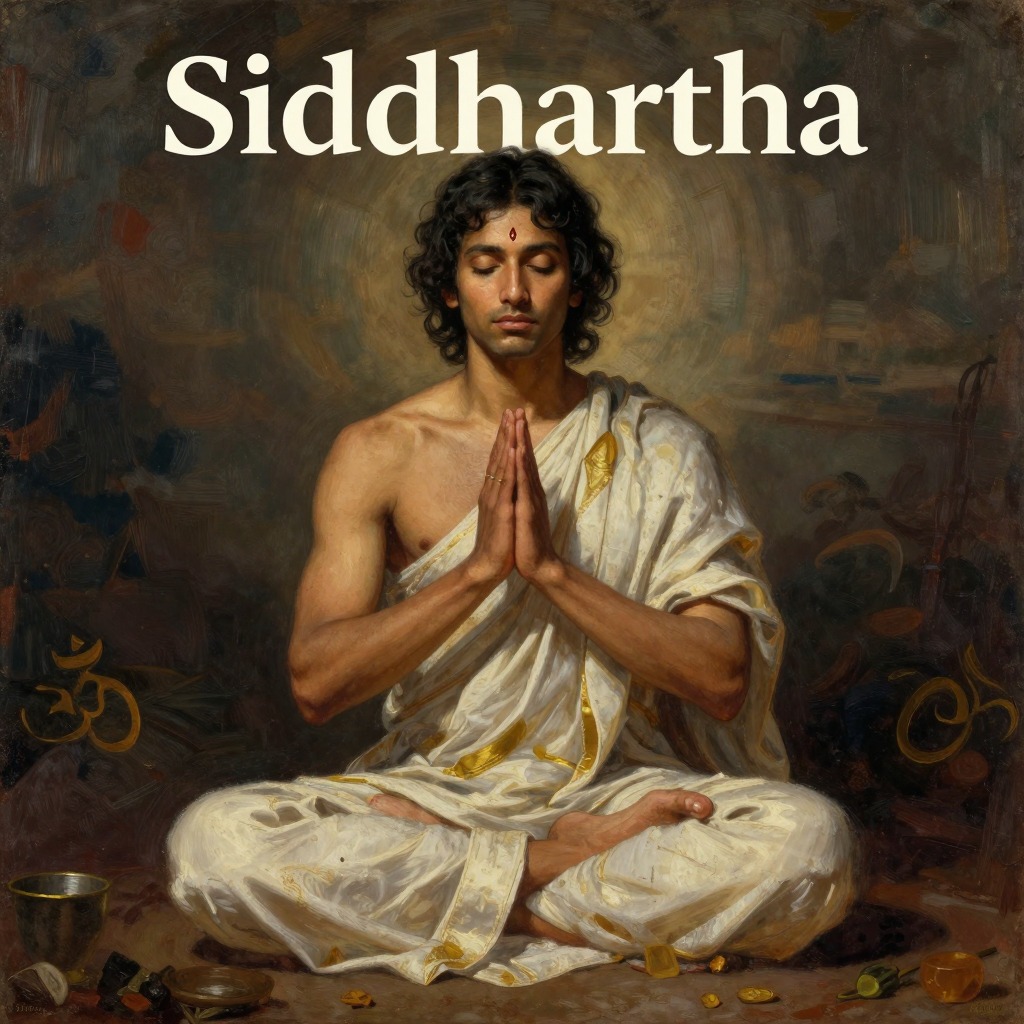
SiddharthaThe Wheel of the Cycle, known in the novel as Sansara, is the fundamental condition of existence that Siddhartha spends his life trying to understand and overcome. It represents the endless, often painful, round of birth, death, and rebirth driven by desire, ignorance, and attachment. The narrative traces Siddhartha's evolving relationship with this cycle, from his youthful attempts to break free through asceticism, through his immersion in worldly pleasures, to his final realization that the cycle itself, when seen from the perspective of eternity, is perfect and holy.
The Cycle as Suffering and Escape
From his earliest days as a Brahman's son, Siddhartha feels the agony of the cycle "forced upon him" . He perceives the world as a place of suffering, where life is "torture" and everything "stank of lies" . His initial goal as a Samana is to become "empty of thirst, empty of wishing, empty of dreams, empty of joy and sorrow" , to escape the self and thereby break the wheel. He learns techniques of self-denial—through pain, fasting, and meditation—to slip out of his self into other forms, becoming an animal, carrion, stone, wood, and water, only to "awake every time to find his old self again" and "feel new thirst" . This is the essence of the cycle: a futile, repetitive motion where every escape leads back to the self and its desires. Siddhartha comes to see that the Samana's path, like the drunkard's numbing drink, is merely a "short escape of the agony of being a self" , not a true liberation.
Immersion in the Worldly Cycle
After his awakening, Siddhartha enters the world of the "childlike people" and fully immerses himself in Sansara. He becomes a merchant, a gambler, and a lover, learning to trade, enjoy power, and indulge in sensual pleasures . He plays the game of dice with increasing rage and passion, loving the fear of losing high stakes because it gives him a feeling of life in his otherwise "saturated, lukewarm, dull life" . He loses his calmness, patience, and kindness, becoming greedy and petty. The wheel of physical manifestations turns quickly, as he later tells Govinda: "Where is Siddhartha the Brahman? Where is Siddhartha the Samana? Where is Siddhartha the rich man?" . This phase of his life is a descent into the very cycle he once sought to escape, and he experiences its full weight of disgust and despair.
Transcendence Through the River and Oneness
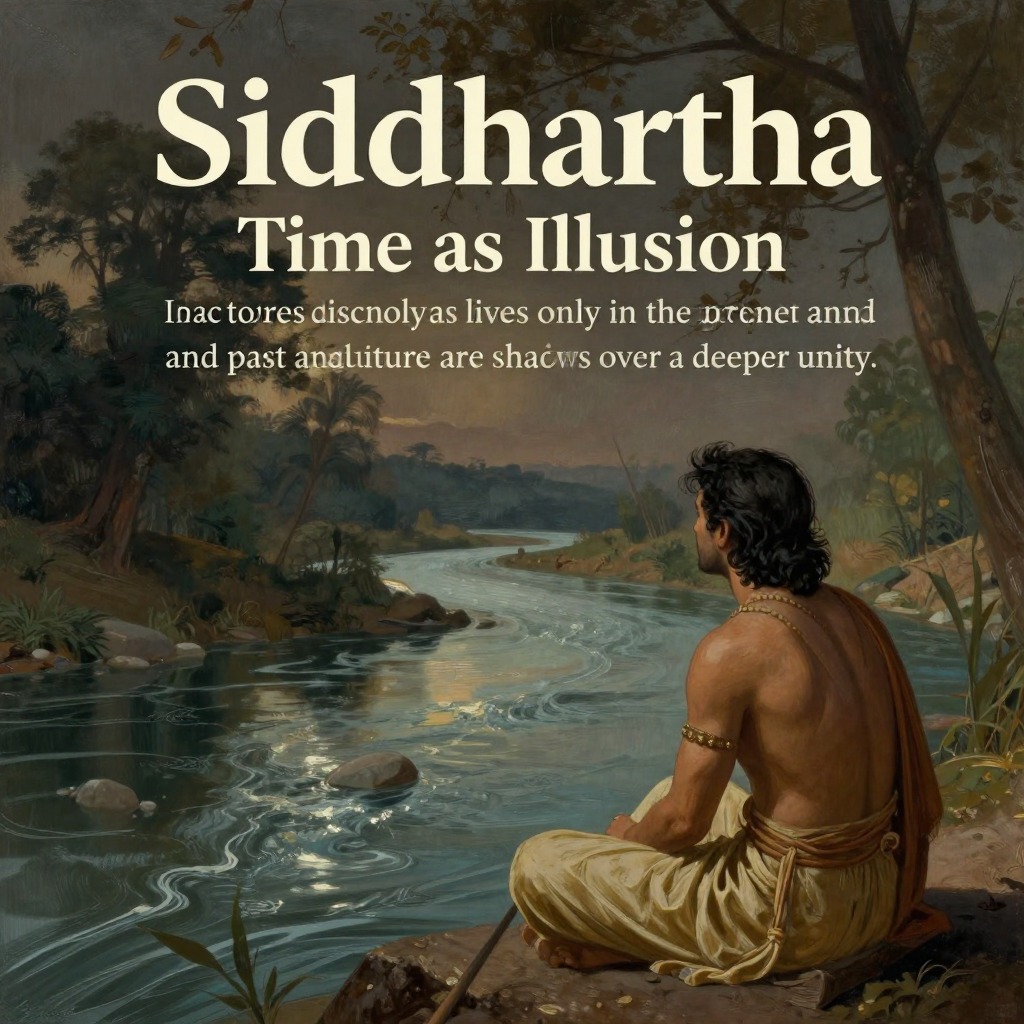
The turning point comes by the river, where Siddhartha, on the verge of suicide, hears the sacred Om and awakens to a new understanding. He realizes that he had to "pass through so much stupidity, through so much vices, through so many errors" to become a child again and start over . The river becomes his teacher, revealing that time is not real and that the cycle is not a linear progression but a simultaneous, perfect whole. He learns that "the river is everywhere at once, at the source and at the mouth" , and that his life, like the river, is a single, present reality where the boy, the man, and the old man are not separate. This insight allows him to see that the sinner is not on a path to becoming a Buddha, but that "within the sinner is now and today already the future Buddha" . The cycle is not something to be escaped; it is the very fabric of existence, and liberation lies in loving it completely.
The Cycle as a Loving, Perfect Whole
In his final wisdom, Siddhartha embraces the Wheel of the Cycle as a manifestation of the oneness of all life. He tells Govinda that the world is "perfect in every moment," that "all sin already carries the divine forgiveness in itself," and that "death is to me like life, sin like holiness, wisdom like foolishness" . He picks up a stone and explains that it is not valuable because it might become something else, but because it is already everything—a stone, an animal, a god, a Buddha—and he loves it for being exactly what it is . The river, with its thousand voices, teaches him to hear all voices—joy and suffering, good and bad—as a single word: Om, the perfection . The cycle, once a source of agony, becomes the object of his deepest love and veneration. He learns from the river that "everything is coming back" , and that this return is not a trap but a song of life. The Wheel of the Cycle, in Siddhartha's final understanding, is not a prison to be broken but a dance to be joined with love and a smiling heart.