Wisdom Cannot Be Passed On
SiddharthaWisdom Cannot Be Passed On is a central expression in Hermann Hesse's Siddhartha, encapsulating the novel's core epistemological insight that true wisdom—as opposed to mere knowledge—cannot be transmitted through teachings or words but must be individually lived and experienced. This principle, articulated by Siddhartha in his final conversation with Govinda, emerges from his lifelong disillusionment with teachers and doctrines and defines his ultimate rejection of all formal paths to enlightenment.
Origin and Articulation
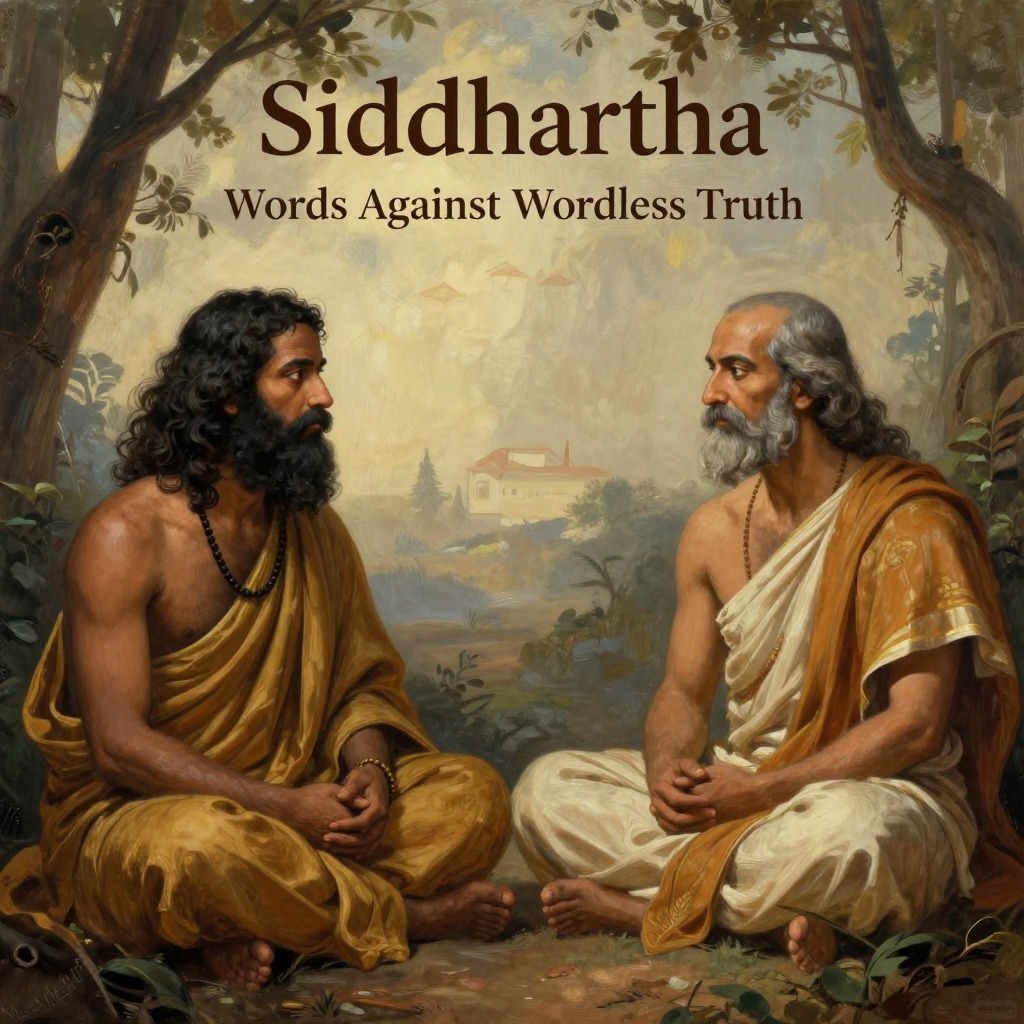
The expression is first fully formulated in Siddhartha's climactic dialogue with his childhood friend Govinda, who has remained a faithful follower of Gotama the Buddha. When Govinda asks whether Siddhartha possesses a teaching or faith that helps him live rightly, Siddhartha replies: "Wisdom cannot be passed on. Wisdom which a wise man tries to pass on to someone always sounds like foolishness." He immediately distinguishes between knowledge, which can be conveyed, and wisdom, which "can be found, it can be lived, it is possible to be carried by it, miracles can be performed with it, but it cannot be expressed in words and taught." This distinction is not a late discovery but the culmination of a suspicion Siddhartha had held since his youth, when he first began to distrust teachers and teachings and turned his back on them.
Roots in Siddhartha's Journey
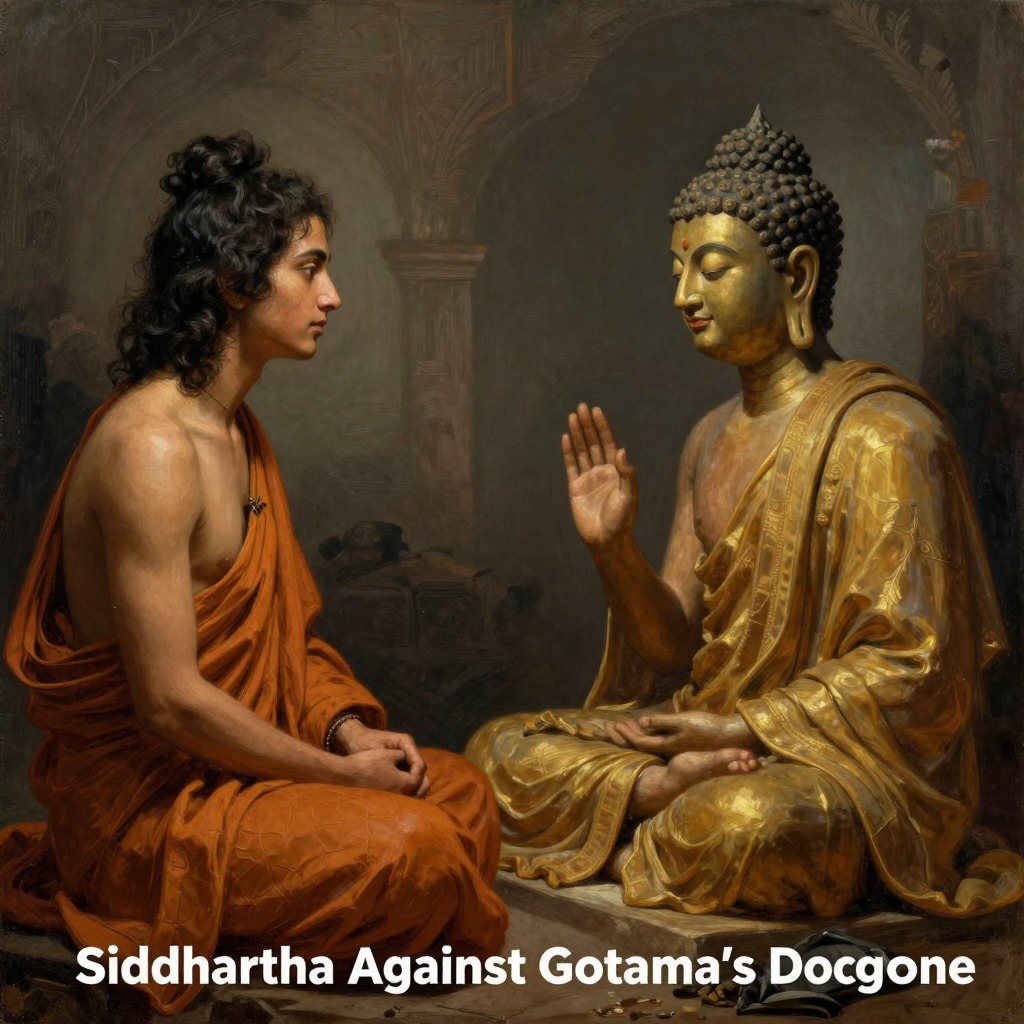
Long before he could articulate it, Siddhartha's life had been a series of experiments that proved the inadequacy of transmitted wisdom. As a Brahman's son, he had absorbed the Vedas, the Upanishads, and the teachings of the wise men, yet he found that "the vessel was not full, the spirit was not content, the soul was not calm, the heart was not satisfied." The sacred ablutions were good, but they were water; they did not wash off sin or heal the spirit's thirst. Among the Samanas, he learned to empty himself of desire through fasting, meditation, and self-castigation, but he realized that these techniques were merely a "short numbing of the senses against the pain and the pointlessness of life," no different from the escape a drunkard finds in rice-wine. Even the Buddha's teachings, which he admired for their perfect clarity and causal chain, contained a gap: they could not convey the mystery of what the exalted one had experienced in the hour of enlightenment. "Nobody will obtain salvation by means of teachings," Siddhartha told Gotama himself, and he left the grove of Jetavana to seek his own path.
The Limits of Language and Thought
Siddhartha's insight that wisdom cannot be passed on is inseparable from his growing distrust of words themselves. In his final teaching to Govinda, he explains that any truth expressed in words becomes one-sided: "Everything is one-sided which can be thought with thoughts and said with words, it's all one-sided, all just one half, all lacks completeness, roundness, oneness." The world itself is never one-sided—a person is never entirely holy or entirely sinful—but language forces division, as when Gotama had to divide the world into Sansara and Nirvana, deception and truth, suffering and salvation. Siddhartha goes further: "I cannot love words. Therefore, teachings are no good for me, they have no hardness, no softness, no colours, no edges, no smell, no taste, they have nothing but words." Even the concept of Nirvana, he suggests, is merely a word; there is no thing that is Nirvana. This radical nominalism underlies his preference for things—a stone, a tree, the river—over doctrines, because things can be loved, while words cannot.
The Paradox of Teaching
The expression creates a profound paradox at the heart of the novel: Siddhartha spends his final conversation explaining why explanation is futile. He acknowledges this irony openly, telling Govinda that his words "will sound like foolishness" and that "what is one man's treasure and wisdom always sounds like foolishness to another person." Yet he continues to speak, offering Govinda his best thought: "The opposite of every truth is just as true." This paradox is not resolved but enacted in the novel's final scene, when Siddhartha, instead of delivering a final teaching, asks Govinda to kiss his forehead. In that moment, Govinda experiences a vision of the oneness of all existence—the faces of fish, children, murderers, gods, and Buddhas flowing together—and recognizes that Siddhartha's smile is precisely the same as the smile of Gotama. The wisdom that could not be spoken has been transmitted through a gesture, a touch, a shared silence.
Thematic Significance
"Wisdom Cannot Be Passed On" is the novel's definitive statement on the nature of enlightenment and the individual's relationship to tradition. It explains why Siddhartha must leave every teacher—his father, the Samanas, Gotama, Kamala, Kamaswami, and even Vasudeva—and why his final state of peace is achieved not through adherence to any doctrine but through a direct, loving engagement with the world as it is. The expression also resolves the tension between Siddhartha's earlier asceticism and his later worldliness: he had to pass through lust, greed, despair, and the thought of suicide in order to learn "how to give up all resistance, in order to learn how to love the world, in order to stop comparing it to some world I wished, I imagined, some kind of perfection I had made up, but to leave it as it is and to love it and to enjoy being a part of it." This knowledge, born of lived experience rather than transmitted teaching, is the wisdom that cannot be passed on.