The Smile of the Perfected Ones
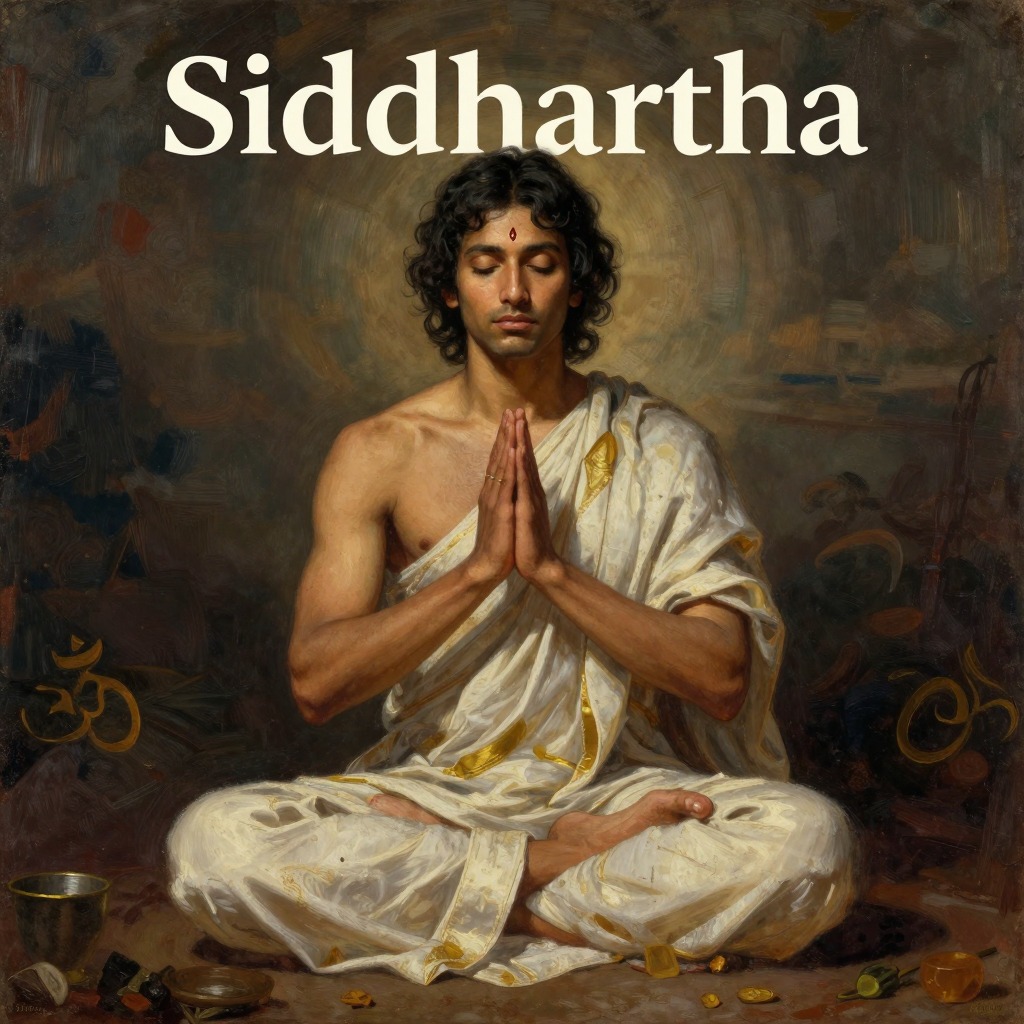
SiddharthaThe Smile of the Perfected Ones is the central, recurring symbol of achieved enlightenment in Hermann Hesse's Siddhartha, a silent, radiant expression that signifies the complete transcendence of suffering, the unity of all existence, and the ineffable wisdom that cannot be conveyed by teachings. It first appears on the face of Gotama the Buddha, marking him as a holy man, and is ultimately mirrored by Siddhartha himself after his own long journey through asceticism, worldly life, and despair, becoming the final, wordless teaching he imparts to his lifelong friend Govinda.
The Buddha's Smile: The Mark of the Perfected One
The smile first manifests as the defining characteristic of Gotama, the exalted Buddha. When Siddhartha and Govinda first see him walking through the grove of Jetavana, they recognize him not by any outward distinction from the hundreds of other monks in yellow robes, but by the perfection of his calm. His face is described as neither happy nor sad, seeming to smile quietly and inwardly, with a hidden smile, quiet, calm, somewhat resembling a healthy child. Every aspect of his being—his walk, his quietly lowered glance, his quietly dangling hand, and even every finger of that hand—expresses peace, perfection, and an untouchable calm. This smile is not an expression of transient emotion but the visible radiance of a soul that has reached the innermost part of itself, a state Siddhartha immediately recognizes as holy. Later, during their private conversation, Gotama's face remains inscrutable, smiling with perfect equanimity, and his glance and half of a smile remain forever etched in Siddhartha's memory as the embodiment of a freedom and venerability he himself wishes to attain.
The Smile's Journey: From Aspiration to Attainment
Siddhartha's entire quest can be understood as a pursuit of this smile. After leaving Gotama, he realizes that no teachings can convey the mystery of what the Buddha experienced in his hour of enlightenment; the smile is the outward sign of that inner, unteachable reality. Siddhartha's subsequent descent into the world of the childlike people—his life as a merchant with Kamaswami, his learning of love from Kamala, his indulgence in gambling and sensual pleasures—is a necessary detour that eventually leads him to the brink of suicide. It is only after he has passed through the depths of disgust and despair, after he has heard the holy Om by the river and awakened as a new man, that the smile begins to grow within him. Living with the ferryman Vasudeva, he learns to listen to the river, and time after time, his smile becomes more similar to the ferryman's, becoming almost just as bright, just as thoroughly glowing with bliss, just as shining out of thousand small wrinkles, just as alike to a child's, just as alike to an old man's. This transformation culminates in the hour when Siddhartha finally hears the thousand voices of the river as a single word, Om, and his own wound blossoms, his suffering shines, and his self flows into the oneness. At that moment, the smile of the perfected ones shines on his own face.
The Final Teaching: The Smile as Wordless Wisdom
The smile reaches its full narrative significance in Siddhartha's final meeting with Govinda. Govinda, who has spent his entire life as a faithful follower of Gotama's teachings, confesses that he has not found peace and asks Siddhartha for a word, something he can grasp and understand. Siddhartha, however, offers no new doctrine. Instead, he asks Govinda to bend down and kiss his forehead. As Govinda does so, a miraculous vision overtakes him: he sees a flowing river of faces—a fish, a newborn child, a murderer, a criminal being executed, lovers, corpses, animals, gods—all transforming into one another, all covered by a thin, transparent mask that is smiling. This mask, this smile of oneness above the flowing forms, this smile of simultaneousness above the thousand births and deaths, is precisely the same as the quiet, delicate, impenetrable, perhaps benevolent, perhaps mocking, wise, thousand-fold smile of Gotama the Buddha. In that moment, Govinda knows that the perfected ones smile like this. The smile is the ultimate proof of Siddhartha's attainment, a direct, non-verbal transmission of wisdom that bypasses the thicket of opinions and the dispute about words. It is the visible manifestation of a knowledge that cannot be passed on, only lived and recognized. Deeply, Govinda bows, tears running down his old face, feeling the most intimate love and humblest veneration before the motionless, smiling figure of his friend, whose smile reminds him of everything he has ever loved in his life, what has ever been valuable and holy to him.