Writing Is Good, Thinking Is Better
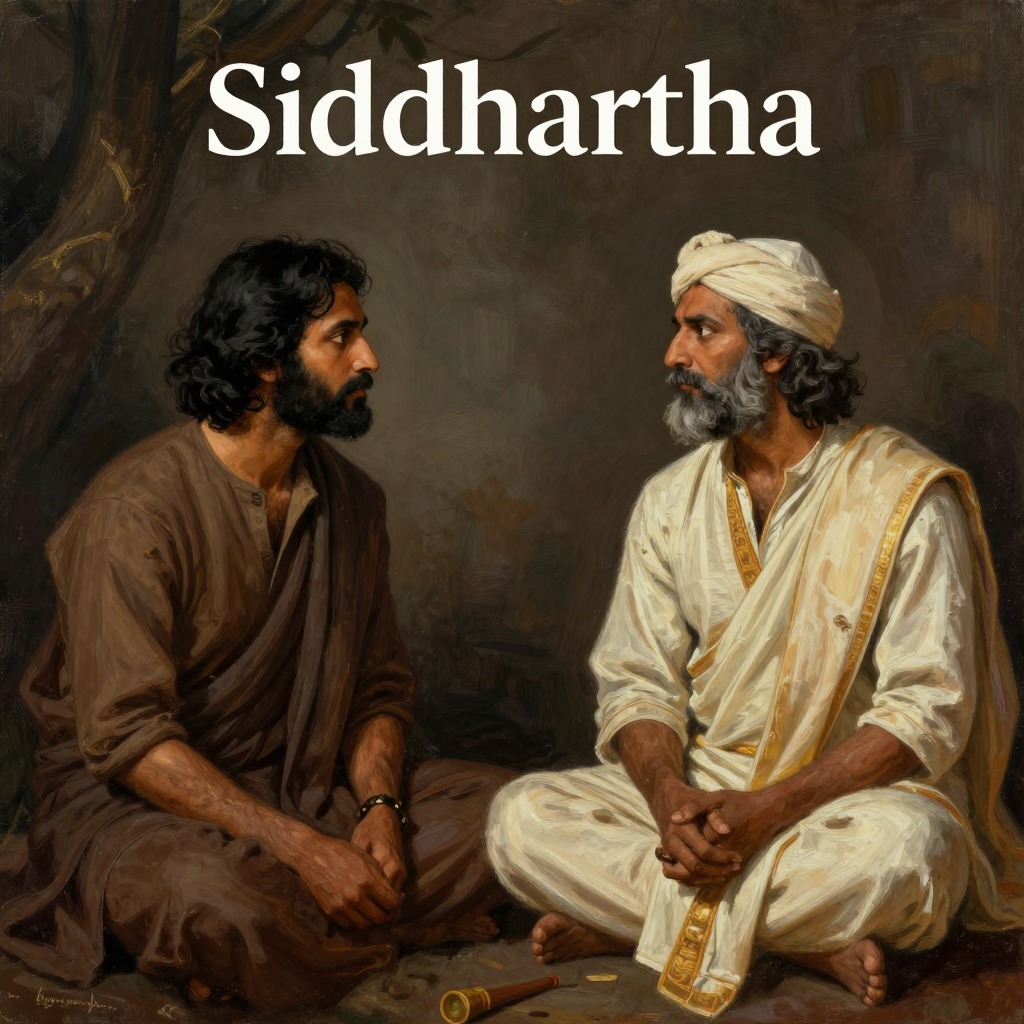
SiddharthaWriting Is Good, Thinking Is Better is a maxim composed by Siddhartha during his first encounter with the merchant Kamaswami, encapsulating his early conviction that intellectual and spiritual faculties surpass mere technical skill. The phrase marks a pivotal moment in Siddhartha's entry into the worldly life of commerce, and its evolution across the novel reflects his deepening understanding that wisdom cannot be captured in words or taught, but must be lived and experienced through the whole being.
Origin and First Utterance
When Siddhartha first presented himself to Kamaswami, the merchant tested him by asking what he could give in return for a living. Siddhartha replied that he could think, wait, and fast. Kamaswami, skeptical, then handed him a scroll containing a sales-contract and asked if he could read it. Siddhartha read it aloud, and when Kamaswami asked him to write something on a piece of paper, Siddhartha wrote: "Writing is good, thinking is better. Being smart is good, being patient is better." The merchant praised his writing and invited him to live in his house. The maxim thus served as Siddhartha's credential, a demonstration that his value lay not in commercial knowledge but in a deeper, more patient intelligence.
The Limits of Thinking and Writing
Siddhartha's own journey soon revealed the inadequacy of the very hierarchy the maxim asserts. As a young Brahman, he had already mastered the sacred texts and the art of meditation, yet he found no joy in his heart. He could speak the Om silently, feel the Atman in the depths of his being, and yet he remained restless, his soul unsatisfied. The ablutions, the sacrifices, the teachings of the wise Brahmans—all were good, but they did not wash off sin or heal the spirit's thirst. He realized that even the most profound knowledge, if merely known and not lived, was like a vessel that could never be filled. Later, after leaving Gotama the Buddha, he understood that he had been trying to capture his self in the net of thought, and that the world of thought was also still on this side, no closer to the ultimate truth than the world of the senses.
The River's Teaching: Listening Beyond Words
Siddhartha's most profound learning came not from thinking or writing, but from listening to the river. When he confessed his life story to the ferryman Vasudeva, he experienced a new kind of listening: Vasudeva let his words enter his mind, quiet, open, waiting, without impatience, praise, or rebuke. Siddhartha felt what a happy fortune it was to confess to such a listener, to bury in his heart his own life, his own search, his own suffering. Later, when he tried to convey his wisdom to his old friend Govinda, he said that wisdom cannot be passed on; knowledge can be conveyed, but not wisdom. It can be found, it can be lived, it is possible to be carried by it, but it cannot be expressed in words and taught. He added that the opposite of every truth is just as true, and that words are not good for the secret meaning—everything always becomes a bit different, a bit silly, as soon as it is put into words.
The Smile Beyond Expression
The ultimate expression of Siddhartha's realization is not a written or spoken teaching, but a smile. When Govinda, after a lifetime of seeking, finally bent down and kissed Siddhartha's forehead, he saw a vision of all forms and faces flowing together, and above them all, a smile—the same quiet, delicate, impenetrable, thousand-fold smile of Gotama the Buddha. This smile, which Siddhartha had learned from the river and from Vasudeva, was the smile of oneness, of simultaneousness above the thousand births and deaths. It was a smile that could not be written or thought, only lived and radiated. The maxim "Writing Is Good, Thinking Is Better" thus stands as an early, partial truth that Siddhartha's entire life would both fulfill and transcend, leading him to a wisdom that lies beyond all words and all thoughts.