The Opposite of Every Truth Is Just as True
SiddharthaThe Opposite of Every Truth Is Just as True is the culminating philosophical principle that Siddhartha, after a lifetime of searching, articulates to his childhood friend Govinda during their final meeting by the river. It represents the core of his mature wisdom: a radical rejection of one-sidedness in all its forms—doctrinal, moral, temporal—and an affirmation of the world's indivisible wholeness. This insight, which Siddhartha calls his "best thought," is not a doctrine to be taught but a lived understanding that emerges from his long journey through asceticism, sensuality, despair, and finally, silent communion with the river.
Origin and Context of the Expression
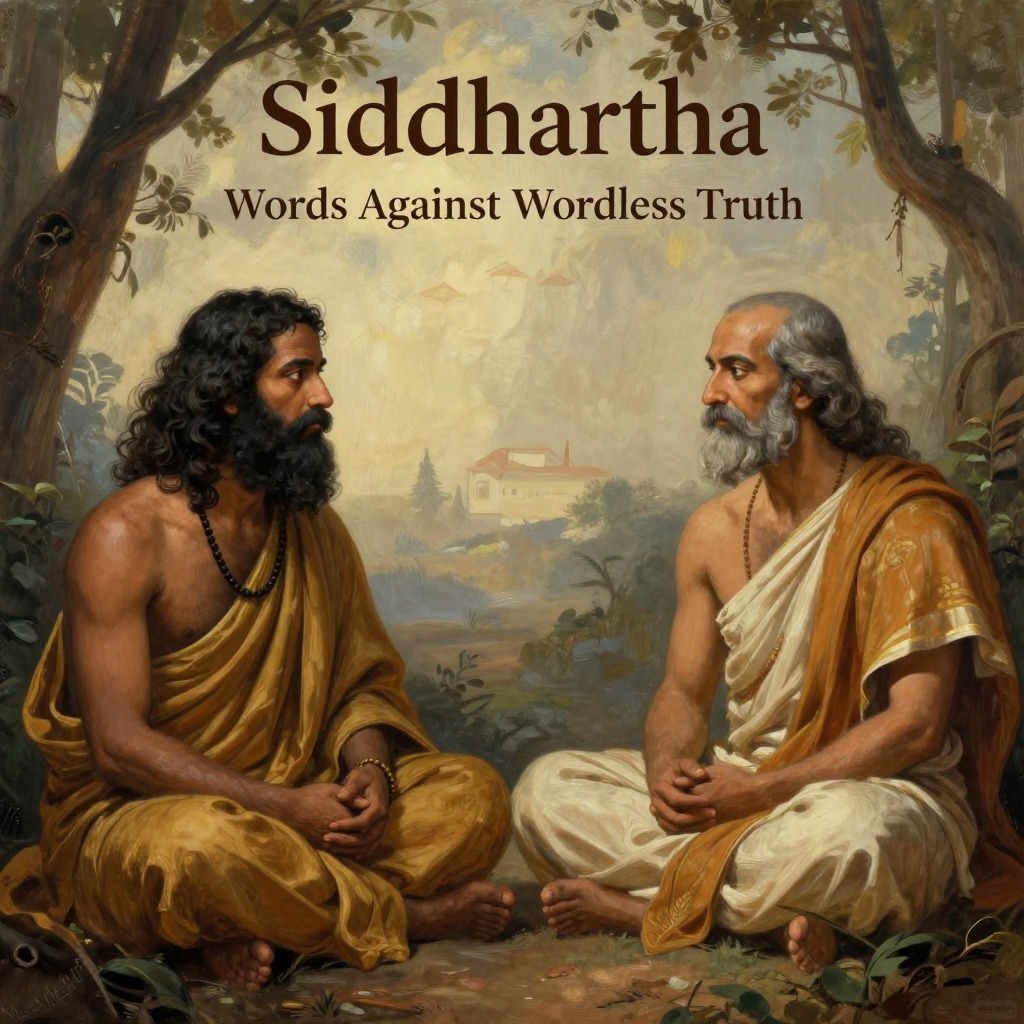
Siddhartha first hints at the inadequacy of one-sided truths early in his life. As a young Brahman, he already suspects that the holy books and his teachers, for all their knowledge, have not grasped "the one and only thing, the most important thing, the solely important thing" . He tells Govinda during their Samana years that there is "just one knowledge"—the Atman within every creature—and that this knowledge has "no worser enemy than the desire to know it, than learning" . This early distrust of verbal teaching foreshadows the mature formulation. After leaving Gotama the Buddha, Siddhartha realizes that he had been trying to capture his self "in the net of thought" , and that both the senses and the thoughts are "pretty things" whose ultimate meaning lies hidden behind both, requiring that both be listened to and played with, neither scorned nor overestimated . The expression itself is spoken directly to Govinda near the end of the novel. When Govinda asks whether Siddhartha has found a teaching or knowledge that helps him live, Siddhartha replies that wisdom cannot be passed on—"Knowledge can be conveyed, but not wisdom"—and then offers his best thought: "The opposite of every truth is just as true" . He explains that any truth can only be expressed in words when it is one-sided: "Everything is one-sided which can be thought with thoughts and said with words, it's all one-sided, all just one half, all lacks completeness, roundness, oneness" .
The Expression's Meaning: The One-Sidedness of All Teachings
Siddhartha uses Gotama's own teachings as his primary example. The Buddha, in order to teach, had to divide the world into Sansara and Nirvana, deception and truth, suffering and salvation . This division is necessary for instruction, but it is a distortion of reality. The world itself, Siddhartha insists, "is never one-sided" . A person or an act is never entirely Sansara or entirely Nirvana, never entirely holy or entirely sinful. This one-sidedness, he argues, stems from the illusion that time is real. "Time is not real, Govinda, I have experienced this often and often again," he says . If time is not real, then the gap between the world and eternity, between suffering and blissfulness, between evil and good, is also a deception. The expression thus dissolves the very categories that structured Siddhartha's earlier quest: the opposition between the ascetic and the sensual, the sacred and the profane, the seeker and the found. It is not a relativism that denies truth, but a recognition that truth, when lived, is a unity that precedes and exceeds all verbal formulations.
The Expression in Siddhartha's Life: A Path of One-Sided Extremes
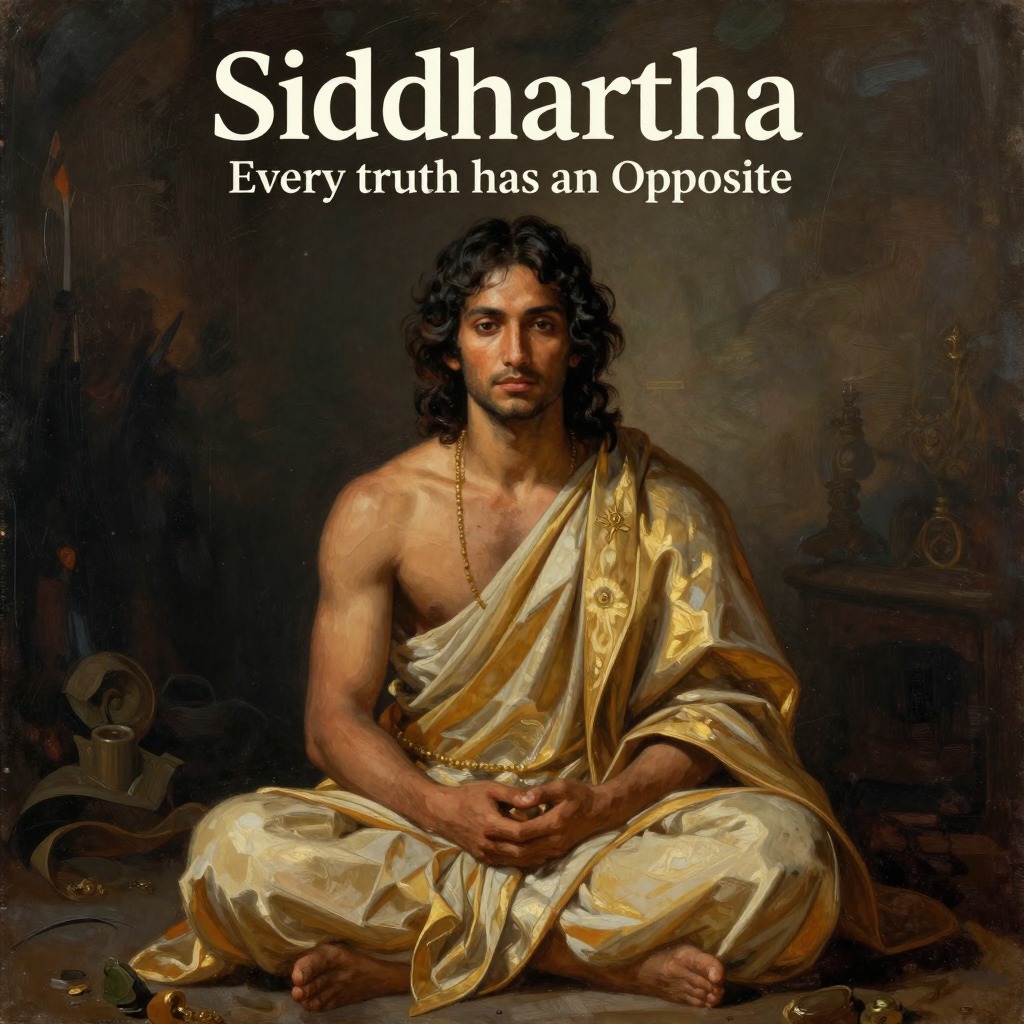
Siddhartha's own life is a series of one-sided experiments, each of which he must exhaust before he can transcend it. As a young Brahman, he is consumed by the search for Atman, scorning the visible world as a "fleeting, deceptive veil" . As a Samana, he pursues the single goal of becoming "empty, empty of thirst, empty of wishing, empty of dreams, empty of joy and sorrow" , killing his senses and memory, slipping out of his self into thousands of other forms—animal, carrion, stone, wood, water—only to awake each time to find his old self again . He learns that this path of self-denial, though it leads away from the self, always leads back to it . Later, he plunges into the opposite extreme: the world of commerce, lust, and gambling. He becomes a rich merchant, a lover of Kamala, a feared dice-gambler who loses and wins thousands with a rage that demonstrates his "disdain for wealth" . He sinks into greed, sloth, and a "pointless cycle" of fleeing from one numbing pleasure to another . Only after reaching the depths of disgust and contemplating suicide does he hear the holy Om and awaken to a new understanding. Reflecting on this trajectory, Siddhartha realizes that he had to pass through "so much stupidity, through so much vices, through so many errors, through so much disgust and disappointments and woe, just to become a child again and to be able to start over" . He had to become a fool to find Atman in himself again; he had to sin to be able to live again . Each one-sided phase—the ascetic, the sensualist—was necessary, not as a mistake to be corrected, but as a stage to be fully lived and then integrated into a larger whole.
The Expression's Culmination: The Oneness of All Voices
The principle that the opposite of every truth is just as true finds its ultimate expression not in words but in Siddhartha's final experience by the river. After his son's departure, Siddhartha listens to the river with complete attention. He hears its thousand voices—"voices of joy and of suffering, good and bad voices, laughing and sad ones" —and realizes that he can no longer tell them apart: "the lamentation of yearning and the laughter of the knowledgeable one, the scream of rage and the moaning of the dying ones, everything was one, everything was intertwined and connected, entangled a thousand times" . When he hears them all together, without tying his soul to any particular voice, the great song consists of a single word: Om, the perfection . This is the lived realization of the expression: all opposites—suffering and joy, sin and holiness, life and death—are simultaneous and belong to the same whole. Siddhartha's face, in this final state, bears the same smile as Gotama's: "the smile of oneness above the flowing forms, the smile of simultaneousness above the thousand births and deaths" . The expression is thus not a philosophical proposition to be debated but a description of a state of consciousness in which all contradictions are held together in loving awareness.
The Expression's Significance: Wisdom Beyond Words
The Opposite of Every Truth Is Just as True is the key to Siddhartha's final teaching and to the novel's deepest meaning. It explains why Siddhartha cannot offer Govinda a doctrine: "wisdom cannot be passed on" . It explains why he loves a stone not for what it might become but for what it already is—"a stone, it is also animal, it is also god, it is also Buddha" . It explains why he values love above all else: "to be able to look upon it and me and all beings with love and admiration and great respect" . The expression is the novel's answer to the problem of one-sidedness that has haunted Siddhartha from the beginning—the problem of teachings that divide the world into opposites and then ask the seeker to choose one side. Siddhartha's final wisdom is not a choice but an embrace: the ability to say yes to everything, to see that "all sin already carries the divine forgiveness in itself, all small children already have the old person in themselves, all infants already have death, all dying people the eternal life" . This is the wisdom that Govinda, still searching, cannot fully grasp, but that he glimpses in Siddhartha's smile—a smile that is "precisely the same" as the smile of the perfected Buddha .