The River
SiddharthaThe River is the most significant non-human entity in Hermann Hesse's Siddhartha, functioning not merely as a setting but as an active, sentient teacher and the primary symbol of the novel's philosophical resolution. It is the site of Siddhartha's most profound transformations, from his near-suicide to his final enlightenment, and it embodies the core truths he spends a lifetime seeking: the oneness of all life, the unreality of time, and the wisdom that cannot be conveyed through words but only through direct, loving attention.
The River as Teacher and Listener
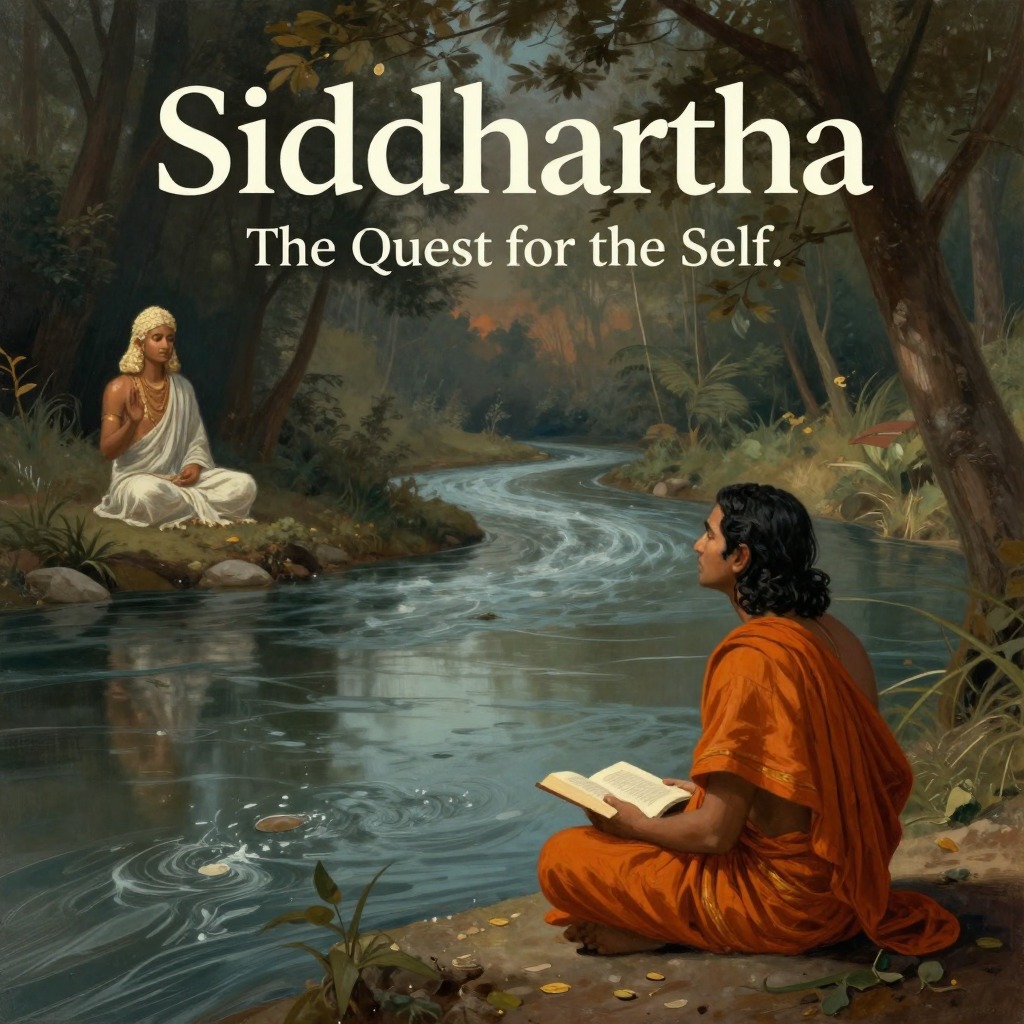
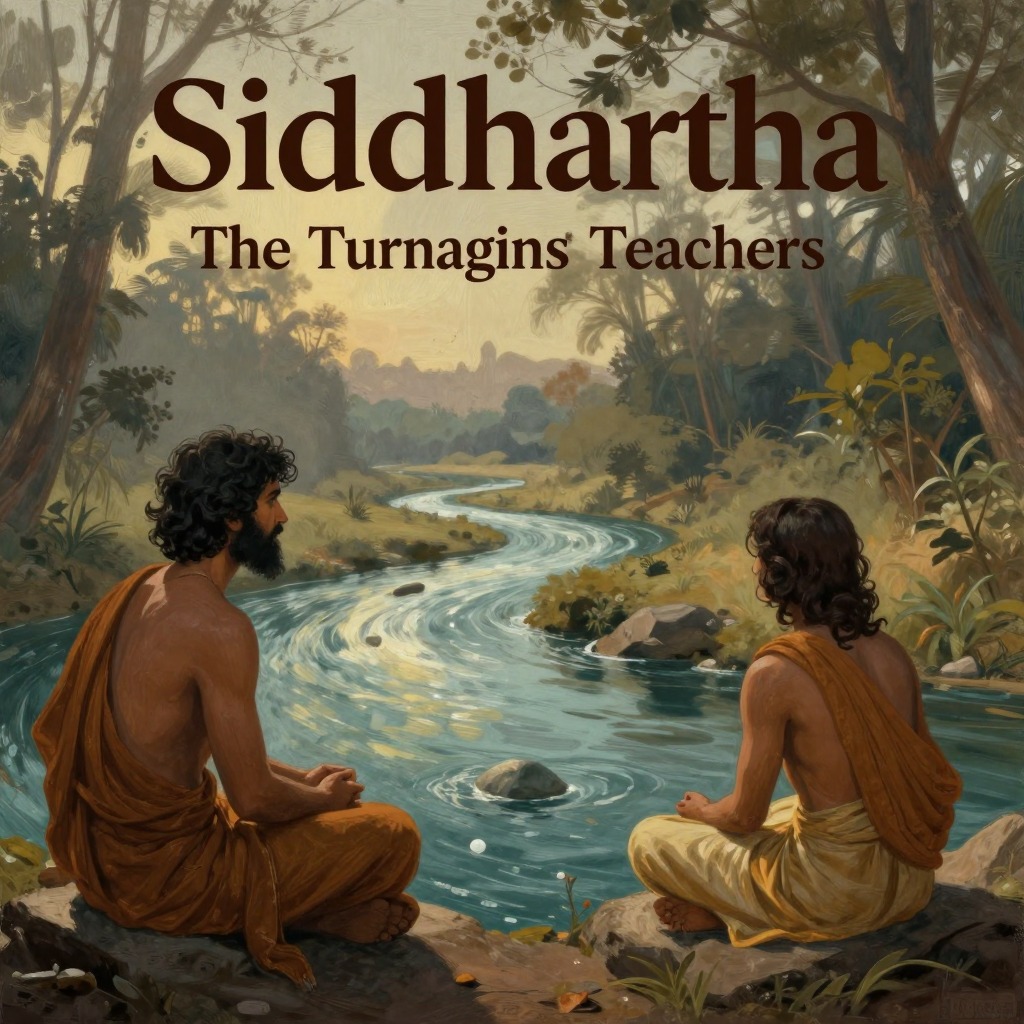
The River first appears as a physical boundary that Siddhartha crosses on his journey from asceticism to worldly life, ferried by a man named Vasudeva. Even then, the ferryman tells him, "Much can be learned from a river" . Years later, after Siddhartha has abandoned his life as a wealthy merchant and gambler, he returns to the same river intending to drown himself. At the moment of despair, the sound of the sacred syllable "Om" rises from his consciousness, and he falls into a deep, restorative sleep . Upon waking, he decides to stay by the river, recognizing it as the same water he had crossed before, and he seeks out Vasudeva to become his apprentice . Vasudeva reveals that the river has taught him to listen, and that Siddhartha will learn from it as well . The River becomes Siddhartha's primary teacher, instructing him in the art of listening "with a quiet heart, with a waiting, opened soul, without passion, without a wish, without judgement, without an opinion" .
The River's Lessons: Timelessness and Oneness
From the River, Siddhartha learns the secret that "there is no time" . Vasudeva confirms this insight, explaining that the river is "everywhere at once, at the source and at the mouth, at the waterfall, at the ferry, at the rapids, in the sea, in the mountains, everywhere at once, and that there is only the present time for it, not the shadow of the past, not the shadow of the future" . This realization allows Siddhartha to see his own life as a river, where the boy, the man, and the old man are not separate entities but one continuous present . The River also teaches that it has "many voices, very many voices"—the voice of a king, a warrior, a bull, a bird of the night, a woman giving birth, a sighing man, and a thousand others . When one succeeds in hearing all these voices at once, they form a single word: "Om," the sound of perfection (E00464-E00465).
The River's Role in Siddhartha's Transformation
The River is the catalyst for Siddhartha's final, decisive transformation. After his son runs away, Siddhartha is consumed by a painful, possessive love. He follows the boy to the city but stops at the entrance of Kamala's former pleasure-garden, where he realizes the futility of his pursuit (E00538-E00539). Later, driven by yearning, he attempts to cross the river to search for his son, but the river laughs at him, and he sees his own father's face reflected in the water, understanding the cyclical nature of suffering (E00551-E00552). In his final, climactic lesson, Siddhartha listens to the river with complete openness. He hears all its voices—the lamentation of yearning, the laughter of the knowledgeable one, the scream of rage, the moaning of the dying—and perceives them as one, intertwined and connected. The song of a thousand voices becomes the single word "Om," and in that moment, his wound blossoms, his suffering shines, and his self flows into the oneness (E00566-E00570).
The River's Significance as a Symbol
The River is the novel's ultimate symbol of the philosophical principle that wisdom cannot be passed on but must be lived. It is a "thing" that can be loved, unlike words or teachings, which Siddhartha finds inadequate . The River's constant flow, its simultaneous presence at source and mouth, and its thousand voices all point to the oneness of all existence, the reconciliation of opposites, and the perfection of the world in every moment. It is the living embodiment of the truth that "everything is coming back" , and it is the final, silent teacher that leads Siddhartha to the smile of the perfected ones.