The Thousand Voices of the River
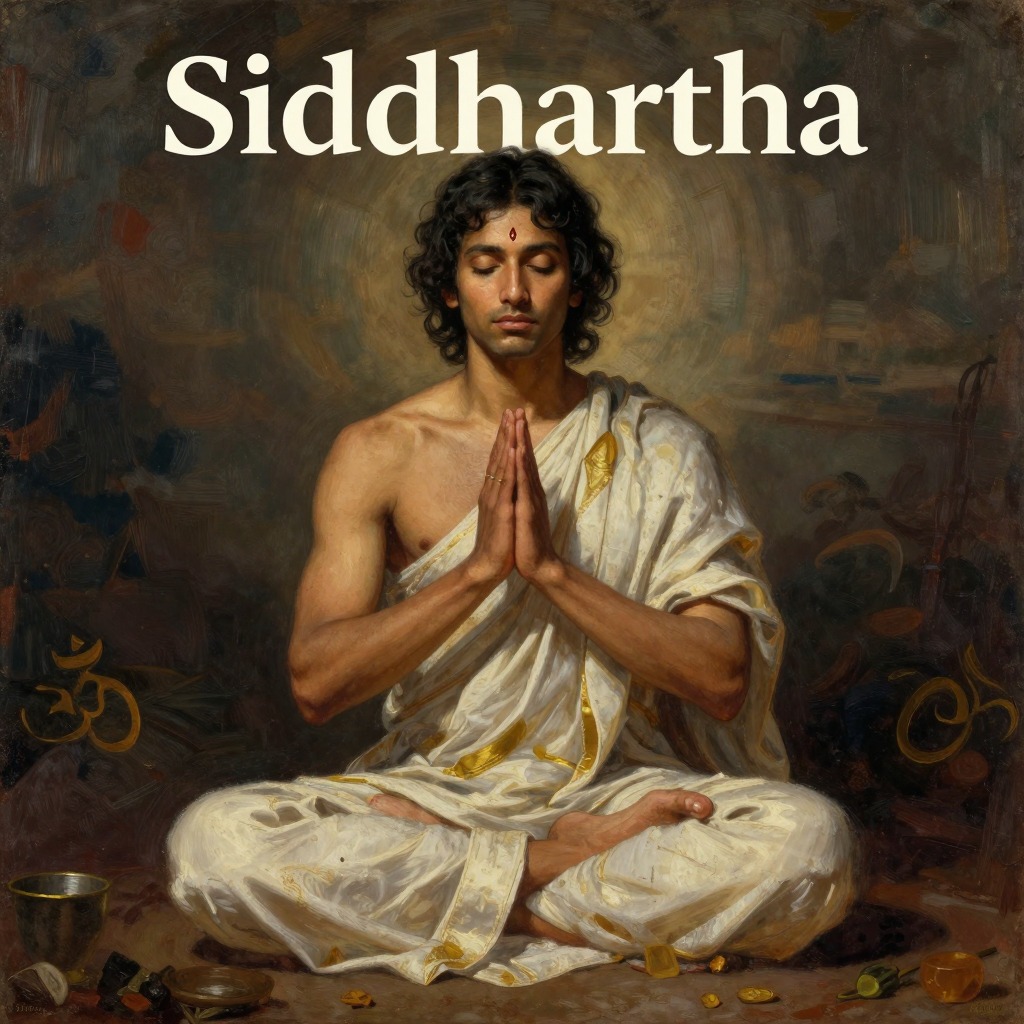
SiddharthaThe Thousand Voices of the River is the culminating aural symbol in Hermann Hesse's Siddhartha, the point at which the protagonist's lifelong quest for unity finally yields a direct, non-verbal experience of the oneness of all existence. It is not a doctrine or a vision but a mode of listening so complete that the river's countless, contradictory sounds—the lament of yearning and the laughter of the wise, the scream of rage and the moan of the dying—merge into a single word: Om, the perfection. This expression marks the moment Siddhartha stops being a seeker and becomes one who has found, a transformation that is also the novel's philosophical climax.
The River as Teacher
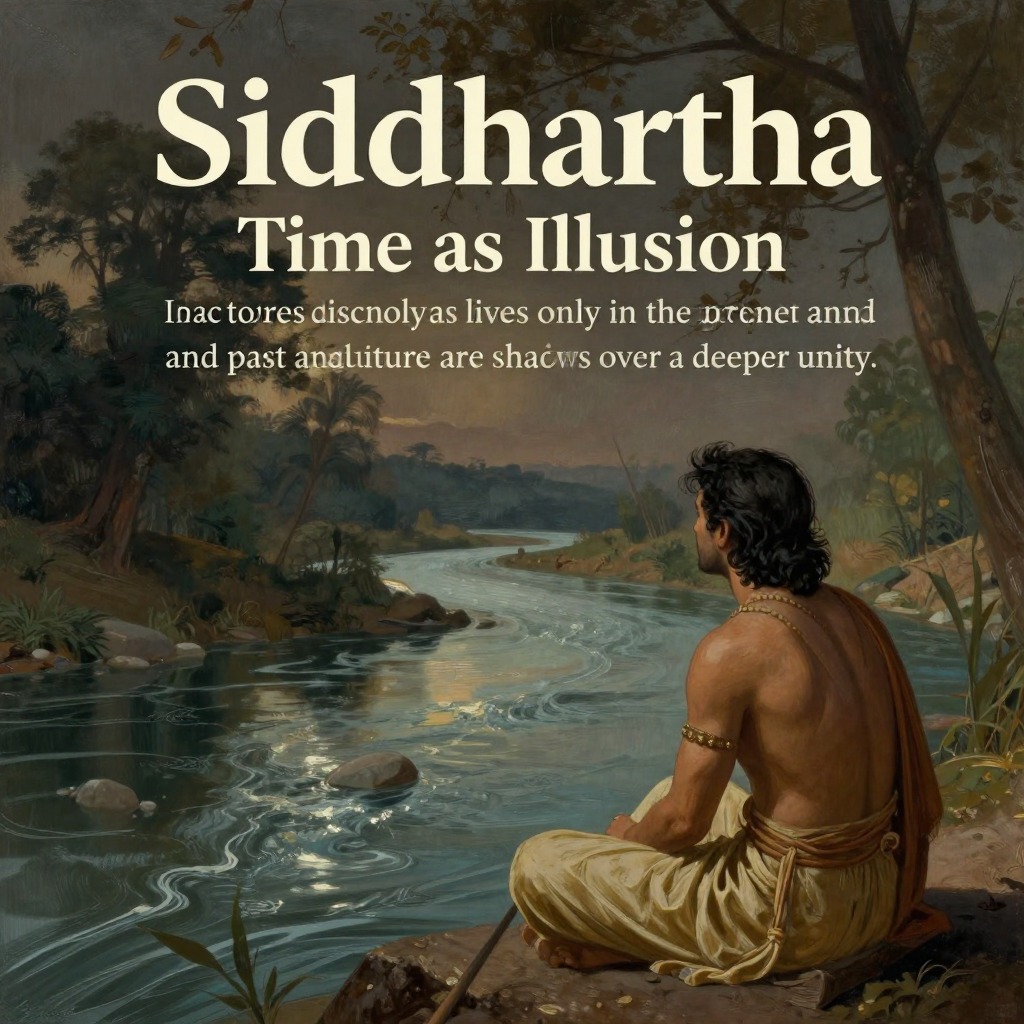
Long before Siddhartha can hear its thousand voices, the river is established as a patient, inexhaustible teacher. The ferryman Vasudeva, who has lived by the water for decades, tells Siddhartha early on that he loves the river more than anything and has always learned from it . When Siddhartha returns to the river after his years of worldly dissipation, he decides to stay near it, feeling that he wants to learn from it and that whoever understands the river and its secrets will understand many other things, perhaps all secrets . Vasudeva later confirms that the river has taught him to listen and that Siddhartha will learn from it as well; he adds that the river knows everything and that everything can be learned from it, pointing out that Siddhartha has already learned from the water the value of striving downward, sinking, and seeking depth . The river is thus not a passive backdrop but an active, articulate presence that shapes the consciousness of those who attend to it.
The Many Voices of the River
The river's voice is never singular. During the rainy season, when its flow increases and it makes a powerful noise, Siddhartha asks Vasudeva whether the river has many voices—the voice of a king, a warrior, a bull, a bird of the night, a woman giving birth, a sighing man, and a thousand others . Vasudeva confirms that all voices of the creatures are in its voice. When Siddhartha then asks what word the river speaks when one succeeds in hearing all ten thousand voices at once, Vasudeva smiles and speaks the holy Om into his ear—the very thing Siddhartha had also been hearing . The river's multiplicity is not chaos but a polyphonic unity that, when perceived as a whole, resolves into the single syllable that is the beginning and end of all Brahman prayers.
The Climactic Hearing
The full revelation of the thousand voices comes only after Siddhartha has suffered the wound of his son's departure and has learned to listen without attachment. When the wound burns violently and he is tempted to go to the city to find the boy, the river laughs at him, and he sees his own face reflected in the water, which reminds him of his father's face and the cycle of suffering he has repeated . Later, sitting with Vasudeva by the bank, Siddhartha listens again. He sees images in the moving water—his father, himself, his son, Kamala, Govinda—all merging into the river, all heading for goals, longing, desiring, suffering. The river's voice sounds full of yearning, burning woe, and unsatisfiable desire. But then other voices join: voices of joy and suffering, good and bad, laughing and sad—a hundred voices, a thousand voices . Siddhartha becomes nothing but a listener, completely empty, and he feels that he has now finished learning to listen. He can no longer tell the voices apart; they all belong together, intertwined and connected a thousand times. All of it together—all voices, all goals, all yearning, all suffering, all pleasure, all good and evil—is the world, the flow of events, the music of life. And when he listens without tying his soul to any particular voice, when he hears them all and perceives the whole, the oneness, the great song of the thousand voices consists of a single word: Om, the perfection .
The Smile of Oneness
This experience of the thousand voices is not merely auditory but transforms Siddhartha's entire being. His wound blossoms, his suffering shines, his self flows into the oneness . The smile that appears on his face is the same smile that Vasudeva has worn for years—bright, floating radiantly over all the wrinkles of his old face, just as the Om floats over all the voices of the river . This smile is later recognized by Govinda as the smile of the perfected ones, the same quiet, delicate, impenetrable, thousand-fold smile of Gotama the Buddha . The thousand voices of the river thus become the audible manifestation of the oneness that Siddhartha has sought his entire life, and the ability to hear them is the final achievement of his quest—a wisdom that cannot be taught or passed on in words, only lived and heard in the moment of perfect, selfless attention.