Frodo Baggins
Frodo Baggins is the central figure of the War of the Ring, the hobbit who carries the One Ring from the comfort of the Shire to the heart of Mordor, and whose final, catastrophic choice at the Sammath Naur — to claim the Ring for himself rather than destroy it — becomes the pivot on which the entire fate of Middle-earth turns. He is defined less by martial prowess than by endurance, compassion, and a capacity for bearing an intolerable burden, and his story is one of progressive wounding and diminishment even as his quest succeeds. His journey is the quest that ends not in triumphant victory but in a broken act of will that is nonetheless redeemed by an unforeseen intervention, and his ultimate reward is not glory but a passage into the West, leaving behind the world he saved.
Identity and Background
Frodo Baggins was the eldest and favourite of Bilbo Baggins's younger cousins, and when Bilbo was ninety-nine he adopted Frodo as his heir and brought him to live at Bag End, finally dashing the hopes of the Sackville-Bagginses. The two happened to share the same birthday, September 22nd, and Bilbo's invitation — "You had better come and live here, Frodo my lad; and then we can celebrate our birthday-parties comfortably together" — sealed the arrangement. At that time Frodo was still in his tweens, the irresponsible twenties between childhood and coming of age at thirty-three, and twelve more years passed in which the Bagginses gave very lively combined birthday-parties at Bag End. When Bilbo was going to be eleventy-one, 111, a curious number and a very respectable age for a hobbit, Frodo was going to be thirty-three, the important date of his coming of age. Bilbo himself had been the wonder of the Shire for sixty years, ever since his remarkable disappearance and unexpected return, and his riches had become a local legend, with it popularly believed that the Hill at Bag End was full of tunnels stuffed with treasure. Bilbo's prolonged vigour was equally marvelled at — at ninety he was much the same as at fifty, and at ninety-nine they called him well-preserved, though unchanged would have been nearer the mark — and some shook their heads, saying it was not natural and that trouble would come of it. Bilbo remained on visiting terms with his relatives except the Sackville-Bagginses, and had many devoted admirers among the hobbits of poor and unimportant families, but no close friends until his younger cousins grew up.
Inheritance and the Burden of the Ring
When Bilbo slipped away quietly at the end of his birthday party, he left a packet for Frodo containing his will and all his other documents, making Frodo the master of Bag End, and also, as Gandalf suspected, a golden ring. Frodo exclaimed, "The ring! Has he left me that? I wonder why. Still, it may be useful," to which Gandalf replied, "It may, and it may not. I should not make use of it, if I were you. But keep it secret, and keep it safe!" This moment marks the transfer of the Ring from one generation to the next, and with it the transfer of a burden that Frodo does not yet understand. The wizard's warning — to keep it secret and safe, and not to use it — becomes the guiding rule of Frodo's life from that point forward, and the Ring's true nature as the One Ring of Sauron is gradually revealed to him. The inheritance is thus not merely an inheritance of property but of a terrible responsibility, and Frodo's quiet acceptance of it, without fully comprehending what it entails, establishes his character as one of unassuming courage.
The Quest and the Journey to Mordor
Frodo's journey takes him from the Shire through the Old Forest, Bree, and Weathertop, where he is wounded by the Witch-king, to Rivendell, where the Council of Elrond decides that the Ring must be destroyed. He volunteers to take the Ring, saying, "I will take the Ring, though I do not know the way," and becomes the Ring-bearer of the Fellowship. The journey through Moria, where Gandalf falls, and into Lothlórien, where Galadriel offers him the Mirror, tests his resolve, and at Amon Hen the Fellowship breaks, with Boromir's attempt to seize the Ring forcing Frodo to decide to continue alone. He takes Samwise Gamgee with him, and the two hobbits, guided by Gollum, cross the Dead Marshes and the Emyn Muil, are captured by Faramir's Rangers of Ithilien, and finally approach Mordor through the pass of Cirith Ungol. Throughout this journey, Frodo's burden grows heavier, and his compassion for Gollum — whom he pities rather than hates — becomes both his strength and his vulnerability, as Gollum's divided nature, the debate between Sméagol and the creature, plays out around him.
The Debate of Gollum and the Approach to Mount Doom
In the shadow of Mordor, Frodo's relationship with Gollum reaches its crisis. Exhausted and hiding in a foul pit, Frodo falls asleep and slides down nearly to the bottom, and Sam wakes to find Gollum by him, talking to himself. Sméagol is holding a debate with some other thought that uses the same voice but makes it squeak and hiss, and a pale light and a green light alternate in his eyes as he speaks. "Sméagol promised," says the first thought, and the answer comes, "Yes, yes, my precious, we promised: to save our Precious, not to let Him have it — never. But it's going to Him, yes, nearer every step. What's the hobbit going to do with it, we wonders, yes we wonders." Each time the second thought speaks, Gollum's long hand creeps out slowly, pawing towards Frodo, and then is drawn back with a jerk as Sméagol speaks again, until finally both arms, with long fingers flexed and twitching, claw towards his neck. Sam, watching from under half-closed eyelids, realizes that ordinary hunger is not the chief danger — Gollum is feeling the terrible call of the Ring, and the Dark Lord is He, but Sam wonders who She is, one of the nasty friends the little wretch had made in his wanderings. Sam rouses himself with an effort, careful not to reveal that he has overheard the debate, and lets out a loud sigh and a huge yawn, asking, "What's the time?" This moment reveals the fragility of Frodo's position: his guide is torn between loyalty and the Ring's call, and the quest hangs on the outcome of a battle within Gollum's fractured mind.
The Choice at the Sammath Naur and the Destruction of the Ring
At the climax of the quest, Frodo stands in the Sammath Naur, the chamber of fire at the heart of Mount Doom, and fails. Sam cries out, "Master!" and Frodo stirs and speaks with a clear voice, indeed with a voice clearer and more powerful than Sam had ever heard him use, rising above the throb and turmoil of Mount Doom, ringing in the roof and walls. "I have come," he says. "But I do not choose now to do what I came to do. I will not do this deed. The Ring is mine!" And suddenly, as he sets it on his finger, he vanishes from Sam's sight. Sam gasps, but has no chance to cry out, for at that moment many things happen: something strikes Sam violently in the back, his legs are knocked from under him and he is flung aside, striking his head against the stony floor, as a dark shape springs over him. Far away, as Frodo puts on the Ring and claims it for his own, even in Sammath Naur the very heart of his realm, the Power in Barad-dûr is shaken, and the Tower trembles from its foundations to its proud and bitter crown. The Dark Lord is suddenly aware of him, and his Eye piercing all shadows looks across the plain to the door that he had made, and the magnitude of his own folly is revealed to him in a blinding flash, and all the devices of his enemies are at last laid bare. His wrath blazes in consuming flame, but his fear rises like a vast black smoke to choke him, for he knows his deadly peril and the thread upon which his doom now hangs. Frodo's failure is thus the very thing that brings about the Ring's destruction: his claim of ownership alerts Sauron to the true danger, and Gollum's attack, seizing the Ring from Frodo's finger, sends it into the fire. The quest succeeds not through Frodo's strength but through his exhaustion and the unforeseen consequence of his compassion for Gollum, who had been spared and who ultimately destroys the Ring in his own greed.
Change and Ending
Frodo's journey leaves him permanently changed and wounded. He loses a finger to Gollum's bite, becoming "Nine-fingered Frodo," and bears the physical and spiritual scars of the Ring's burden, the wound from the Witch-king's blade at Weathertop, and the sting of Shelob. He returns to the Shire to find it under the control of Lotho and Saruman, and participates in the Scouring of the Shire and the Battle of Bywater, but he finds no peace. The Shire is saved, but Frodo himself is not healed; his wounds, both visible and invisible, do not mend, and he is unable to find rest in the world he has saved. His final act is to depart from the Grey Havens with the Ring-bearers, sailing into the West, leaving Sam, Merry, and Pippin behind. His story is thus one of sacrifice without reward in the ordinary sense: he gives everything to save Middle-earth, and in return he is granted a passage to Valinor, a healing that is also a farewell. His departure marks the end of the Third Age and the beginning of the Dominion of Men, and his legacy is the peace he has won for others at the cost of his own happiness.
Narrative Role and Evaluation
Frodo functions as the moral and emotional center of the narrative, the ordinary hobbit whose courage is not martial but moral, whose strength is not in arms but in endurance and compassion. His relationship with Gollum — the pity he extends to the creature that ultimately destroys the Ring — embodies the theme that mercy and compassion, even to the point of folly, can have unforeseen and redemptive consequences. His failure at the Sammath Naur is the narrative's most profound irony: the quest succeeds precisely because he cannot complete it, and because his earlier act of sparing Gollum creates the instrument of the Ring's destruction. He is also a figure of the "long defeat," the idea that even in victory there is loss, and that the price of saving the world may be the loss of one's own place in it. His departure to the Grey Havens, leaving behind the Shire he loved and the friends who loved him, is the final, quiet tragedy of the book, a reminder that the Ring-bearer's reward is not joy but release.
Related StoryFlow
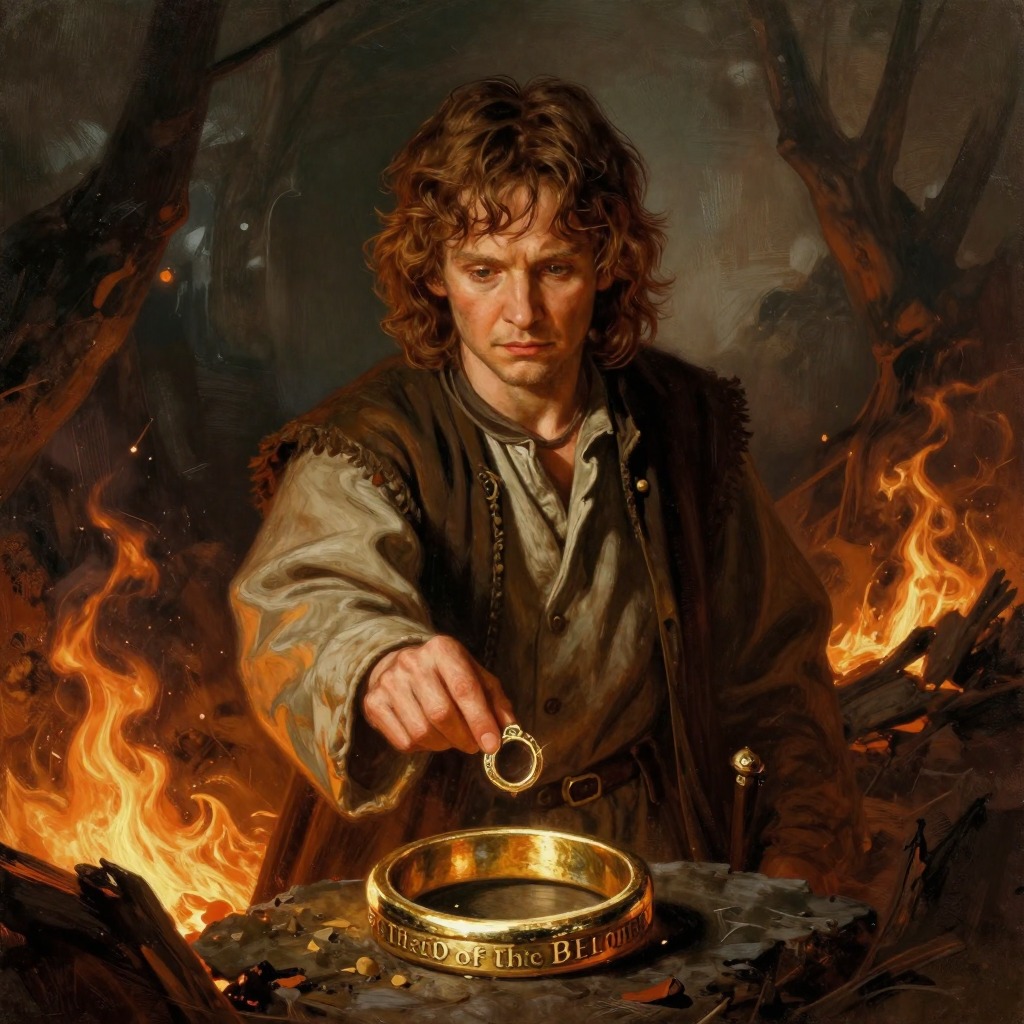 Frodo's Quest to Destroy the Ring
 Aragorn's Path to Kingship
 The Journey of the Fellowship
 The Battle for Middle-earth
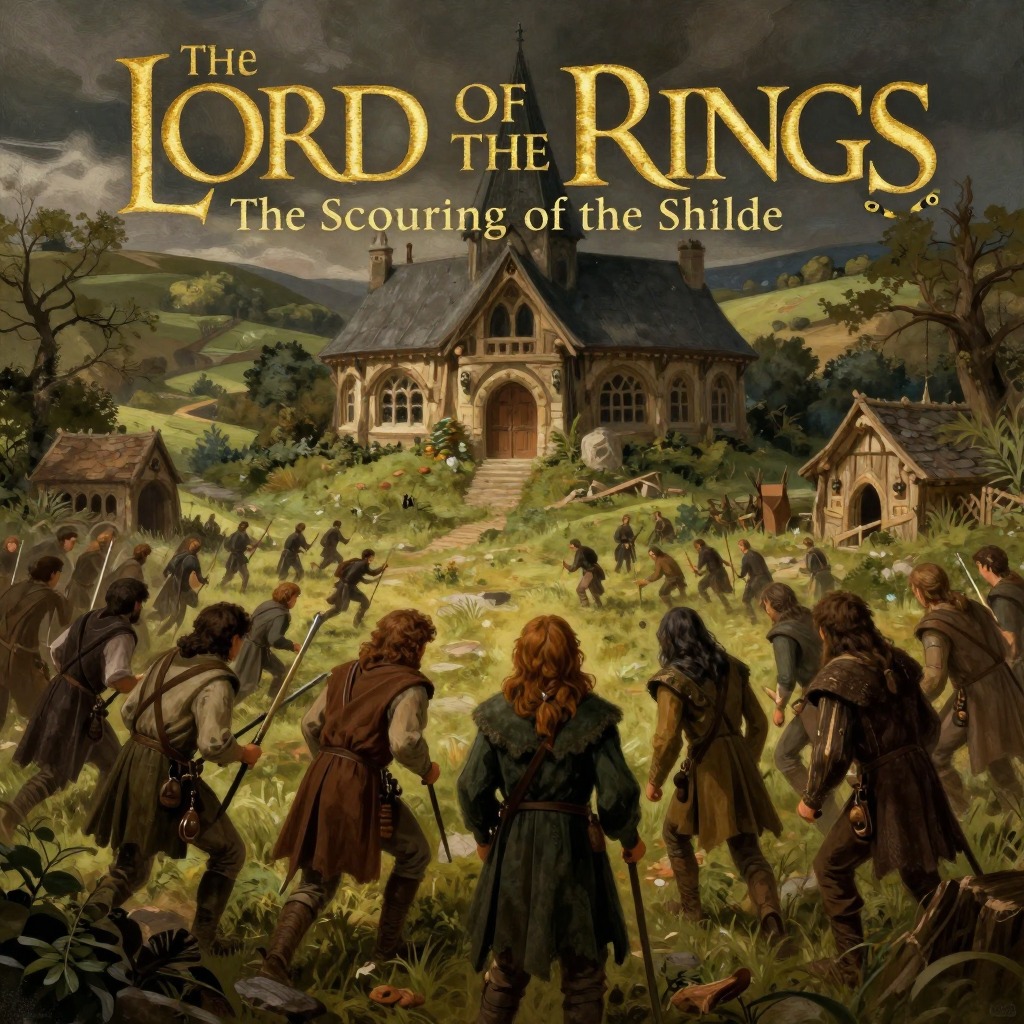 The Scouring of the Shire
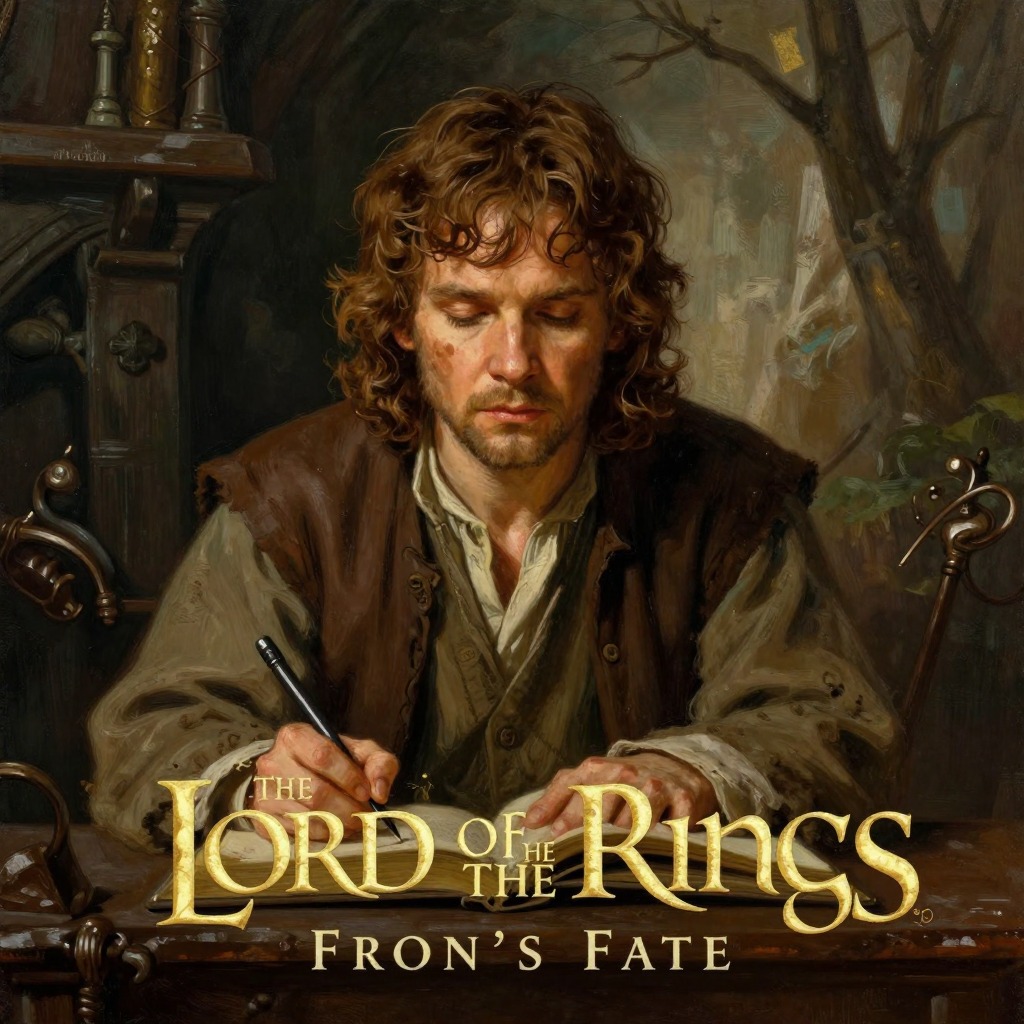 Frodo's Fate
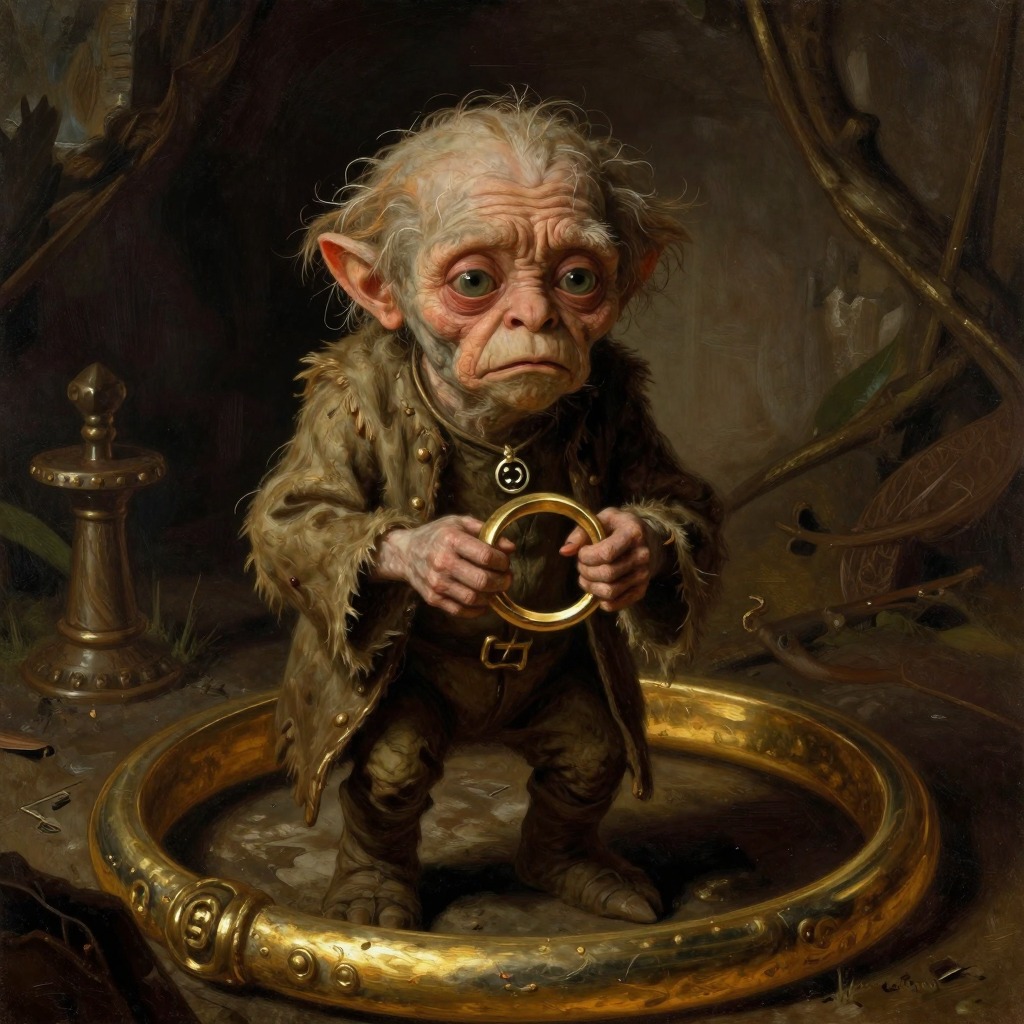 Gollum's Fate
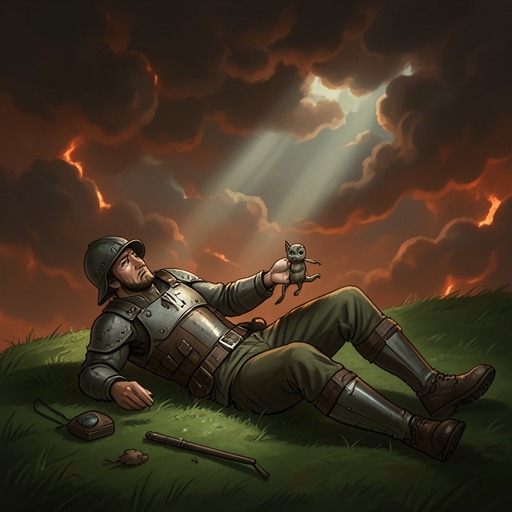 Boromir's Fall and Redemption
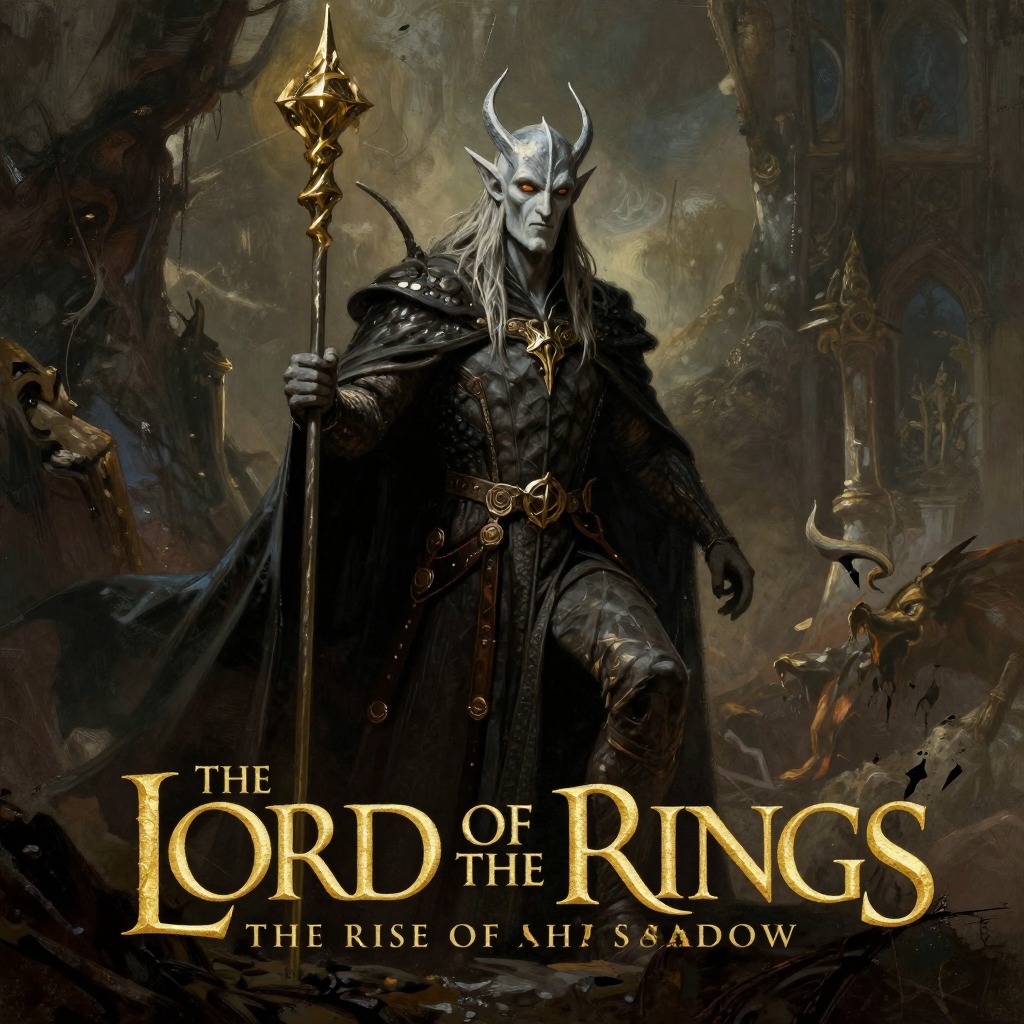 The Rise of Sauron and the Shadow
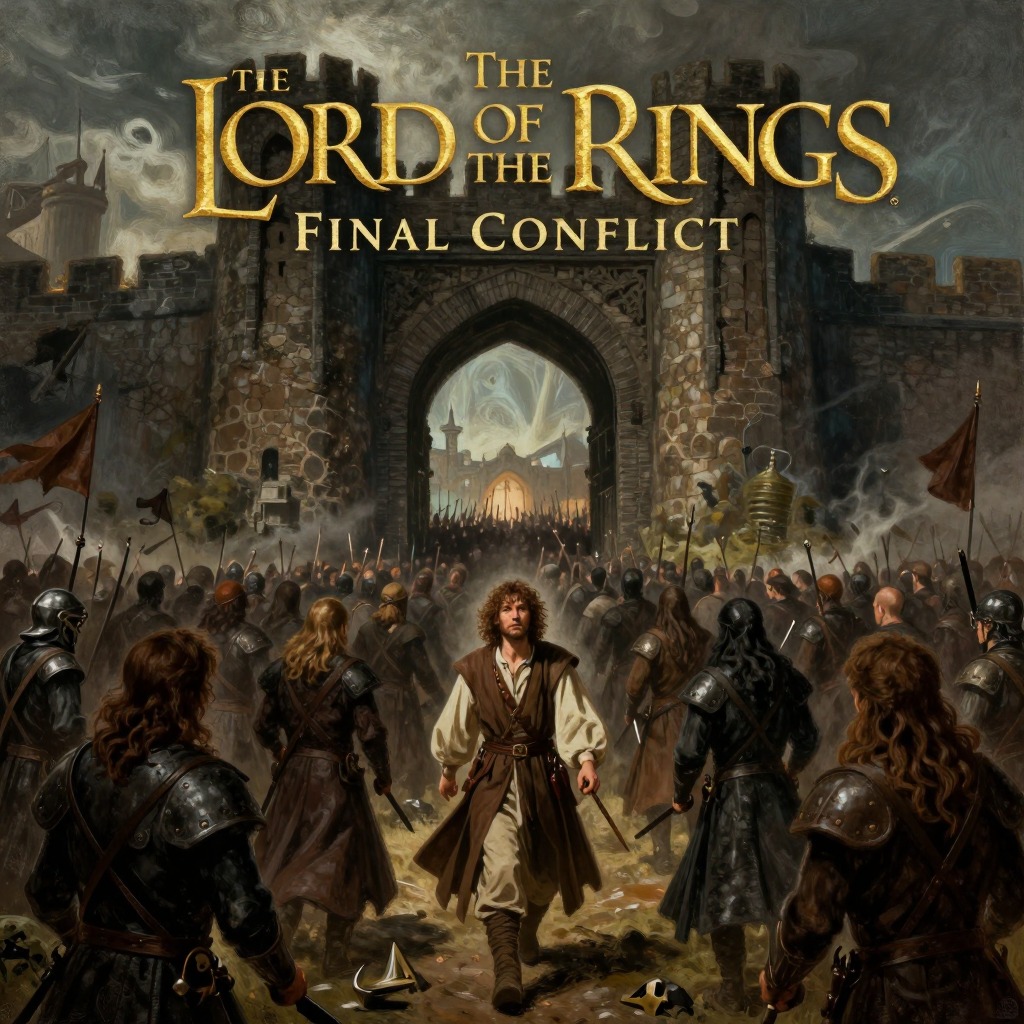 The Final Conflict at the Black Gate
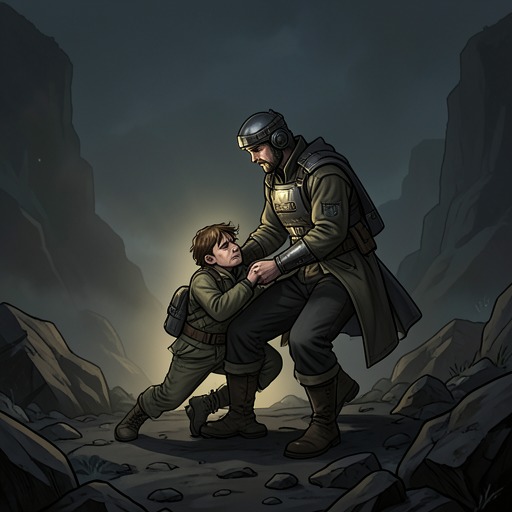 Frodo and Sam's Friendship
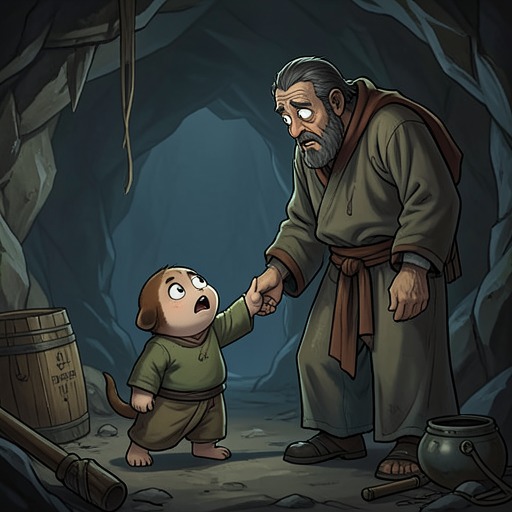 The Power of Pity and Mercy
 The Nature of the Ring and Corruption
 Hope in Despair
 The Passing of the Elves and the Age of Men
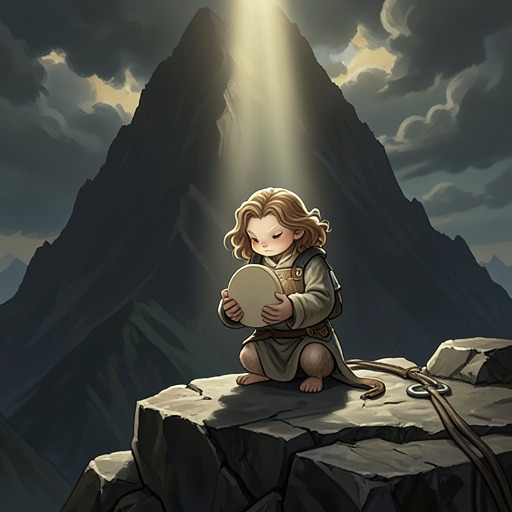 Small Hands Doing Great Deeds