Isildur
Isildur, son of Elendil, stands at the hinge of Middle-earth's history, the man who both won and lost the war against Sauron. His act of cutting the One Ring from the Dark Lord's hand at the slopes of Orodruin was the decisive blow of the Last Alliance, yet his refusal to destroy it, and his subsequent death in the Gladden Fields, transformed a moment of triumph into the seed of the Third Age's greatest peril. He is remembered in the North as the bearer of Isildur's Bane, a name that marks him as the tragic figure whose choice doomed his heirs and the Free Peoples to a long, shadowed struggle against the returning Enemy.
Identity and Background
Isildur was the son of Elendil of Westernesse, the great lord who, with the Elven-king Gil-galad, led the forces of the Last Alliance against Sauron. He was not merely a prince of the Númenórean exiles but a figure of the highest lineage, one of the few who stood at the very heart of the final conflict. His brother Anárion also fought in the war and was slain, a loss that would echo in Isildur's own fateful decisions. As the heir of Elendil, he carried the weight of his father's legacy, a burden that would prove both his glory and his undoing.
The Last Alliance and the Cutting of the Ring
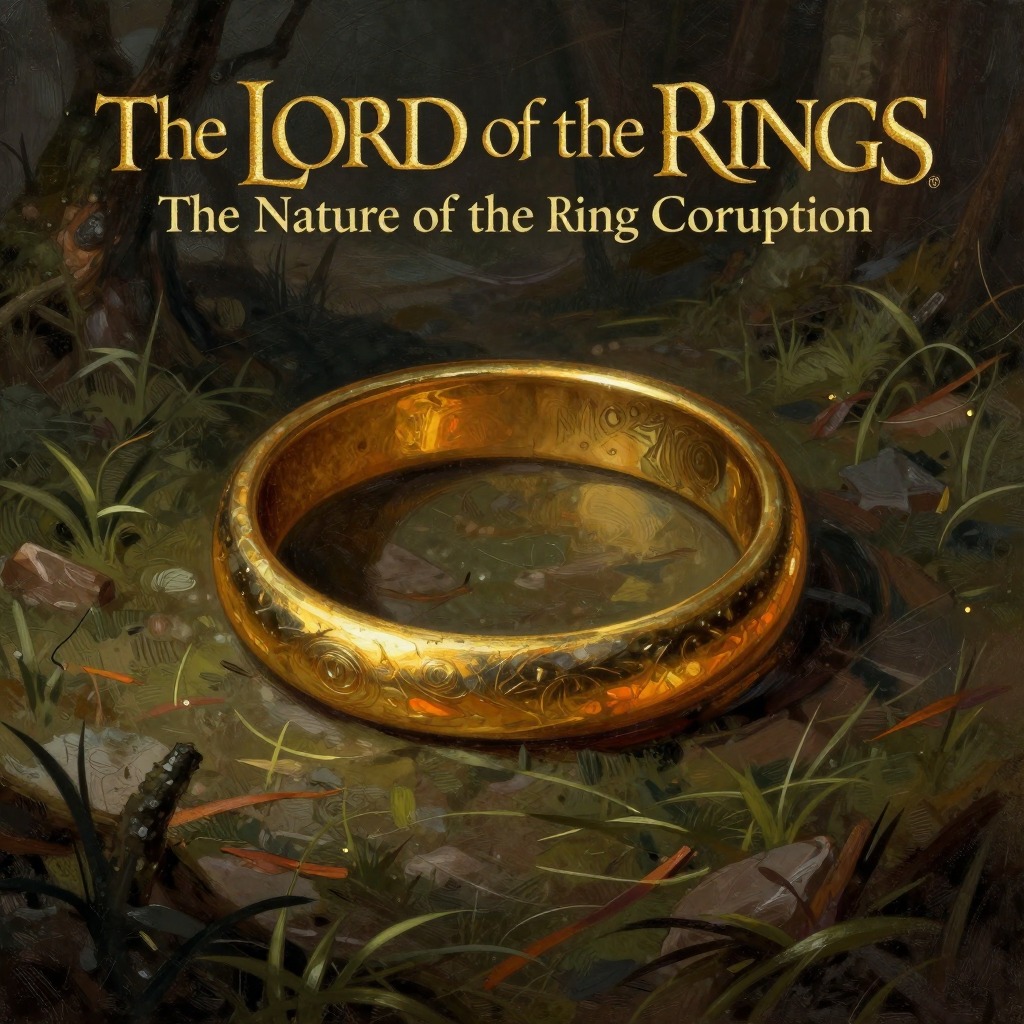
The war against Sauron reached its climax at the Battle of Dagorlad before the Black Gate of Mordor, where the forces of Elves and Men had the mastery. There, the Spear of Gil-galad and the Sword of Elendil, Aeglos and Narsil, proved unstoppable. The final combat took place on the slopes of Orodruin, the mountain where the Ring had been forged. In that last mortal contest, Gil-galad died and Elendil fell, and Narsil broke beneath him. Yet Sauron himself was overthrown, and it was Isildur who cut the Ring from his hand with the hilt-shard of his father's sword, taking it for his own. This act, witnessed by few, was the moment that defined everything that followed. Elrond, who was the herald of Gil-galad and marched with his host, stood by in that terrible moment, and he later recalled that Isildur would not listen to counsel. When urged to cast the Ring into the fires of Orodruin, which were nigh at hand, Isildur refused, declaring, 'This I will have as weregild for my father, and my brother.' He took it to treasure it, and in doing so, he betrayed himself and all who came after.
The Death in the Gladden Fields
The Ring was lost almost immediately. As Isildur marched north along the east banks of the Great River Anduin, he was waylaid near the Gladden Fields by the Orcs of the Mountains. Almost all his folk were slain. He leaped into the waters to escape, but the Ring slipped from his finger as he swam, and the Orcs saw him and killed him with arrows. The Ring passed out of knowledge and legend, vanishing into the dark pools of the Gladden Fields. Only three men ever came back over the mountains after long wandering, and one of these was Ohtar, the esquire of Isildur, who bore the shards of the sword of Elendil to Valandil, the heir of Isildur, who had remained as a child in Rivendell. Narsil was broken and its light extinguished, and it was not forged again for many ages. The victory of the Last Alliance was thus fruitless in its deepest purpose: Sauron was diminished but not destroyed, his Ring was lost but not unmade, and the Dark Tower was broken but its foundations, made with the power of the Ring, endured.
Legacy and the Shadow of Isildur's Bane
Isildur's failure became the defining curse of the Third Age. His name became a byword for the Ring's peril, and in the North, the Ring itself was called Isildur's Bane. The memory of his choice haunted the Council of the Wise, who could discover no more of the Ring's history after it vanished. When the Ring finally resurfaced, the weight of Isildur's decision fell upon Frodo Baggins, who was told the tale by Gandalf as a warning of the Ring's corrupting power. The echo of Isildur's act even reached the final days of the War of the Ring, when Frodo, standing in the same fires of Orodruin, was unable to cast the Ring away, repeating the failure of his ancient predecessor. Yet the memory of Isildur also carried a different lesson: his death was perhaps better than what else might have befallen him, a grim reminder that the Ring's hold could only end in ruin. Even in the Scouring of the Shire, the legacy of the ancient war was invoked, as Frodo reminded a ruffian that the Dark Tower had fallen and there was a King in Gondor, a line of authority that traced back to Isildur's own line and the broken sword that was finally reforged.
Narrative Role and Evaluation
Isildur functions as the archetypal tragic hero of the backstory, a figure whose single, understandable human choice—to keep a treasure as compensation for his father's and brother's deaths—unleashes millennia of suffering. His story is told and retold by Gandalf and Elrond, each time serving as a moral lesson about the Ring's insidious power and the necessity of destroying it. He is the shadow that falls over the entire quest, the proof that even the greatest victory can be undone by a moment of weakness. His presence is felt not only in the ancient history but in the very landscape of the story, from the Gladden Fields where the Ring was lost to the broken sword Narsil that awaited its reforging. Isildur's legacy is thus double-edged: he is the one who cut the Ring from Sauron's hand, proving that the Enemy could be defeated, and the one who failed to finish the task, proving that the Enemy could never be truly vanquished while the Ring endured. His story is the cautionary tale that frames the entire narrative, the original sin of the Third Age that the Fellowship of the Ring was formed to redeem.