Saruman
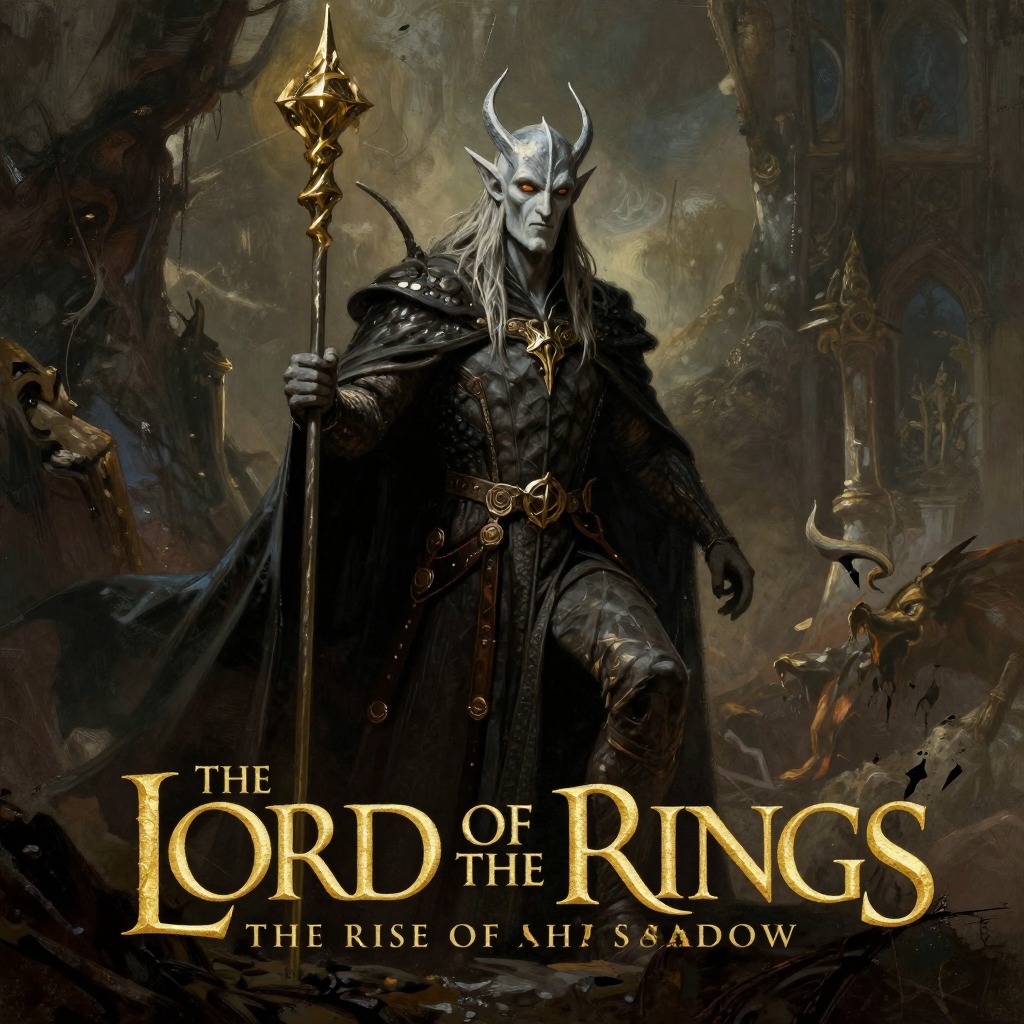
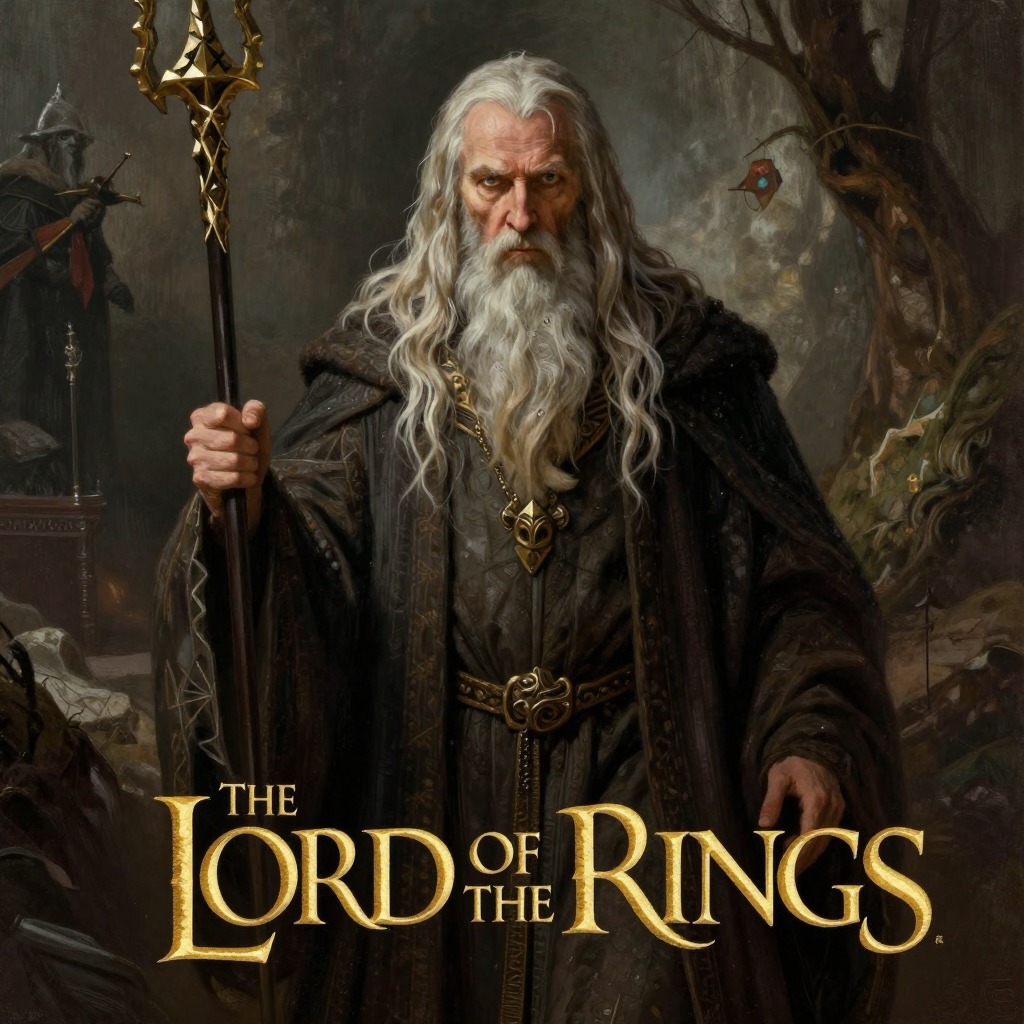
Saruman is one of the Istari, the order of Wizards sent to Middle-earth, and for long ages he stood as the chief of his order and the head of the White Council. His knowledge was deep, particularly in the lore of the Elven-rings, great and small, which was his province; he had long studied it, seeking the lost secrets of their making. Yet his pride grew with his knowledge, and he took ill any meddling in his affairs. This pride, and his secret desire for the One Ring, would prove his undoing, turning the wisest of the Wise into a servant of evil who ultimately destroys himself.
Identity and Rise to Power
Saruman was known as Saruman the White, a title that carried immense weight among the Wise and across Middle-earth. He was the chief of Gandalf's order and the head of the White Council, making him the most powerful and respected of the Istari. His dwelling was in Isengard, a circle of sheer rocks that enclosed a valley as with a wall, in the midst of which stood the tower of Orthanc. This tower was not made by Saruman but by the Men of Númenor long ago; it was very tall and had many secrets, yet it looked not to be a work of craft. It could not be reached save by passing the circle of Isengard, and in that circle there was only one gate. This fortress, far south in Isengard at the end of the Misty Mountains, not far from the Gap of Rohan, was the seat of his power and the place where his corruption would become manifest.
His reputation among the Wise was formidable. Gandalf, who knew him well, described him as great among the Wise, with knowledge so deep that his pride had grown with it. He was the head of the Council, and his ring-lore was considered the greatest of any living being. When the Rings were debated in the Council, all that he would reveal of his ring-lore told against Gandalf's fears about the One Ring, allowing doubt to sleep uneasily. This was the first sign of his betrayal: he used his authority and knowledge not to seek truth but to obscure it, serving his own hidden purposes rather than the cause he was sworn to uphold.
The Meeting at Orthanc and the Fall from Grace
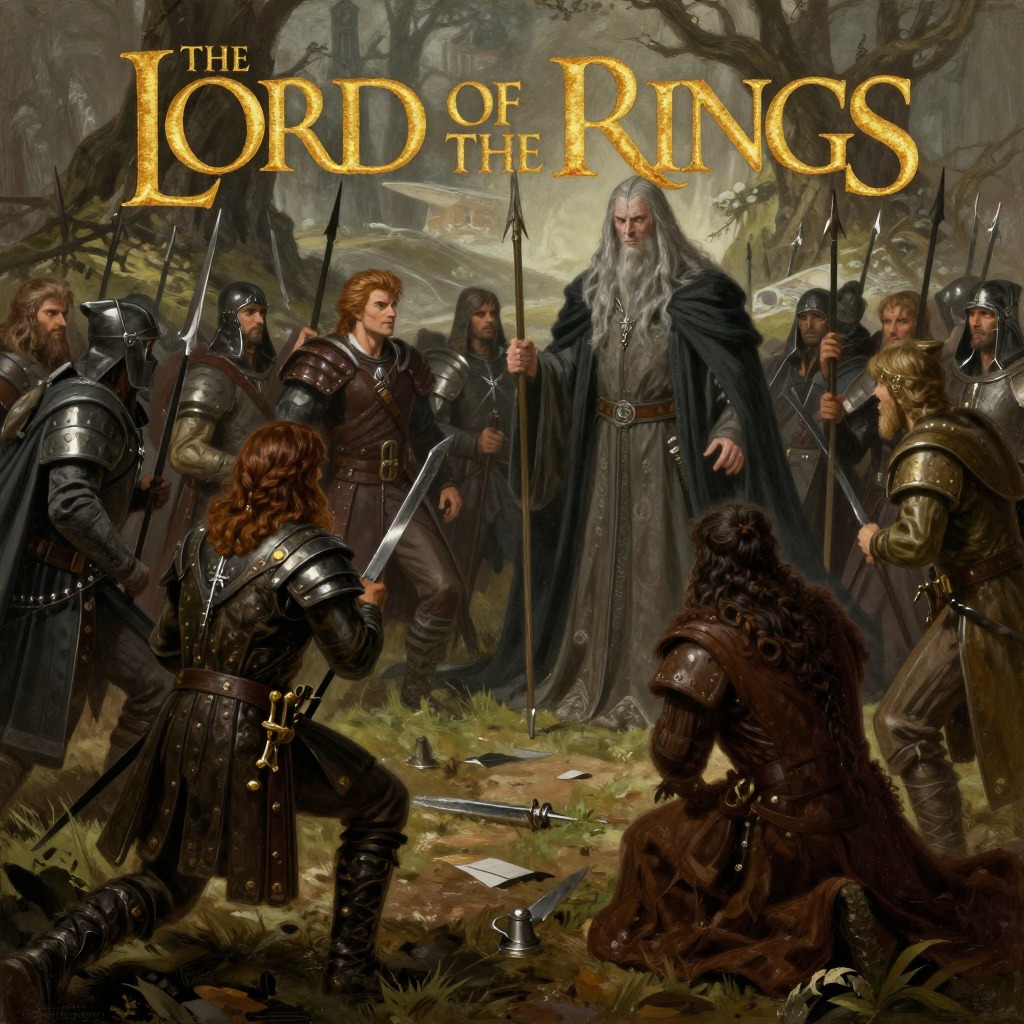
Gandalf's visit to Saruman at Orthanc revealed the depth of his fall. When Gandalf came seeking aid, Saruman met him at the foot of the tower and led him up to his high chamber, where he wore a ring on his finger. This detail was a clear sign of his corruption, for the Wizards were not meant to bear rings of power. Saruman greeted Gandalf with cold mockery, scoffing at the title "Gandalf the Grey" and accusing him of concerning himself in every business, whether it belonged to him or not. When Gandalf spoke of things moving that would require the union of all their strength, Saruman dismissed the thought as late in coming, and accused Gandalf of concealing from him, the head of the Council, a matter of greatest import. The exchange revealed that Saruman had already chosen his path: he saw Gandalf not as a colleague but as a rival, and he had no intention of uniting against the Dark Power of Sauron, for he had come to desire the Ring for himself.
This meeting was the turning point of Saruman's public career. He had been the chief of the Wise, the one to whom others looked for counsel and leadership. But his pride had grown so great that he could not bear to be second to anyone, not even to the Dark Lord himself. He believed he could use the Ring to challenge Sauron and become the master of Middle-earth. In this, he was deceived by his own ambition, for the Ring's power was beyond his control, and his alliance with evil would lead only to his ruin.
The Fall to Sharkey and the Scouring of the Shire
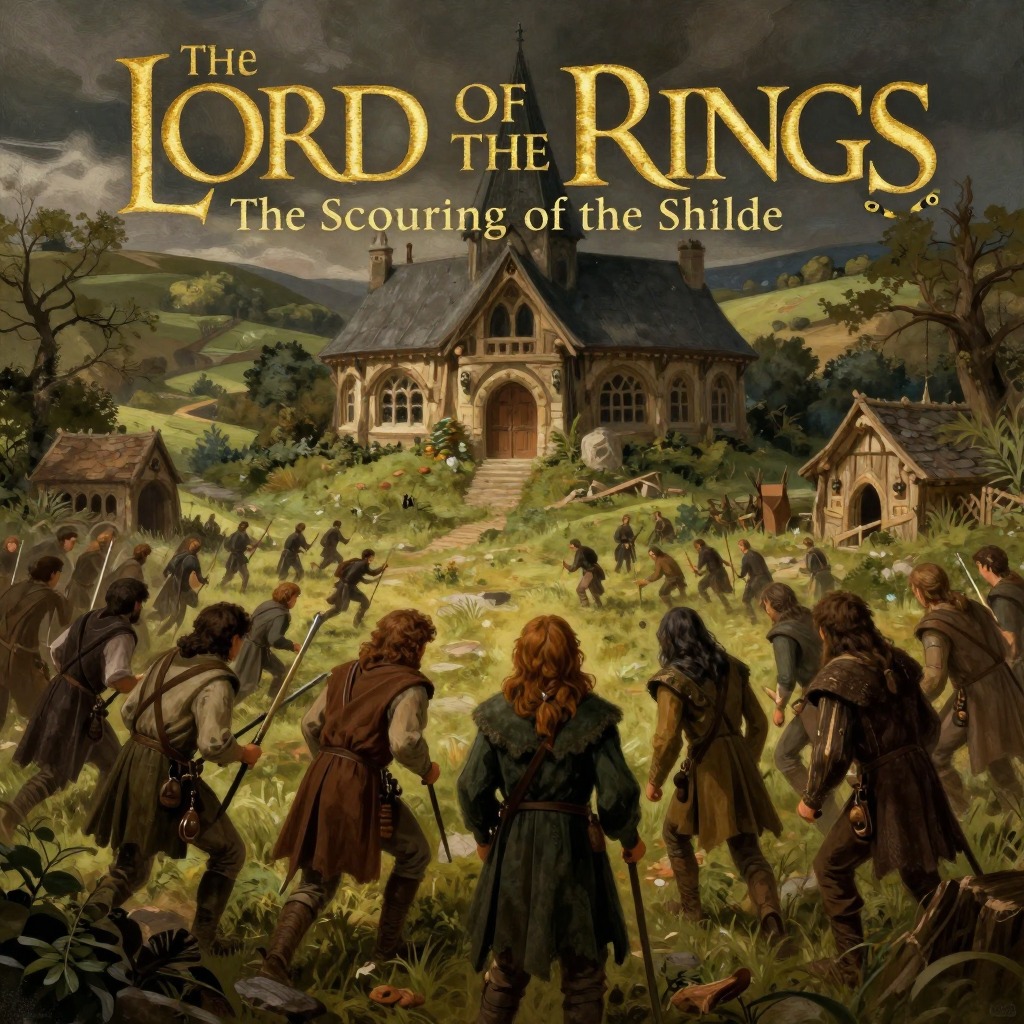
After the destruction of Isengard and the defeat of his forces, Saruman's power was broken, but his malice endured. He escaped the wrath of the Ents and the Fellowship, and his path led him at last to the Shire, where he took on the name Sharkey. This name, he revealed with a laugh, was what all his people used to call him in Isengard, a sign of affection, possibly. In the Shire, he established himself as a petty tyrant, using his cunning to corrupt and dominate the hobbits through his servant Lotho, whom he had made the Chief. His rule was one of mean mischief, a shadow of his former greatness, and it was here that his story reached its squalid end.
When Frodo and his companions returned to the Shire, they found it under Saruman's oppressive rule. Frodo recognized him at once and cried out "Sharkey!" Saruman, well-fed and well-pleased, his eyes gleaming with malice and amusement, mocked the hobbits for not expecting to see him. But his power had waned, and his control over his own servant was slipping. When Wormtongue, his creature, was exposed for killing Lotho, Saruman callously revealed the murder, saying that Worm had stabbed him in his sleep and buried him, though Worm had been very hungry lately. He then kicked Wormtongue in the face and ordered him to follow, but at that moment something snapped in the broken servant. Wormtongue rose up, drawing a hidden knife, and with a snarl like a dog he sprang on Saruman's back, jerked his head back, cut his throat, and with a yell ran off down the lane. Before Frodo could recover or speak a word, three hobbit-bows twanged and Wormtongue fell dead.
Death and the Dissolution of the Spirit
Saruman's death was as ignoble as his fall had been great. As he lay dead, a grey mist gathered about his body, rising slowly to a great height like smoke from a fire, and as a pale shrouded figure it loomed over the Hill. For a moment it wavered, looking to the West, but out of the West came a cold wind, and it bent away, and with a sigh dissolved into nothing. This image of his spirit being blown away by the West wind was a final judgment on his life: he had turned his back on the West, on the cause of the Valar and the free peoples, and so even in death he was denied any peace or return. Frodo looked down at the body with pity and horror, for as he looked it seemed that long years of death were suddenly revealed in it, and it shrank, and the shrivelled face became rags of skin upon a hideous skull. Lifting up the skirt of the dirty cloak that sprawled beside it, he covered it over, and turned away.
Thematic Significance and Narrative Role
Saruman's story is a study in the corrupting nature of pride and the desire for power. He began as the wisest of the Wise, the chief of the White Council, and his fall was not sudden but gradual, a process of self-deception and rationalization that led him to believe he could master the Ring and challenge Sauron. His fate stands as a warning against the very ambition that drives the quest itself: where Frodo and the Fellowship seek to destroy the Ring, Saruman seeks to use it, and his destruction is the direct consequence of that choice. His end, at the hands of his own despised servant, is a fitting irony, for he who sought to command all was brought down by the one creature he thought he owned completely.
His role in the narrative is also that of a dark mirror to Gandalf. Both are Wizards, both are members of the White Council, and both are tempted by the Ring. But where Gandalf refuses the Ring and remains faithful to his mission, Saruman succumbs and betrays it. Their confrontation at Orthanc, where Saruman mocks Gandalf for seeking aid, is the moment when the two paths diverge, and it sets the course for the entire War of the Ring. Saruman's fall also demonstrates the reach of Sauron's influence, for even the greatest of the Wise could be turned to evil when pride and desire overcame wisdom. His death, and the dissolution of his spirit, is a final confirmation that the Shadow is a passing thing, and that even the most powerful of its servants cannot escape the consequences of their choices.