Acheron
AeneidAcheron is the river surrounding the entrance to the Underworld, described as a dark and impassable boundary between mortal travel and the realm of the dead. Its presence gives the Underworld a definite geography: the road leads toward a shore, the river bars ordinary passage, and Charon controls the crossing beyond it.
Definition and Setting
Acheron is introduced as an “innavigable flood” encircling the dark abode below. The description emphasizes troubled eddies thick with ooze and clay, whose waters are thrown upward and lost in Cocytus. Rather than functioning as a distant symbol alone, the river is a material obstacle: whoever reaches the Underworld must confront its current, its shore, and the authority governing its passage.
The Threshold of the Underworld
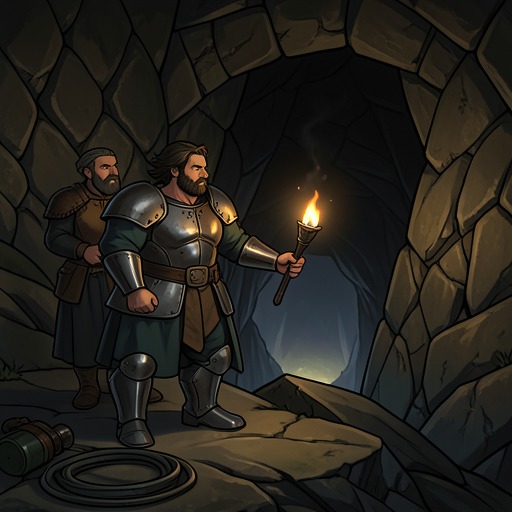
The road to hell lies near the priestess’s grove, and Acheron is the first great boundary encountered by those who follow it. The river therefore converts descent into a sequence of thresholds. The travelers move from the upper world toward the shore, where the ordinary rules of navigation no longer suffice and the living enter a landscape defined by death, darkness, and separation.
Charon and the Crossing
Charon stands at Acheron’s edge as the ruler of its gloomy coast. He is presented as a sordid, aged god with a long, uncombed, unclean beard, an appearance that makes the river’s guardian an embodiment of the place itself. His position gives Acheron a political as well as physical function: crossing depends not simply on reaching the water but on passing under the control of its boatman.
As the travelers draw nearer to the Stygian lake, Charon sees them from the shore and observes their passage through the shadowy wood. Acheron is thus linked to a wider system of infernal waters, including the Styx and Cocytus, while remaining the decisive first barrier at which the expedition’s status changes from earthly journey to Underworld passage.
Narrative and Thematic Significance
Acheron concentrates the poem’s recurring concern with boundaries. Elsewhere, gates, walls, shores, camps, and battlefields regulate access and possession; here, the river marks the most absolute border, separating life from death. Its polluted, turbulent waters oppose the open sea through which the Trojan fleet travels in the upper world. The river’s crossing also gathers the poem’s attention to mortality: Misenus is newly lost before the descent, and Palinurus appears among the spirits as a recent arrival, so the route toward Acheron is accompanied by the immediate presence of bereavement.
The river’s significance is therefore both spatial and ritual. It is the place where movement requires permission, where the living confront the dead, and where the journey’s earthly purpose is enlarged by contact with the order beneath the world. Acheron does not merely surround the Underworld; it gives that realm its first enforceable limit and makes the hero’s descent a passage across an intelligible, terrifying frontier.