Antandros
AeneidAntandros is the Trojan settlement near the foot of Mount Ida where exile becomes a material enterprise. In its sacred groves, Aeneas and the Trojans cut timber and build a fleet, transforming the loss of their former home into the first practical stage of their divinely directed search for a new one.
Setting and Sacred Landscape
Antandros lies near the foot of Mount Ida, placing the Trojans’ departure within the remembered landscape of their Anatolian homeland rather than in an already foreign world. Its most important feature in the surviving account is the timber of sacred groves. The forest is therefore both a religious space and a store of material resources, and the fleet’s construction depends on crossing that boundary between reverence and use.
The Fleet and Trojan Exile
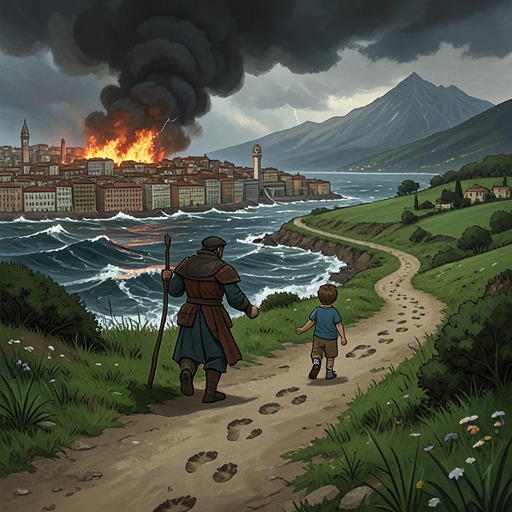
Warned by celestial omens, the Trojans retreat from danger and seek a happier seat in foreign lands. At Antandros they cut wood and build ships, although they still do not know where the gods have appointed their repose. The location thus marks a decisive transition: the Trojans are no longer merely fleeing, but organizing themselves for prolonged movement by sea. Their uncertain destination gives the construction an unsettled quality, since the vessels are built before the travelers possess a secure homeland or a fixed route.
The settlement also becomes a gathering point for the displaced community. Friends flock to the Trojans daily, so the fleet is not the work of an isolated hero but the instrument of a people being reassembled after catastrophe. Antandros turns scattered survivors into a traveling collective, linking sacred woodland, communal labor, and the political continuity of Trojan identity.
Resource, Movement, and Consequence
Antandros reveals how the epic’s future foundations depend upon the conversion of landscape into mobility. Timber cut from the groves becomes ships; ships make exile sustainable; and sustainable exile preserves the possibility of a later settlement. The scene therefore joins environmental exploitation to the larger work of foundation. The forest is not described as merely passive scenery: its sacred status gives the act of cutting moral and ritual weight, while its wood supplies the means by which the Trojan people can continue their mandated journey.
The place’s significance is consequently provisional rather than monumental. Antandros is not the final city promised to the Trojans, but a threshold between the destroyed past and the unknown future. Its groves provide the fleet, its position near Mount Ida keeps the departing people connected to their ancestral terrain, and its communal activity initiates the long sequence of movements through which Trojan exile will eventually become the prehistory of Rome.