Drepanum
AeneidDrepanum is presented as a place of brief arrival and devastating loss: the port receives the weary Trojan fleet after prolonged exile, only to become the scene of Anchises’s death. Its significance lies in the reversal by which refuge fails to become renewal, turning a hard-won landing into another wound in Aeneas’s journey.
Arrival After Prolonged Wandering
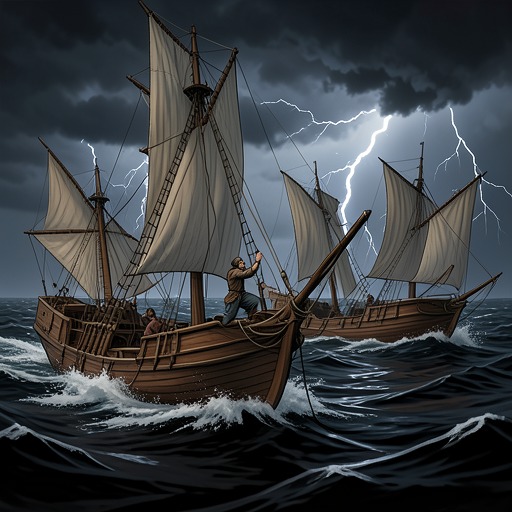
The fleet reaches Drepanum only after enduring “endless labours,” repeated tossing by raging storms, and forced movement along successive coasts. The port therefore appears at the end of an accumulated maritime ordeal rather than as an ordinary destination. Its shore offers physical arrival after danger at sea, but the relief is shadowed by the suffering that has made the fleet weary and vulnerable.
The Port and Anchises’s Death
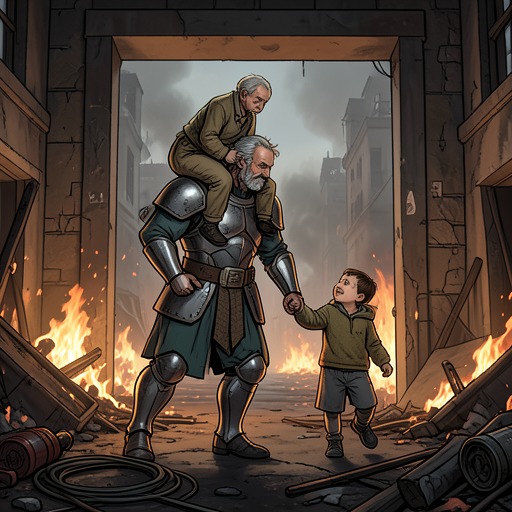
Drepanum’s defining event is the loss of Anchises. Aeneas identifies his father as beloved, aged, and already “Sav’d thro’ a thousand toils,” a description that makes the death especially bitter: the man who survived the fleet’s repeated dangers is nevertheless lost after the survivors reach land. The port thus concentrates the tragedy of an apparently successful escape, since safety from storms cannot preserve the family at the center of Aeneas’s mission.
Refuge Reversed into Grief
The arrival at Drepanum creates a sharp reversal in value. The fleet moves from exposure and instability toward the apparent security of shore, but that expected consolation is replaced by bereavement. Drepanum is called an unhappy port because its hospitality is inseparable from the death it witnesses; it receives the Trojans, yet it does not deliver the “ease” of Aeneas’s cares or the “solace” of his pain. The location becomes a threshold between one phase of wandering and the grief that must accompany the next.
Narrative Significance
Drepanum embodies the repeated cost of the Trojan survivors’ passage. The fleet’s movement through storms and along dangerous coasts has been endured for the sake of preserving its people and its future, but the arrival proves that survival is incomplete when Anchises is taken from Aeneas. As a remembered location, the port binds geography to mourning: a name on the route becomes memorable because it marks the instant when prolonged endurance yields not rest, but the loss of the father whose presence had sustained the journey.