Buthrotum
AeneidButhrotum is a port and city in Epirus that receives Aeneas and the Trojan exiles after their voyage along the coast. It is not merely a stopping-place. There, the displaced Trojans find Helenus ruling in the name of the old Trojan world, Andromache welcoming them with tears of joy, and a settlement that resembles Troy in reduced form. Buthrotum therefore becomes a geography of remembrance: a preserved image of the homeland, but also a warning that exile can reproduce the past only in altered dimensions.
Setting and Arrival
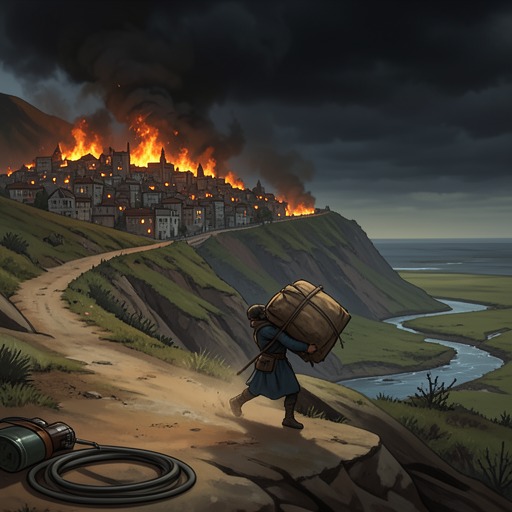
Aeneas reaches Buthrotum after the Trojans lose sight of Phaeacia and skim along the rocky coast of Epirus. Their course turns toward the port of Chaonia; once landed, they climb toward the heights of Buthrotum. The movement from sea to harbor and then upward into the city gives the encounter a threshold quality. The exiles cross from uncertain travel into a place where the history they have carried with them has taken visible political form.
A Trojan Past Re-established
News has already spread that Helenus has revived the Trojan name and reigns in Greece. Buthrotum thus offers an extraordinary reversal of the normal condition of the Trojan refugees: instead of finding a people dispersed after the fall of Troy, Aeneas finds Trojan authority reconstructed abroad. The city does not restore the original kingdom, but it keeps its name and prestige active through Helenus’s rule. Its fame travels through neighboring lands before the Trojan fleet itself comes into view, making reputation the first sign of the settlement’s existence.
Andromache and the Recreated City
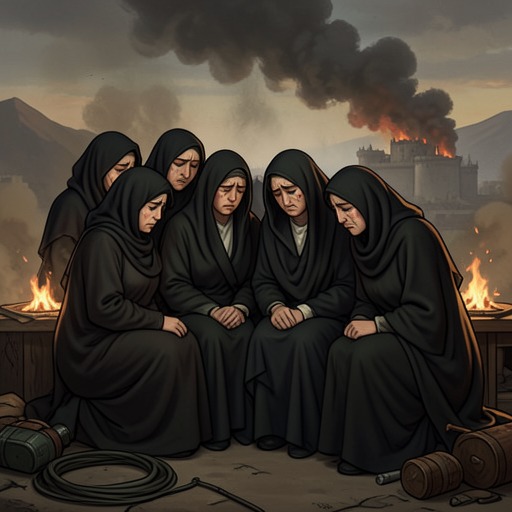
At Buthrotum, Andromache receives her Trojan friends and leads them into the city, shedding tears of joy during the welcome. Her response joins private grief to public continuity. She belongs to the ruined Trojan past, yet she is also one of the figures through whom that past remains hospitable and recognizable to the living.
The most striking sight is another Troy, described as Troy in miniature. A stream bearing the name of the Xanthus runs through the settlement, repeating the geography of the lost city on a smaller scale. This duplication is both consoling and unsettling. Buthrotum gives the exiles familiar names, landscapes, and political memory, but its reduced compass makes clear that the original Troy cannot simply be recovered. What survives is an epitome: a selective, condensed version of the homeland shaped by displacement.
Memory, Space, and the Trojan Future
Buthrotum stands between recollection and destiny. It demonstrates that Trojan identity can outlive the city that first embodied it, whether through Helenus’s rule, Andromache’s welcome, or the deliberate reuse of Trojan names such as Xanthus. Yet the settlement also separates memory from the future. It is a completed substitute, whereas Aeneas’s journey continues toward Italy and the foundation of a new historical order.
The place therefore presents two possible responses to ruin. One is preservation through reproduction: Buthrotum keeps Troy present by making a smaller Troy elsewhere. The other is transformation through departure: Aeneas must accept the remembered city without settling permanently inside its image. Buthrotum’s importance comes from this contrast. It is a refuge of recognition, but its very resemblance to Troy confirms that the exiles’ ultimate task is not to repeat the past exactly, but to carry its name into a different world.