Cumae
AeneidCumae is the sacred coastal setting where Aeneas’s wandering acquires a prophetic direction. On reaching the Cumaean shore, he and his crew moor their vessels, and the hero climbs the holy hill to seek the prophetic Sibyl. The place therefore stands between ordinary travel and revelation: it is a landing place, a sanctuary, and the entrance to knowledge of what awaits Aeneas in Italy and beyond.
Setting and Sacred Function
At Cumae, the landscape is marked by the black waters of Lake Avernus and a sounding wood. The Sibyl is associated with a hidden, venerable dwelling on the sacred hill where Phoebus is worshiped. The geography makes Cumae more than a recognizable destination. Its dark flood, wooded recesses, and concealed prophet establish a boundary between the visible world of travel and the divine knowledge that will govern the next stage of Aeneas’s mission.
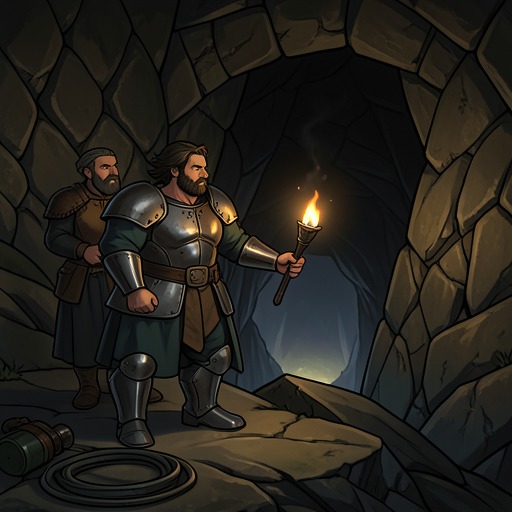
The hero approaches this setting in a posture of ritual seriousness. While his companions carry out their separate duties, the pious prince ascends the hill and seeks the Sibyl in her hidden shade. His movement upward toward the sanctuary prepares the descent that follows: Cumae joins sacred ascent, prophetic instruction, and the eventual passage toward the Stygian lake and the Underworld in one continuous spatial design.
Arrival of Aeneas
Aeneas reaches the coast after spreading his sails before the winds. When the anchors fall and the crew moor the vessels, the seaborne phase of the journey pauses at Cumae. The arrival is practical and immediate, but its narrative consequence is immense. The fleet has not merely found a harbor; it has arrived at the place where the Sibyl will disclose the adventures awaiting Aeneas in Italy.
The Cumaean episode thus transforms the meaning of the voyage. Before the landing, Aeneas is still moving through the uncertainty of exile and exploration. At Cumae, his route becomes legible through prophecy. The Sibyl’s guidance will lead him safely onward, including through the black region of Avernus, so that the shore functions as the first secure point from which the next and more dangerous passage can begin.
Prophecy and the Underworld Journey
The Sibyl’s presence gives Cumae its central narrative authority. She foretells the trials Aeneas must meet in Italy, attends him to hell, describes the regions of that realm, and conducts him to his father Anchises. Through Anchises, Aeneas receives instruction concerning the soul of the world and the transmigration of souls, while also being shown the future race of heroes destined to descend from him and his posterity.
Cumae is consequently the threshold of a quest for both immediate direction and historical vision. The prophecy concerns the dangers of the near future, but the Underworld revelation extends far beyond Aeneas’s own survival. From this place, the narrative opens onto the promised succession of descendants and the future greatness associated with Rome. The local sanctuary becomes the point at which personal pilgrimage, ancestral memory, and imperial destiny converge.
Narrative Significance
The treatment of Cumae depends on contrast. Its harbor receives ships, anchors, and a working crew, yet the same setting opens onto black waters, prophetic concealment, and the Stygian lake. It is both a place of arrival and a station before descent; both a physical shore in Italy and a sacred boundary where ordinary chronology gives way to the deep time of prophecy and ancestry.
The place also establishes Aeneas’s defining relation to duty. He does not approach the Sibyl as a private seeker detached from his people. The poem presents him as a pious prince whose sacred ascent serves the larger mission of the Trojan exiles. What he learns at Cumae will sustain the voyage, clarify the fates, and connect his sufferings with the future race that will come from him. Cumae therefore marks the point where wandering becomes vocation: the traveler enters a sanctuary and emerges committed to a destiny larger than his own life.