Strophades
AeneidStrophades is the island refuge reached by Aeneas and his fleet after a violent sea passage, but its apparent safety quickly gives way to terror. Encircled by the Ionian Sea and described as the foul dwelling of the Harpies, the islands place the Trojan exiles at a threshold between maritime danger and an even more ominous divine hostility.
Setting and Arrival
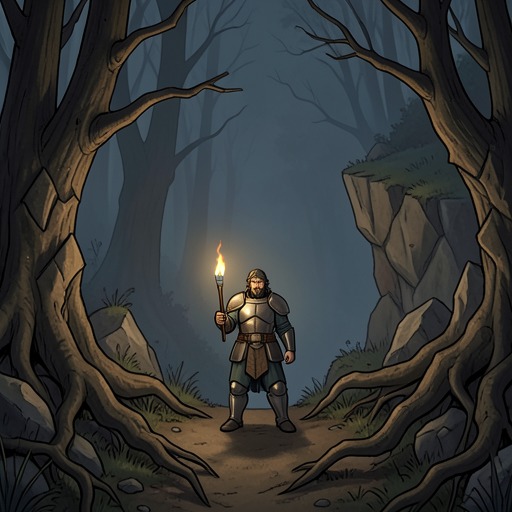
The fleet approaches Strophades only after the sea has become nearly featureless, with land disappearing from sight beneath rain, black night-clouds, and winds that raise foaming waves. The sailors lower the canvas and take to their oars, driving the ships forward through the storm. Their arrival is therefore marked not by triumph but by exhausted survival: Aeneas lands at Strophades safe from the stormy seas, and the islands briefly appear to offer the relief that the voyage has denied him.
The geographic isolation of Strophades intensifies that relief and its reversal. The islands are surrounded by the Ionian Sea, cut off from familiar shores and exposed to the same elemental vastness through which the fleet has just struggled. Their position makes them both harbor and frontier, a temporary resting place for the Trojans and a boundary beyond which ordinary expectations of safety no longer apply.
The Harpies' Dominion
Strophades is defined most powerfully by its inhabitants. It is the dire abode where the Harpies reign, so the island is not merely a neutral stop in the fleet's itinerary but a territory claimed by winged monstrous forces. The contrast between the Trojans' need for food and rest and the Harpies' predatory presence turns the island's resources into a source of danger. Refuge becomes exposure; arrival becomes an ordeal.
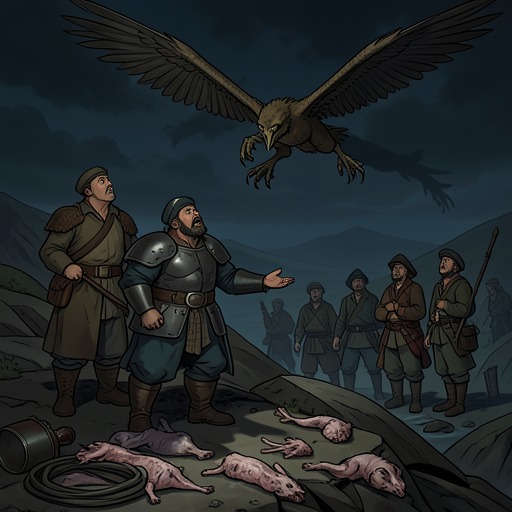
The Harpies attack the Trojans' provisions, and their violence is presented as a physical assault as well as a contamination of hospitality. The winged creatures descend upon the prey, mangling it before withdrawing into the sky. Their movement between ground and air prevents the Trojans from securing the scene: what appears before them can suddenly vanish beyond reach, leaving the exiles unable to establish control over the place where they have landed.
Celaeno's Prophecy
The encounter does not end when the Harpies depart. One remains behind as the messenger of Fate, seated high on a craggy cliff: Celaeno. Her elevated position gives the final scene a prophetic shape. The Trojans are not simply attacked by monsters and left to interpret the violence for themselves; the surviving Harpy assumes the role of an authoritative supernatural messenger and delivers a dismal errand.
Celaeno's presence changes the meaning of Strophades. The island becomes a place where physical hardship is translated into foreknowledge. The storm has tested the fleet's endurance, while the Harpies' assault reveals that the voyage is subject to forces beyond seamanship and military strength. By linking the encounter to Fate, the scene makes Strophades part of the larger pattern governing Aeneas's exile: each refuge may conceal a warning, and each delay may expose another condition of the future.
Narrative Significance
Strophades concentrates the voyage's recurring opposition between shelter and threat. The Trojans reach land only after the storm has driven them through darkness, yet the land itself belongs to hostile beings. This structural reversal keeps the exiles in motion and denies them the stable home that they seek. The island is therefore a miniature of the wider journey: nature endangers them at sea, the supernatural confronts them on shore, and survival requires them to read danger as instruction.
As a setting, Strophades also joins the poem's imagery of elemental vulnerability to its prophetic architecture. Rain, night, wind, waves, cliffs, wings, and sky create a vertical and horizontal world in which the fleet is constantly exposed. The sailors can lower the canvas and wield their oars, but those practical responses cannot master the powers that rule the island. Strophades matters because it converts a successful escape from one danger into an encounter with another, preserving the voyage's atmosphere of precarious refuge while advancing the divine and prophetic forces that shape Aeneas's destiny.