Thrace
AeneidThrace is the first major foreign shore sought by Aeneas and the Trojan exiles after they leave Troy. Once ruled by Lycurgus, it is described as a spacious land whose people are bold in war, yet it initially appears politically and religiously favorable: Thrace had been joined to Troy by friendship and shared worship. Its importance lies in the reversal by which a promised refuge becomes the first place to expose the danger hidden beneath an apparently secure foundation.
Setting and First Settlement
After celestial omens warn the exiles to retreat from Troy, they sail in search of a happier home. Near Antandros, at the foot of Mount Ida, they cut timber from sacred groves and build their fleet, carrying Aeneas’s father Anchises, his son Ascanius, and their household gods with them. Thrace is therefore reached not by an established state but by a displaced people attempting to convert flight into a new beginning.
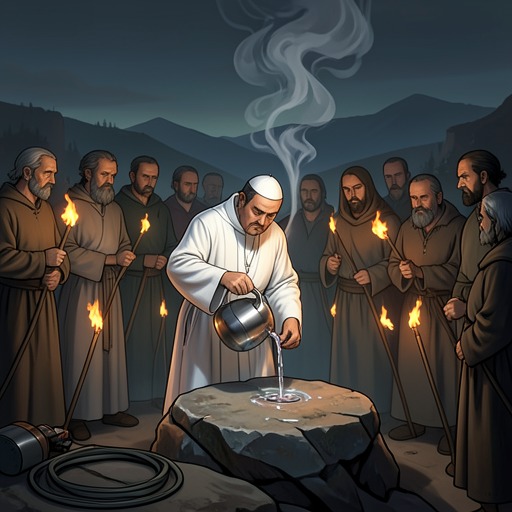
Aeneas lands in Thrace and performs worship before drawing a line along the shore and laying the deep foundations of a wall. The gesture is both practical and ceremonial: marking the boundary and beginning construction turns foreign ground into a possible homeland. Yet the act is accompanied by luckless omens. The place that appears to offer political friendship and religious continuity cannot safely receive the Trojan foundation.
The Revelation of Polydorus
The central event associated with Thrace occurs when Aeneas attempts to use the land’s vegetation for the needs of settlement. As he tears branches from a living tree, blood flows from it. The tree declares that every drop is kindred blood that once ran in Trojan veins, and identifies itself as Polydorus, a Trojan prince. The revelation transforms the landscape from passive building material into a witness bearing the evidence of political murder.
Polydorus’s warning is direct: Aeneas must flee the inhospitable shore because the ground contains his fate. Lances, still stained with Polydorus’s blood, have been driven into the earth. The image joins warfare, burial, and vegetation in a single material sign: the weapons that killed him have become roots, while the tree preserves and voices the victim’s identity. Thrace thus conceals violence beneath the appearance of natural growth, and the act of founding a wall becomes ethically impossible until the truth of the soil is recognized.
From Refuge to Prohibited Ground
The discovery overturns the expectation created by Thrace’s former alliance with Troy. A land once described as hospitable while Fate favored it is revealed as a place where Trojan blood has been absorbed into the earth. The problem is not merely that Aeneas encounters a hostile population; the territory itself has become morally charged by the murder of Polydorus. Its natural resources cannot be treated as neutral instruments of colonization, because the timber used for the new settlement releases the buried history of the displaced people.
Aeneas’s response is retreat rather than possession. The Trojan exiles abandon the wall and continue their search elsewhere, learning that destiny requires more than finding land capable of supporting a city. A viable homeland must also be free of the concealed violence that makes settlement an act of repetition. Thrace is the first place to teach the exiles that founding, cutting, and claiming are actions that may awaken what a landscape has been made to contain.
Narrative Significance
Thrace establishes a recurring pattern in the Trojan journey: movement is governed by signs, and each new shore must be interpreted before it can become home. The exiles carry their family, gods, and political future across the sea, but the encounter with Polydorus shows that they also carry the unresolved dead. The first attempted city therefore fails not because the Trojans lack labor or purpose, but because the land answers their project with a testimony of blood.
The location also gives environmental form to the poem’s concern with imperial foundation. The Trojans cut sacred timber to build their fleet and try to clear a space for walls; nature initially seems to be a resource for migration and state-making. In Thrace, however, the tree possesses narrative agency. It reveals that the environment is not an empty stage for human destiny, and that resource extraction can become an encounter with the victims of earlier power. The abandoned foundations mark the boundary between a settlement imagined by human hope and a settlement permitted by Fate.