Ottoman Empire
BluebeardThe Ottoman Empire enters Rabo Karabekian’s family history as the power behind the massacre that shattered his parents’ Armenian communities and drove them into exile. The account moves from the scale and methods of mass killing to two sharply different acts of survival, then follows the parents’ escape across borders and seas. Its consequences reach forward into Rabo’s strained relationship with his father and the gap between inherited catastrophe and descendants who have largely forgotten its cultural history.
Imperial Violence and the Armenian Massacre
Rabo says that both his parents came from large families in the Old World, but that their blood relatives were lost in a massacre carried out by the Ottoman Empire against its Armenian citizens. He describes the victims as being regarded as treacherous because they were educated and resourceful, and because many had relatives across the border in the empire’s Russian enemy. The passage places the destruction within an imperial rivalry that made Armenian connections across the frontier a pretext for suspicion.
The account gives the massacre a transnational political setting. German military observers, allied with the Ottoman Empire, watched the violence; Rabo points to the later appearance of the word genocide to name the organized attempt to destroy an entire perceived subfamily of humanity. His historical comparison emphasizes that mass killing is not only a matter of intention but also of systems and capacity: he contrasts the Ottoman Empire’s lack of specialized machinery and large-scale industrial expertise with the machinery the Germans would deploy a quarter-century later. The result is a narrative that treats genocide as a planned undertaking while distinguishing the historical circumstances and means of successive imperial crimes.
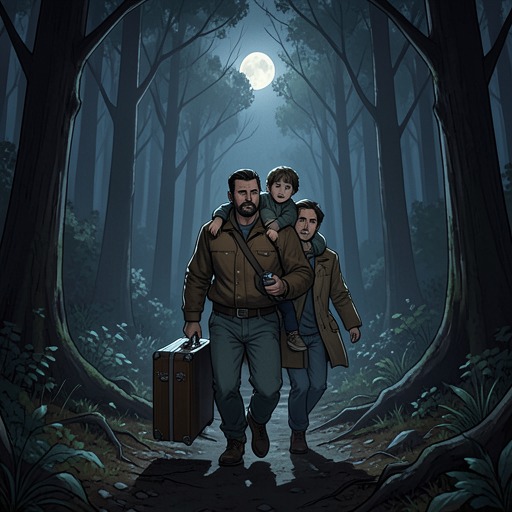
Rabo describes Armenians being taken from homes, workplaces, places of worship, education, and recreation, and driven into the countryside, where deprivation and violence left few survivors. The survivors’ fates were not merely a matter of who escaped the initial attacks: hunger, exposure, and the absence of shelter formed part of the assault. This account establishes the scale of the catastrophe without reducing it to a single battlefield or moment of killing.
His Parents’ Separate Escapes
Rabo’s mother survived by pretending to be dead among the victims. His father escaped differently: when soldiers came to the schoolhouse where he taught, he hid in the privy behind it. He had been alone in the school after the school day, writing poetry, and never saw or heard the killing itself. What stayed with him was the village’s terrible stillness by nightfall, when he believed himself its only living inhabitant. The contrast matters: his mother’s survival came from being physically amid the dead, while his father survived by hiding apart from the violence and later remembered its aftermath as silence.
Their routes out of the region were separate at first. Rabo’s mother was not from his father’s village, and they did not meet until both had crossed the lightly guarded border into Persia, roughly seventy miles from the massacre. Persian Armenians took them in; after they decided to travel together to Egypt, Rabo’s father did most of the talking because his future wife carried jewels she had gathered while escaping. In Cairo they met Vartan Mamigonian, an Armenian shoe manufacturer and survivor of an earlier massacre, who persuaded the inexperienced couple that they could find a better future in San Ignacio, California.
The jewels connect immediate survival to the family’s later migration. Rabo’s mother gathered jewels that had fallen from a dead woman’s mouth, but, whenever she recounted the escape, insisted she had not taken those still inside it. She crawled away after nightfall, when the killers had left. Later, at the Persian Gulf, she sold one of the compact treasures to pay for passage on a small freighter bound for Cairo by way of the Red Sea. Rabo links the family’s eventual American citizenship to the jewels, while preserving his mother’s insistence on the boundary between what she collected and what she left untouched.
Memory, Shame, and Cultural Inheritance
The massacre survives in the next generation as family testimony and as an uneasy relationship between Rabo and his father. In a conversation with Circe Berman, she suggests that his father suffered from survivor’s syndrome and was ashamed that he had lived when friends and relatives had died. Rabo answers that his father was ashamed his mother had survived too. He calls his father upsetting and admits that remembering him hurts; when Circe urges forgiveness, Rabo says he has done so many times and wants a receipt for it. The dry joke gives forgiveness the character of an effort repeatedly undertaken, not a settled resolution.
Rabo argues that his mother had an even stronger claim to survivor’s syndrome. She had been in the midst of the killing, pretending to be dead while people lay on top of her, and she was still very young. The remembered scene also includes the open mouth of an elderly woman whose jewels lay both inside it and on the ground below. In later telling, Rabo carefully distinguishes the jewels his mother took from those she did not. The detail keeps the family’s escape from becoming a simple tale of good fortune: survival involved a choice she later made central to how the story was told.
His father’s memories also surface in the phrases he might repeat while working in California, where Rabo says there were no other Armenians within a hundred miles. He recalled the million Armenians killed, the lost homeland, the Armenian alphabet, and the resistance at Musa Dagh, where civilians held off Turkish militiamen for forty days and nights before being exterminated. These references make language and historical names part of the family’s survival: Rabo’s father could express his self-pity in Armenian, which only his wife and son understood, and he invoked Mesrob Mashtots, who created the Armenian alphabet. The account thus records both the persistence of cultural memory in the parents and its weakening among later generations.
Rabo gives the generally accepted death toll as one million, or two-thirds of Turkey’s Armenians and about half of Armenians worldwide at the time. He contrasts that loss with a present Armenian population of about six million, including his two sons and three grandchildren, who, he says, know and care little about Mesrob Mashtots. This contrast turns family memory into a question of transmission: descendants inherit the consequences of an escape and migration even when the history and cultural references behind them have faded.
Narrative Significance and Afterlife
The Ottoman Empire’s significance in the narrative is inseparable from displacement. The parents’ escape leads through Persia and Egypt before Vartan Mamigonian directs them toward California; a story about imperial violence consequently becomes the prehistory of Rabo’s American identity. Their journey is not presented as a smooth passage from danger to safety, but as a chain of precarious decisions involving concealment, a guarded border, refuge among Persian Armenians, and the sale of a jewel to purchase passage.
The history returns in Rabo’s present conversation not as detached background but as a force shaping family feeling. Circe’s language of survivor’s syndrome helps bring his father back into view, while Rabo’s reply complicates any simple assignment of shame: both parents survived, but in different circumstances, and the son has spent years trying to forgive the father he remembers as difficult. At the same time, the distance between the father’s Armenian references and the grandchildren’s indifference shows how catastrophe may remain consequential after its original witnesses and cultural context recede.
The narration also sets the empire’s violence within Rabo’s broader reflection on empires, which he says remain present even when less openly named. That movement from a particular history to a wider warning does not erase the Armenians’ specific experience: the account remains anchored in the lost relatives, the parents’ distinct escapes, the family’s migration, and the memory passed unevenly to later generations. The Ottoman Empire is therefore both a historical agent in the family’s past and the starting point for a narrative about survival, diaspora, and the fragile inheritance of memory.