San Ignacio
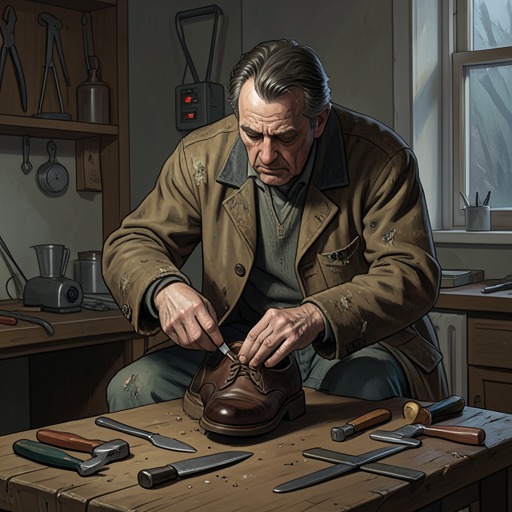
BluebeardSan Ignacio is the California town where Rabo Karabekian is born in 1916 to immigrant parents and grows up amid the fragile security of his father’s shoe-repair business. Recalled from the vantage point of his 1987 autobiography, it is more than a birthplace: it holds the family’s private calamities, an unresolved immigrant dream of property and belonging, and the small-town economic collapse that helped determine the family’s future.
Setting and Family Beginnings
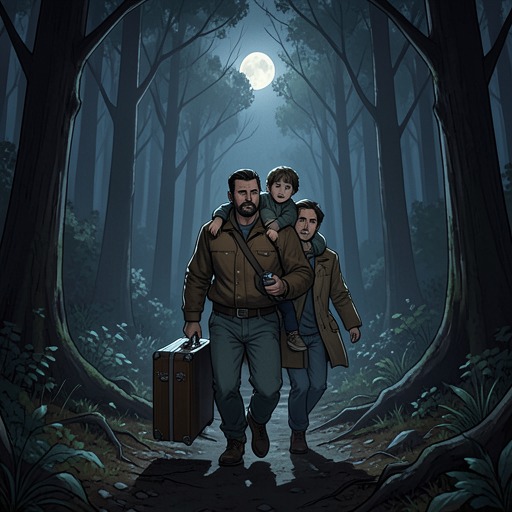
Rabo’s parents establish themselves in San Ignacio after Vartan Mamigonian tells them in Cairo that they are buying a grand white house there with most of his mother’s jewelry. The house is supposedly distinguished by a long winding driveway and a porte-cochere. The promise is represented by a photograph and a deed crowded with signatures and sealing wax; both remain for years in the bedside table of the family’s tiny apartment above his father’s shoe-repair shop. The contrast between the imagined estate and the actual apartment gives the town an enduring double aspect: it is the place where the family puts down roots, but also where an expected prosperity never arrives.
Rabo grows up as the only artist of any age or sort in San Ignacio. In his later mental arrangement of his life, his boyhood works belong to the earliest and most distant gallery, before the magazine illustrations he made as an apprentice to Dan Gregory. That retrospective image makes the town the starting point of an artistic life that will be lived elsewhere, without making its influence disappear: San Ignacio remains the ground from which Rabo measures both ambition and loss.
Family Losses and Local Memory
Rabo’s mother dies when he is twelve from a tetanus infection she evidently picks up while working in a California cannery. He describes the path of the infection with almost forensic precision: tetanus spores, originating in horse intestines, persist in the dirt around the cannery, and one reaches a cut in her hand. His account turns an ordinary workplace injury into an explanation of how a tiny, dormant danger can travel through a life. The cannery’s location on the site of an old livery stable makes the town’s past physically present in the setting of his mother’s death.
His father dies in 1938 at the Bijou Theater in San Ignacio. He has gone to the movie alone, and when the film ends and the lights come on, the other patrons go home while he remains. Rabo’s plain account fixes the death in a local place of public entertainment, but the detail of the emptying theater gives it a stark solitude. His father has never even considered remarrying after his wife’s death; San Ignacio is thus also the place where the surviving parent’s bereavement and isolation endure.
The House That Was Never Theirs
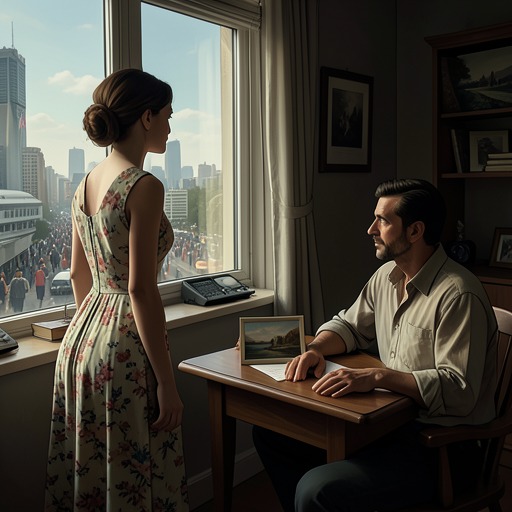
The supposed house acquires a different meaning when Rabo prepares to leave for New York City in 1933, during the Great Depression. Before he boards the train to seek his fortune, his father gives him the photograph and asks him to let him know if he ever finds the house, adding that wherever it is, it belongs to him. The handover makes the photograph a family relic and a charge: the father’s claim to ownership survives even though its promised object has not been found.
After his father’s funeral, Rabo returns to New York City and tears the photograph to pieces. He does so in anger, concluding that his father’s own choices have damaged his parents more than Vartan Mamigonian’s fraud did. In Rabo’s counterfactual account, his father might have moved the family to Fresno, where an Armenian community could have sustained its language, customs, and religion while its members grew happier in California. He might even have become a beloved teacher again. Rabo does not absolve Mamigonian; he refuses to make the scam the sole explanation for the family’s unhappiness. The town stands at the center of that distinction: the deception concerns a house supposedly there, but Rabo’s mature grievance is that his father remained in San Ignacio and did not seek a different communal life.
Work, Poverty, and the Town’s Economic Reversal
The family’s local foothold is precarious. Rabo’s father once owns the building that houses his shop on the first floor and the family’s home on the second, having bought it with a loan from the Luma County Savings and Loan Association. The bank’s failure wipes out his savings; its receivers then foreclose mortgages in arrears, including the mortgage on the building. The family’s home and livelihood are therefore bound to the same local financial collapse. The irony is severe: residents entrusted their savings to the institution, and the resulting failure leaves many of them unable to meet the very mortgages the bank had issued.
Rabo recalls the institution’s nickname, “El Banco Busto,” and notes that depositors had no federal insurance scheme to protect them. The failure is not simply a private misfortune in the family story: it is a town-wide reversal in which savings vanish, debt comes due, and a small business’s premises are put at risk. Against the photograph of an elegant house supposedly waiting in San Ignacio, the shop and apartment embody the material reality his parents actually inhabit.
Narrative Significance
San Ignacio enters Rabo’s autobiography through memories organized around particular places and objects: the cannery, the Bijou Theater, the apartment above the shop, the photograph, and the building lost after the bank collapses. Together they make the town a family archive, one in which the facts of birth and death coexist with competing accounts of responsibility. Rabo’s parents were deceived about a house, but he later judges that deception alongside his father’s decision to stay, his mother’s death, and the failure of the bank that had once enabled them to own a building.
The town also frames the distance between Rabo’s childhood and his later identity as a painter living in New York. He leaves San Ignacio during the Depression, yet returns after his father’s death and revisits it through the objects he remembers and destroys. His account does not turn the town into a simple origin story: it is both the place where his family tries to establish itself and the place he associates with loneliness, economic vulnerability, and roads not taken. That unresolved mixture makes San Ignacio a continuing measure of what home promised, what it provided, and what Rabo believes his father might have chosen instead.