Cairo
BluebeardCairo is a refuge and a turning point in the family history Rabo Karabekian recounts: his parents reached the city after escaping the Armenian Genocide, but there they met Vartan Mamigonian, whose fraudulent promise of a prosperous Armenian community in California displaced their plan to settle in Paris. The city’s place in the story is therefore defined by both survival and the precarious choices that followed it.
A stop along the escape route
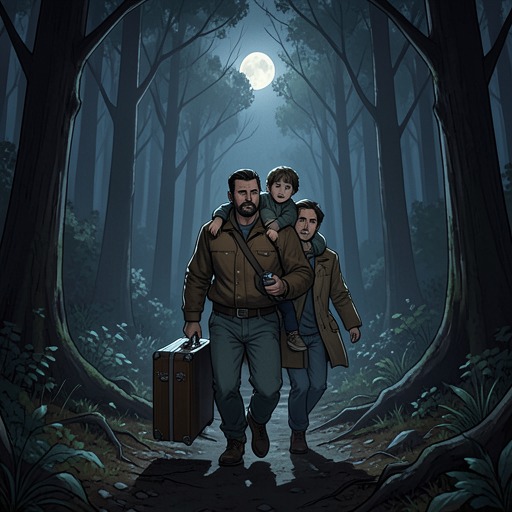
After the massacre, Rabo’s mother escaped at night and later crossed into Persia, where Persian Armenians took her and Rabo’s father in. His parents decided to continue together toward Egypt. His mother had gathered jewels from the ground near the dead, and sold some of them when the couple reached the Persian Gulf to pay for passage on a small freighter to Cairo via the Red Sea. Cairo was the destination of that leg of their flight, and the place where their next direction was set.
The city appears within a larger diaspora route rather than as a settled home. Rabo’s parents had met while traveling toward Cairo; after arriving there, they intended to marry and go to Paris, where they believed a large Armenian community offered a future among their people. The narrative thus places Cairo between flight from the massacre and an anticipated life elsewhere.
Mamigonian’s deception
In Cairo, the couple met Vartan Mamigonian, an Armenian shoe manufacturer who had survived an earlier massacre and grown wealthy making military boots for the British and German armies. Rabo’s father remembered him as a criminal and later distilled the encounter into a warning: “Never trust a survivor,” my father used to warn me, with Vartan Mamigonian in mind, “until you find out what he did to stay alive.” The warning turns survival into an uncertain credential: shared suffering did not guarantee solidarity.
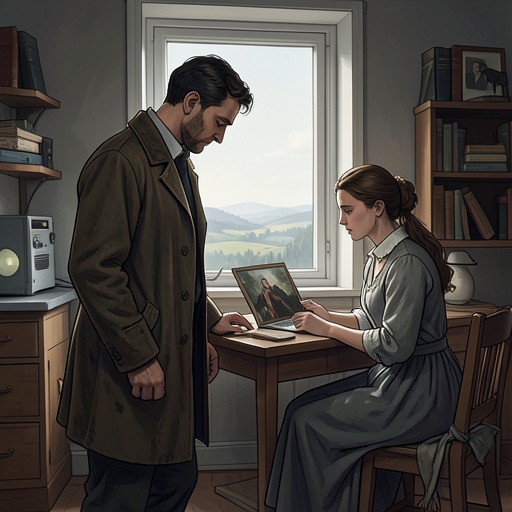
Mamigonian first offered Rabo’s parents low-paid work of the dirtiest kind. They told him about the jewels, their plans to marry, and their intention to move to Paris. Presenting himself as their adviser and protector, he claimed to be seeking a safe place for the jewels, although they had already put them in a bank. His attention to their plans gave him the opportunity to redirect them.
He invented a rich brother in San Ignacio, California, and forged letters purporting to come from him. The letters promised a thriving Armenian community, a teaching position for Rabo’s father, and a house with twenty acres of fruit trees at a fraction of their supposed value; a photograph and deed made the story appear tangible. Mamigonian offered this fiction in exchange for the jewels. Cairo is where the plan was devised and presented, linking the family’s hard-won escape resources to a fabricated prospect overseas.
Meaning in the family’s history
The contrast between the parents’ original intention and Mamigonian’s scheme gives Cairo its narrative significance. The couple had hoped to join the Armenian community in Paris; instead, a fellow survivor persuaded them to pursue a future in a California town they had never known. The migration that follows is not presented as a simple, freely chosen search for opportunity: it begins with vulnerable newcomers being deceived by someone who understood their hopes and their limited knowledge of the destination.
Cairo also holds a distinct place in the inherited memory Rabo relates. His parents’ journey there began with survival, helped by the jewels his mother had collected and sold for passage. In the city, those same resources and their desire for Armenian community became targets of Mamigonian’s manipulation. The episode makes Cairo a hinge between escape and resettlement, while showing how displacement could expose survivors not only to danger but also to exploitation by those who claimed kinship with them.