Hugo Weinschenk
BuddenbrooksHugo Weinschenk’s story turns on the gulf between a prosperous public appearance and the disgrace that follows a criminal conviction. Introduced as a diligent insurance director and accepted into the Buddenbrook family through his marriage to Erika Grünlich, he is accused of fraudulently shifting fire losses onto other insurers. He serves a prison sentence, returns home unable to resume his former public life, and ultimately leaves for London, after which his family hears nothing further from him.
Identity and Introduction
When the narrative introduces Hugo Weinschenk, he has been director of the Municipal Fire Insurance Company for some time. Crossing the company’s entrance hall between its outer and inner offices, he presents himself as a busy, prosperous gentleman: he wears a buttoned frock coat and a small black moustache, and walks with a confident swinging gait, elbows moving and fists held in front of him. His striking manner is not incidental decoration; it becomes the recognizable public persona that his later disgrace will undo.
Weinschenk’s growing attention to twenty-year-old Erika Grünlich leads to marriage. He greets her admiringly when their paths cross, while she is so overwhelmed by the encounters that she retreats to weep. Erika’s mother, Tony, sees a practical match between two people without social connections of their own. Weinschenk has steady employment and a good salary, and the marriage could bring him entry into one of the town’s leading families while supporting his career. In January 1867, after further afternoon visits, he asks for Erika’s hand in brief, direct terms.
Marriage gives Weinschenk a place in the family, but does not erase the distance between his self-assurance and the Buddenbrooks’ social ease. He is invited to family gatherings and treated with formal tolerance as a hardworking wage-earner, although he seems aware that he is out of place and responds by striking an even bolder pose. At dinner, his intrusive familiarity with Erika and his conversational mistakes repeatedly require someone else to ease the atmosphere. He mistakes orange marmalade for a kind of pudding and identifies Romeo and Juliet as a play by Schiller. These episodes establish a man earnest and energetic, but without the social discernment his new position seems to require.
Work, Marriage, and Public Standing
Weinschenk’s professional identity is bound to his visible confidence. At the family table, he often arrives late because he is occupied with work, still in his frock coat and carrying himself with the same brisk swing. When the family asks about the legal affair developing around him, he says it is going well and changes the subject. His cheerfulness and candour persist even as the case becomes a source of anxiety for everyone around him; he is not shown openly reckoning with the danger until it is impossible to avoid.
The charges concern fires in several places that caused large losses to insurers. The prosecution alleges that Weinschenk, after receiving confidential reports of the fires from his agents, fraudulently reinsured the policies with other companies, passing the losses on to them. The case is handled by prosecutor Dr. Moritz Hagenström, and its outcome is uncertain while it proceeds. The alleged conduct therefore strikes at both sides of Weinschenk’s standing: it threatens his position as an insurance director and exposes the difference between his respectable public appearance and the criminality asserted by the state.
During a Christmas gathering, the trial intrudes on the family celebration. Weinschenk gives an animated account of testimony and criticizes the presiding judge’s apparent bias and the prosecutor’s manner. He also reports that his lawyer, Breslauer, has weakened some incriminating evidence and has assured him that conviction is not yet to be feared. The household’s silence, however, makes the strain unmistakable. Weinschenk’s confident account cannot restore the easy family conversation, and the trial remains present even when the festivities have briefly postponed discussion of it.
Conviction and Family Consequences
As the trial advances, Hagenström demands that Weinschenk be arrested or provide bail of 25,000 marks courant. Erika’s mother asks Thomas Buddenbrook for a temporary advance, explaining that the family does not have the money and that Weinschenk promises not to leave town. Her plea marks a change from anxious discussion to immediate financial and familial crisis. Thomas recognizes that matters have reached a decisive point, while Tony fears that her daughter will suffer a fate resembling her own earlier failed marriages.
One week later, Weinschenk is sentenced to three and a half years in prison and arrested at once. The verdict stands despite Breslauer’s celebrated defence speech, which is praised by listeners for its irony and emotion. The public proceedings become a family matter as well: at Elisabeth Buddenbrook’s funeral, the relatives and townspeople assemble, and Tony’s history of marriages and Weinschenk’s case are among the burdens surrounding the family’s gathering. His scandal is part of the public record from which the Buddenbrooks cannot simply withdraw.
Early in 1873, the senate grants Weinschenk’s petition for pardon, releasing him six months before his sentence would have ended. Tony drives to the prison in a closed carriage to bring him home. On arrival he greets Erika and their child in a dazed, helpless way, then withdraws to a room prepared for him. For days he smokes cigars, avoids going out in public, and usually does not join his family for meals. The former director who once crossed an office hall with energetic assurance is now described as skittish and grey-haired.
Disgrace and Disappearance
The account distinguishes Weinschenk’s physical condition from his moral collapse: prison has not harmed his rugged health, but the conviction and public disgrace have shattered his confidence. He had maintained that the measures he took benefited the insurance company as well as himself and reflected ordinary business practice, a view supported by expert witnesses. The lawyers, approaching the matter from another perspective, judged him guilty of fraud, and the state’s verdict leaves him unable to face other people as he once did. The narrative does not establish that he was innocent; it shows how his own understanding of business conduct fails to protect him from legal judgment and social shame.
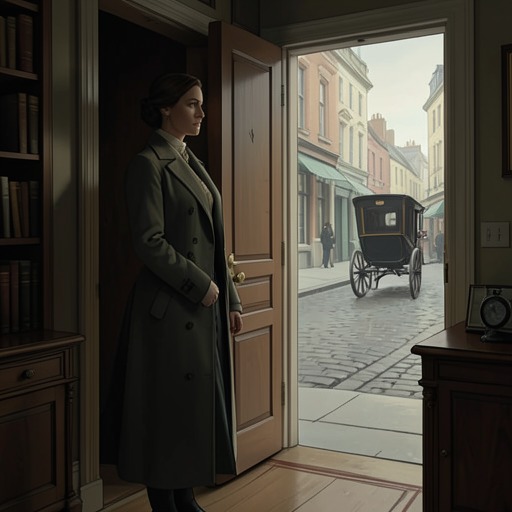
After eight to ten days spent smoking, Weinschenk begins reading newspapers and writing letters. Another eight or ten days later, he says indirectly that a new position may be available in London and that he will go there alone to make arrangements, with the intention of sending for Erika and their child when everything is ready. Erika accompanies him in a closed carriage to the train station. He departs without seeing his other in-laws.
Several days later, a letter from Hamburg reaches Erika. Weinschenk writes that he has decided not to have his wife and child join him, or even hear from him, until he can provide a home worthy of them. It is the last sign of life they receive. Tony makes several efforts to locate him, intending to establish wilful desertion as grounds for divorce, but he remains missing. Erika and her daughter Elisabeth continue to live with Tony on Linden Platz. Weinschenk’s ending is thus not a public reconciliation or a return to his former place: it is a disappearance that leaves his wife and child in the care of her family.
Narrative Role
Weinschenk’s arc repeatedly sets outward form against inward condition. His frock coat, deliberate gait, and cheerful anecdotes first signal professional energy, but after prison the same public world becomes something he cannot face. The change is rendered through observable conduct: he retreats to his room, avoids meals and public appearances, and later leaves alone. His disappearance extends the consequences of the trial beyond the sentence itself, turning legal disgrace into an unresolved family separation.
His case also brings the novel’s commercial world into intimate domestic spaces. Alleged reinsurance fraud begins as a matter involving fire losses and competing insurers, but it reaches the Buddenbrooks through the family dinners silenced by the trial, Tony’s request for bail money, and Erika’s eventual return to her mother’s home. Weinschenk’s confidence that his conduct belonged to ordinary business practice is set against the court’s conviction and the lasting loss of his self-respect. His story makes the boundary between business custom, criminal liability, and social respectability a lived family crisis rather than an abstract question.