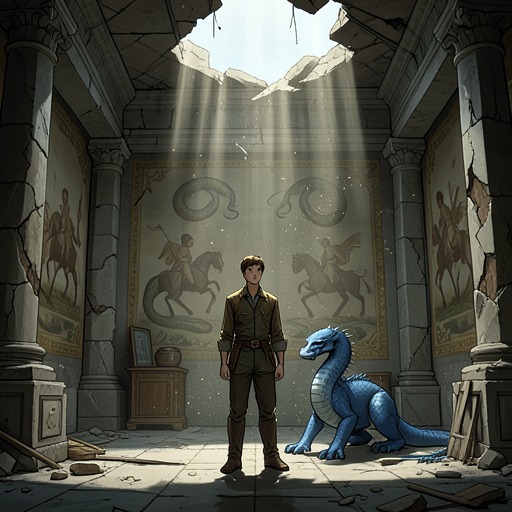
Vrael
EragonVrael stands at the vanishing point of the Dragon Riders’ golden age: their ancient leader, their last effective defender, and the figure whose defeat opened the way for Galbatorix’s absolute rule over Alagaësia. His death is remembered not merely as the fall of one warrior, but as the moment when a tradition devoted to protection and peace was broken by treachery, hesitation, and overwhelming power.
Identity and Historical Role
Vrael led the Dragon Riders during the final crisis of their civilization. The Riders had been formed thousands of years earlier to protect and guard the land, and their powers had helped produce an era of flourishing cities, prosperity, and peace. Their alliance with the elves and friendship with the Dwarves placed them at the center of Alagaësia’s political and cultural order. By the time Vrael became their leader, however, Galbatorix and the Thirteen Forsworn had turned the Riders’ strength against them. Vrael was the one figure able to resist that onslaught.
His authority combined age, wisdom, and military ability. The historical account describes him as ancient and wise, yet also as the only Rider capable of holding out against Galbatorix and the Forsworn. His task was larger than defeating an enemy: he struggled to save whatever remained of the Riders and to keep the surviving dragons from falling into hostile hands. Vrael therefore represents both the order’s accumulated knowledge and its dwindling capacity to preserve itself.
The Last Battle
The decisive confrontation took place before the gates of Dorú Areaba, the abandoned city on Vroengard that had once belonged to the Riders’ ancestral world. In that battle Vrael defeated Galbatorix, proving that the future king was not yet beyond resistance. The victory nevertheless contained the fatal weakness that would destroy him. Vrael hesitated before delivering the final blow, and Galbatorix used that instant to strike him in the side.
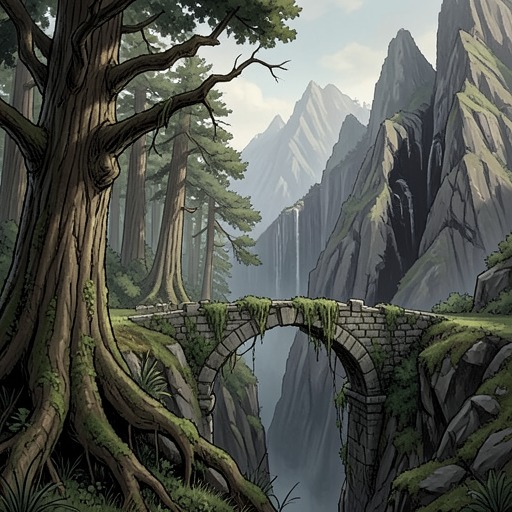
Grievously wounded, Vrael fled to Utgard Mountain in the hope of recovering enough strength to continue the struggle. The mountain’s later history preserves the memory of this retreat: its old Rider outpost, Edoc’sil, became known among commoners as Utgard, while the Riders called it Ristvak’baen, the Place of Sorrow. The names bind the landscape to Vrael’s defeat, turning a military refuge into a monument to the end of an age.
Galbatorix eventually found Vrael at Utgard. During their fight, Galbatorix used an underhanded kick to the fork of Vrael’s legs, gaining dominance through a dishonorable blow rather than through a clean triumph of skill. He then removed Vrael’s head with a blazing sword. The manner of the killing intensifies its symbolic force: the last defender of the Riders was not simply overcome in an honorable contest, but brought down through treachery at the instant when the old order had already been weakened.
Defeat and the Fall of the Riders
Vrael’s death completed the collapse begun when Galbatorix recruited Morzan, acquired Shruikan, and gathered twelve other Riders into the Thirteen Forsworn. The Riders had been unprepared for the coordinated assault. The elves fought bitterly but were overthrown and driven into secret places, while the Riders themselves fell beneath the Forsworn’s campaign. Vrael’s resistance delayed the catastrophe and preserved the possibility of survival, but it could not reverse the wider betrayal within the order.
After Vrael fell, Galbatorix anointed himself king over all Alagaësia. The sequence makes Vrael’s death the political hinge between the Riders’ destruction and Galbatorix’s reign. His defeat did not merely remove a military opponent; it eliminated the final authority capable of contesting the conqueror’s claim to rule. The king’s power thus emerges from the destruction of an older protective institution rather than from a legitimate succession.
Memory, Ruins, and Narrative Significance
Vrael survives in the story through historical recollection and physical remnants. Brom presents the past as incomplete and fragmented, yet worth preserving because memory allows what has been lost to continue living. Within that frame, Vrael’s story becomes a warning about the fragility of civilizations that appear invincible. The Riders could withstand external enemies for thousands of years, but they could not protect themselves from internal corruption, ambition, and betrayal.
Utgard gives that warning a visible form. Eragon sees the ruined tower as a remnant of the Riders’ glory, tarnished by time, and understands that the tradition he has inherited stretches back into antiquity. Vrael’s refuge is therefore both a place and a lesson: the old order once seemed unconquerable, yet its final sanctuary became the Place of Sorrow. The contrast between Edoc’sil and Ristvak’baen captures the distance between ideal and aftermath.
Vrael also helps define the historical burden placed on Eragon. Eragon’s name recalls an earlier elf who found a dragon egg and helped end the war between elves and dragons; Vrael belongs to the later history in which the Rider tradition itself is destroyed. One name points toward reconciliation and renewal, while the other marks the catastrophic failure of guardianship. When Eragon encounters the remnants of Vrael’s world, he is not merely learning ancient history: he is confronting the unfinished consequences of a fallen order and the possibility that its purpose might be recovered without repeating its failures.