Morzan
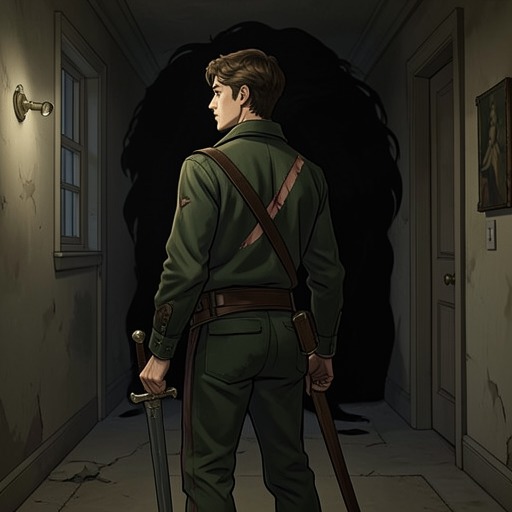
EragonMorzan is remembered as one of the decisive agents in the fall of the Dragon Riders: once a Rider and companion to Brom, he betrayed their order to Galbatorix, became the last of the Forsworn, and served as the king’s most loyal and powerful follower. Although he is already dead when the main narrative reaches its early turning points, his violence continues to shape Brom’s grief, Murtagh’s identity, Zar’roc’s history, and the ethical conflicts surrounding survival and vengeance.
Identity and Historical Position
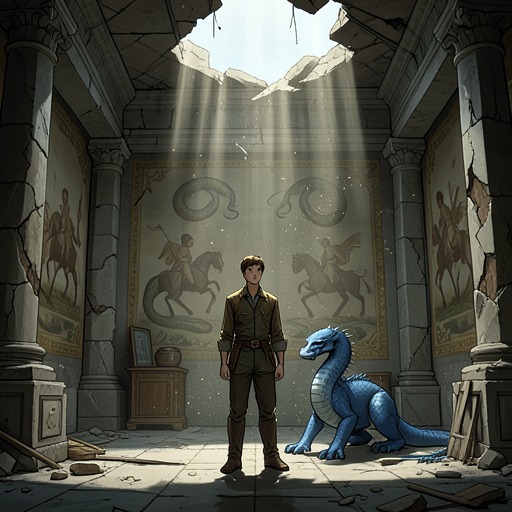
Morzan first enters the story through Brom’s public account of the Riders’ lost golden age. The Riders had been formed to protect the land, and for thousands of years their unmatched martial strength and longevity helped maintain peace while cities flourished and men, elves, and dwarves lived as allies or friends. Their destruction came not from an enemy capable of defeating them directly, but from betrayal within their own ranks. Galbatorix’s rebellion shattered the order, and Morzan became the last of the Forsworn, the Riders who joined the king.
Brom later places Morzan among the Empire’s most dangerous servants. When the Varden’s stolen dragon egg became the object of a vast pursuit, Brom and Jeod raced against the Ra’zac, Morzan, and the forces of Galbatorix. Brom describes Morzan as old, strong, and cruel, one of the king’s first followers and by far his most loyal. The description gives Morzan a double historical identity: he is not merely an ordinary commander of the Empire, but a former member of the very order whose destruction made the Empire’s power possible.
Betrayal and Conflict with Brom
Morzan’s relationship with Brom began before the betrayal. When Brom was young, the Riders selected him for their ranks, and during his training he became friends with another apprentice, Morzan. That early fellowship makes Morzan’s later treachery more than a distant political reversal. He was a companion who knew the Riders from within and then turned that knowledge against them and Galbatorix’s enemies.
The rupture also became personal. Brom says that there had already been blood between them before the search for the dragon egg, so the pursuit became a private battle as well as a struggle over the future of the Riders. When the egg was located in Gil’ead, Brom fought Morzan for possession of it. The contest was terrible, but Brom killed him, took the egg, and carried it to the Varden. Morzan’s death therefore ended his direct service to Galbatorix, yet it did not end the consequences of his allegiance; the egg, the surviving Riders’ hopes, and Brom’s subsequent life all remained tied to that confrontation.
Family Violence and Murtagh’s Inheritance
Morzan’s most immediate legacy is carried by Murtagh. In a moment of desperate disclosure, Murtagh reveals a long white scar running from his right shoulder to his left hip. He received it at the age of three, when Morzan, during one of his drunken rages, threw Zar’roc at him as he ran past. A nearby healer prevented the child from dying, but the wound remained as a permanent record of Morzan’s violence.
The sword that scarred Murtagh is the same red blade Eragon now carries. Murtagh explains that Zar’roc was the only inheritance he expected from his father, until Brom took it from Morzan’s corpse. The weapon consequently connects three generations of conflict: Morzan’s brutality toward his child, Brom’s victory over Morzan, and Eragon’s possession of the sword without initially understanding its family history.
Murtagh insists that he does not love the Empire or serve Galbatorix, and that he means Eragon no harm. His claim is made necessary by his father’s name: being Morzan’s son places him under suspicion even when his own stated allegiance is different. Morzan thus survives in the narrative not only as a villain from the past but as a social and moral burden imposed on someone who did not choose his parentage. Murtagh’s scar and his hurried explanation turn inherited identity into a question of responsibility: the son must answer for the father’s crimes even while denying that those crimes define him.
The Dragon Rider Connection
Morzan’s betrayal is also bound to the destruction of Brom’s dragon. During the fighting at Dorú Areaba, the city of Vroengard, Brom’s young dragon was killed. Brom identifies her name as Saphira, creating a painful distinction between the dead dragon who once belonged to him and the living Saphira who now accompanies Eragon.
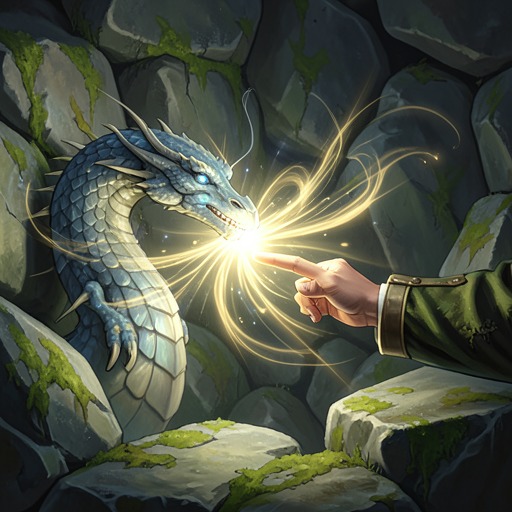
Brom tells Eragon that he continued to grieve for his dragon and to hate Galbatorix for what had been taken from him. His confession transforms Morzan’s historical role into an emotional wound that has lasted for more than a century. Brom’s warning that Eragon must guard Saphira with his life arises directly from that earlier loss. Morzan is therefore part of the chain of events that makes the bond between Eragon and Saphira both a source of power and an object of terror: Brom has already witnessed what the king’s servants can destroy.
Narrative Function and Moral Contrast
Morzan is constructed through layered recollection rather than direct action in the present. Brom’s traveling performance first places him inside a grand account of the Riders’ golden age and fall. Later, Brom’s private history supplies sharper details: friendship, betrayal, pursuit, combat, and death. Finally, Murtagh’s scar brings the same figure into the intimate sphere of childhood abuse and family inheritance. The narrative moves from public legend to personal memory, showing how a historical catastrophe persists in bodies, weapons, and relationships.
Morzan also sharpens the book’s debate over violence. In the dispute following Torkenbrand’s death, Eragon condemns the killing of a defenseless captive, while Murtagh argues that survival requires protecting oneself and what one cherishes regardless of the cost. Morzan is not present in that exchange, but Murtagh’s history makes the argument more charged: the man defending ruthless self-preservation was shaped by a father whose violence was arbitrary and intimate. The contrast separates necessary combat from wanton cruelty without making the boundary easy to maintain.
His legacy is likewise visible in the wider war. Eragon encounters the mountain of bodies at Yazuac, where neither young nor old were spared and a baby was impaled atop the pile; later, during the battle beneath Farthen Dûr, he and Saphira fight amid mass violence against the Urgals while the Varden and dwarves face destruction. These scenes do not attribute each act directly to Morzan, but they extend the historical order of violence that his betrayal helped inaugurate. By the time Eragon confronts Durza and believes the Varden, the dwarves, Saphira, and Arya have all been lost, the past represented by Morzan has become a continuing present rather than a closed chapter.
Morzan’s decisive narrative role is therefore the creation of consequences that outlive the character himself. His betrayal helps explain the Empire’s origin; his death marks Brom’s victory but not Brom’s recovery; his sword carries his violence into Murtagh’s and Eragon’s stories; and his treatment of his son makes ancestry itself a source of danger. Morzan is absent from the battlefield of the present, yet his shadow remains embedded in the political conflict, the Rider tradition, and the moral question of whether survival can justify violence.