Selena
EragonSelena is Eragon’s mother and the unresolved center of his family history. Her brief return to Carvahall, her desperate decision to leave her infant with Garrow and Marian, and the silence surrounding Eragon’s father give his childhood a permanent question: whether he was abandoned by necessity, by shame, or by some danger no one would explain.
Identity and Background
Selena had spent six years living in the cities before returning to Carvahall alone and pregnant. She arrived in expensive clothing, with her hair bound in a net of pearls, a striking contrast to the rural household to which she came seeking refuge. She asked her brother, Garrow, to let her remain until the child was born, and within five months she gave birth to Eragon.
The circumstances of her return shocked the people around her. Rather than raise the child herself, Selena tearfully begged Garrow and Marian to take him in. When they demanded an explanation, she offered only the words, “I must.” Her pleas became increasingly desperate before they finally agreed. She named the boy Eragon, left early the next morning, and never came back.
Eragon’s Inheritance of Absence
Selena’s departure determined the shape of Eragon’s childhood. Garrow and Marian raised him, but Marian later told him that they were not his birth parents. The revelation disturbed Eragon because it turned what he had regarded as permanent and unquestionable into something uncertain. He eventually learned to live with the knowledge, yet retained the suspicion that he had not been good enough for Selena, even while trying to believe that she must have had a good reason.
Her silence also concealed Eragon’s paternal identity. Selena told no one who his father was, and the unknown man never came looking for the child. Eragon therefore lacked not only a relationship with his father but even a name by which to imagine his heritage. Selena’s absence became both a personal wound and a genealogical blank: Eragon knew where he had been raised, but not fully from whom he came.
The Fortune and Its Return
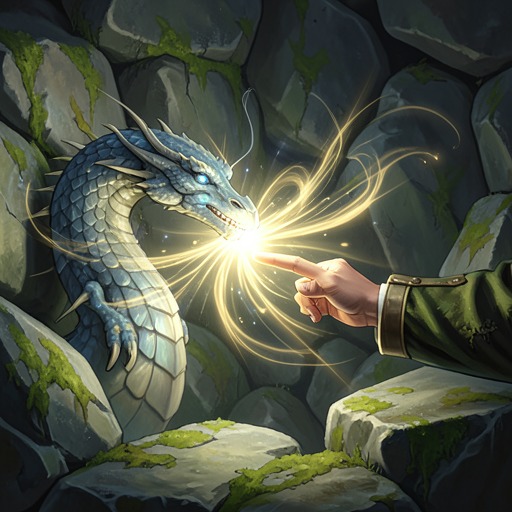
Years later, Angela revealed that Selena had once spoken with Solembum, the werecat. Because Solembum had talked to Eragon, Angela considered him special and offered to cast the knucklebones of a dragon for him; she had made the same offer to two other people who had spoken with Solembum, and only one woman had accepted. That woman was Selena.
Angela remembered Selena’s fortune as bleak and painful. Selena had not believed it at first, but Angela had never forgotten the expression on her face. Angela refused to disclose the details, saying that the knowledge had belonged to Selena alone. This refusal preserves the mystery rather than resolving it: Eragon learns that his mother may have faced a terrible destiny, but he is denied the very information that might explain why she abandoned him.
The revelation transforms Selena’s disappearance in Eragon’s mind. Her decision can no longer be understood only as a failure of maternal affection. The possibility that she acted under the pressure of a dreadful future does not prove her motive, but it deepens the moral uncertainty surrounding her. Her fate remains private, while its consequences are inherited by her son.
Connections to the Wider History
Selena’s story is embedded in a world where personal identity is repeatedly shaped by hidden histories, lost inheritances, and the survival of memory. Eragon first hears the history of the Dragon Riders from Brom, who presents the Riders as protectors whose golden age ended through internal betrayal and Galbatorix’s rise. He also learns that an earlier elf named Eragon found a dragon egg during the war between elves and dragons, making his own name part of a history older than his family’s secrets.
The book’s competing forms of remembrance sharpen Selena’s silence. Brom preserves the past through performance and oral narration, while rare books such as The Domia abr Wyrda preserve written histories that the Empire attempted to suppress. Eragon initially cannot read, and must depend on others to interpret the records that define the world he has entered. Selena, by contrast, leaves no account at all. Her history survives only in Garrow’s household memory and in Angela’s guarded recollection of a fortune.
Narrative Role and Significance
Selena functions as an absent but active force in Eragon’s development. She never appears directly in the supplied scenes, yet her choices govern his earliest understanding of family, legitimacy, and inheritance. Her abandonment produces the emotional question behind his search for origins, while the undisclosed identity of his father leaves that search incomplete.
Her connection with Angela and Solembum also links intimate family mystery to the book’s larger supernatural pattern. Selena is not merely someone who vanished; she is someone who may have known more about her future than those she left behind. Because the content of her fortune remains withheld, Selena’s role is defined by a tension between explanation and secrecy. She gives Eragon a name, a home through others, and an unanswered past, making absence itself one of his most consequential inheritances.