Lucy Kent
HarvestLucy Kent is the deceased wife of Charles Kent and the only daughter of Edmund Jordan, the former owner of the manor. Her death in childbirth leaves behind more than a bereaved husband: because inheritance is conditioned on descent through male blood heirs, her family position becomes the hinge on which the estate’s future turns. She never appears in the present action, but her loss governs Charles’s private life and makes him vulnerable to a cousin’s claim.
Family and Inheritance
Lucy was the daughter of Edmund Jordan and his wife. After she married Charles Kent, her father died, and the manor and property passed to her as his sole heir. The legal arrangement did not, however, give Charles an uncomplicated succession. On Lucy’s death, the estate was to be divided equally among her male heirs by blood, described as the sons she was expected to have. The terms place Lucy at the center of the inheritance while defining the future of her property through male descendants.
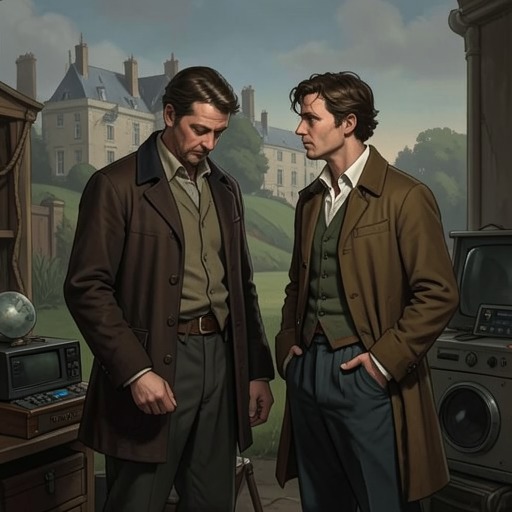
Lucy died in childbirth in the spring. The child was a girl, not the son whose birth might have resolved the succession in Charles’s favor. Charles initially considers himself Lucy’s sole heir, but Philip Earle explains that a husband is not a blood heir and identifies a Jordan cousin with a claim. That cousin, Young Edmund Jordan, is expected to arrive and assert what he regards as his entitlement. Lucy’s death therefore changes the estate from a possession inherited by marriage into the subject of a contested claim; the evidence establishes the competing positions, not the final legal outcome.
Marriage, Loss, and the Household
Lucy’s death is registered in the domestic spaces and habits she left behind. While she lived, the manor was busier and more carefully tended. Its rooms were used, and juniper smoke and lavender marked a household maintained around her presence. Village women attended her daily, helping her dress, cleaning, and working as kitchen maids. Her household was not simply a grand residence: its activity depended on her life and on the local women who served within it.
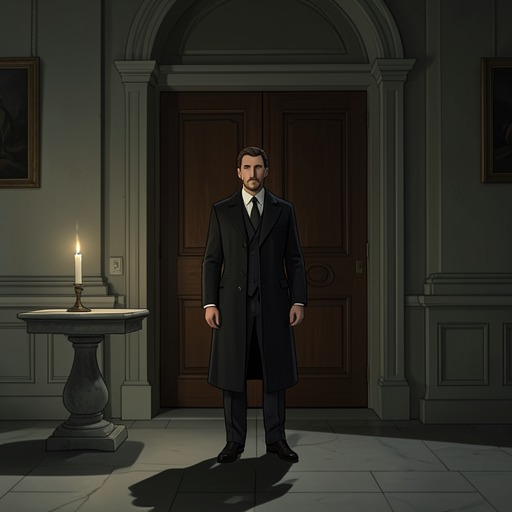
After her death, Charles simplified his life. The upstairs sleeping rooms and the old gallery remained closed; their wood paneling faded and scabbed without regular polishing. He made his bed in the parlor, where his few personal reminders of Lucy were a small loom and her hairbrush. He also kept the sleeveless mandilion she had woven for him during the winter of her death. These objects do not restore her presence, but they make the difference between the occupied house of her lifetime and Charles’s diminished household materially visible.
The Shawl and the Limits of Village Knowledge
A velvet shawl associated with Lucy becomes a clue in the village’s effort to understand the newcomer Mistress Beldam. When the woman first appears wearing it, its heavy Turkish mauve fabric and silver thread draw immediate attention. The villagers judge the garment as far beyond what a woman of her apparent station could possess. Their first response is suspicion and envy: they assume it must have been stolen, and some wonder whether they might ever wear it themselves.
Later, when Charles is asked who owned the shawl, he identifies it as Lucy’s. The revelation unsettles the villagers’ earlier assumptions. They had treated the garment as proof of the newcomer’s questionable status without knowing its history; its connection to Lucy gives it a place in the manor’s private past. Charles does not name Mistress Beldam as its wearer’s source, even though he has reason to connect her with the events under investigation. Instead, he lets the shawl stand as a trace of his wife while offering an alternative account of how it left the house. Lucy’s possession thus matters both as a personal remnant and as evidence around which Charles’s concealment takes shape.
An Absent Presence in the Estate’s Conflict
Lucy’s inheritance gives the landowner’s authority a personal and legal complication. Charles’s standing rests on marriage to Edmund Jordan’s daughter, but the deed’s emphasis on blood descent excludes a husband from the category that controls succession. Young Edmund Jordan’s arrival threatens Charles not because Lucy’s significance has faded, but because the rules governing what she inherited do not secure her husband’s place. Her family connection is simultaneously the source of Charles’s title and the weakness in his claim.
The novel presents Lucy through other people’s accounts, the household she once animated, and the objects left behind. She has no opportunity to explain what she wanted for the estate or how she understood its inheritance. The deed instead anticipates male heirs, while the village remembers her through service, marriage, bereavement, and possessions. Her absence is therefore active: her death clears the way for a succession dispute, changes the character of the manor, and leaves Charles to defend a life and property whose legal foundations depend on her but do not fully protect him.