1999 Russian Apartment Bombings
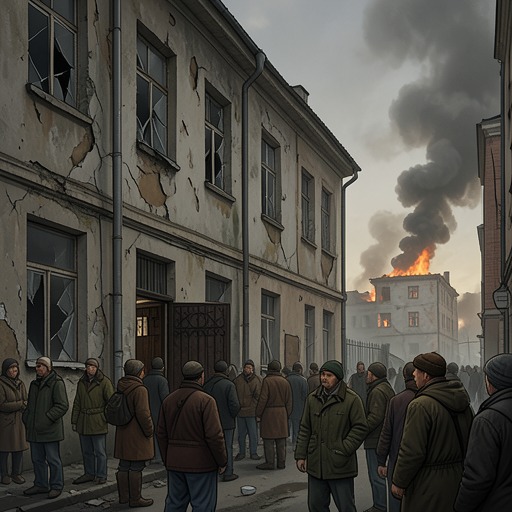
LimonovThe 1999 Russian Apartment Bombings, a series of attacks on apartment buildings in the suburbs of Moscow in the fall of 1999, killed more than three hundred civilians. In the book’s account, the bombings became both the pretext for a new war in Chechnya and the setting for a lasting, unresolved suspicion: that the attacks attributed to Chechen terrorists had in fact been carried out by the Federal Security Service, possibly with Vladimir Putin’s endorsement.
Political setting and the attacks
Six months before the presidential election, Boris Yeltsin designated Putin as his heir apparent. The book presents the election as already appearing almost a formality, then links the bombings to the effort to make the new leader look like a savior: once again, it suggests, a war in Chechnya offered a useful pretext. The account describes the attacks as having been blamed on Chechen terrorists without a shred of proof, while distinguishing that official attribution from the competing theory about responsibility.
The theory that the Federal Security Service had carried out the bombings was publicly expressed by General Alexander Lebed, journalist Artyom Borovik, former Federal Security Service officer Alexander Litvinenko, and Paul Klebnikov, the narrator’s cousin. The book notes that all four later died violent deaths: Lebed and Borovik in suspicious accidents, Litvinenko by polonium poisoning, and Klebnikov, a journalist, by gunfire from a Kalashnikov. Their deaths are recounted alongside the theory, but do not establish that it was true.
Suspicion and public response
The account characterizes the theory as both paranoid and not entirely implausible, and says it remained widespread among the Russian population. Its emphasis is not only on the allegation but on the apparent coexistence of suspicion and political support: people were not particularly bothered by the possibility, the narrator writes, and voted overwhelmingly for Putin several times while believing—or at least believing him capable of being guilty—of such a crime. The bombings thus remain politically consequential in the narrative even as their responsibility remains contested.
Putin’s rhetoric and the later echo
A few months after his promotion, Putin declared his intention to “waste the terrorists in their shithouses.” The book treats the phrase as setting the tone for his presidency. Among the National Bolsheviks, it immediately became an inside joke, recast as a threat exchanged over vodka. The joke turns presidential language into everyday banter, even as the account stresses that Eduard Limonov and his associates had no idea what awaited them.
The suspicion surrounding the bombings returns during the Moscow theater hostage crisis in October 2002. Watching news coverage from his cell in Saratov, Limonov recalled persistent rumors that the 1999 attacks had been committed not by Chechens but by the Federal Security Service with the president’s endorsement. The later recollection connects the bombings to Limonov’s growing condemnation of Putin: in the book’s account, this was the first time he used the word fascist negatively.