Timișoara Mass Grave Hoax
LimonovThe Timișoara Mass Grave Hoax was a false atrocity story that took shape amid the Romanian Revolution (1989): bodies exhumed from a cemetery were presented as evidence of a vast massacre by the dying regime, and estimates of the dead climbed from thousands to tens of thousands. The account later reversed the meaning of the images. The bodies had died natural deaths and numbered only a few dozen at most; the supposed killers, meanwhile, were not carrying out a final act of genocide but emerging as officials in the new political order.
Reports of a Last Massacre
In the months after the revolution, accounts circulated that the collapsing regime had massacred thousands of people in a final spasm of violence. The mass graves said to have been discovered at Timișoara became the focus of particular emotion. The commonly cited figure was 4,000 dead. Libération reported a more exact total of 4,630, while the television station TF1 raised it to 70,000. The shifting numbers did not slow the spread of the story; each new figure enlarged the scale of the alleged crime.
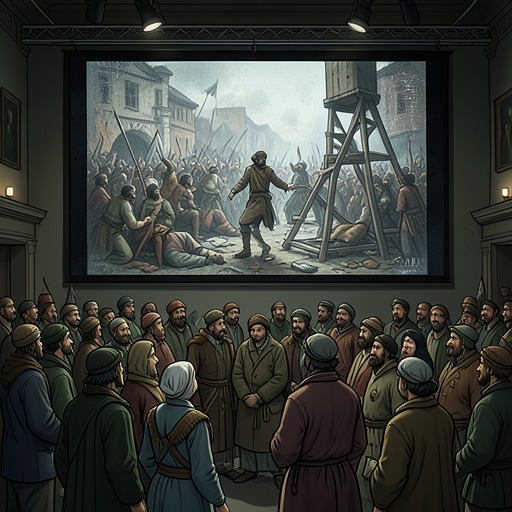
As holiday festivities approached, television showed skeletal bodies pulled from hastily dug graves. They were muddy and dressed in striped pajamas. The images gave the claims a stark visual force, and Europe trembled at the prospect of further killing. There was talk of sending international brigades to stop what was described as genocide by the Securitate, the secret police of the deposed regime. In the sequence of reports, the corpses appeared to confirm the numbers and the numbers appeared to explain the corpses. The account of an ongoing massacre seemed to acquire its own momentum.
What the Images Concealed
The revelation was that the bodies shown to cameras had not been the victims of a recent massacre. They had been dug up at Timișoara Cemetery, where they had been buried after natural deaths; there were a few dozen at most. The images had not documented the mass killing that viewers were led to believe they showed. The distance between the filmed evidence and the story attached to it was the core of the hoax: real bodies, presented as proof of a false scale and cause of death.
The correction also overturned the expected roles in the original account. Far from perpetrating a suicidal genocide as the regime collapsed, Securitate personnel showed political resourcefulness and became officials of the National Salvation Front, the party of the new president, Ion Iliescu. The claims of a last massacre had cast the secret police as desperate killers on the verge of defeat; the later account instead placed former regime personnel within the institutions taking power.
The Political Aftermath
The revolutionary break proved less complete than the change of names suggested. The Communist Party of Romania, banned and charged with every imaginable crime, had changed its name and leader but, in the narrator’s account, remained alive and well. Its substantial majority in the March 1990 elections offered a further reversal: the party presented as discredited had won freely in the new political order. The mass-grave story thus sits within a wider uncertainty about what the revolution had actually displaced and what had survived it.
The reports intrigued the narrator enough to take an assignment in Romania that spring. His subsequent description of the country as uncanny carries the consequences beyond the cemetery: amid rumors, suspicion, and competing claims about who had resisted and who had informed for the secret police, even established accounts of the past were difficult to trust. The hoax did not make every claim of wrongdoing false; rather, it made the means of knowing and judging those claims part of the story. The episode becomes an early test of the book’s attention to the gap between vivid evidence, political explanation, and facts that remain difficult to establish.