Publication of The Gulag Archipelago
LimonovThe publication of The Gulag Archipelago made testimony about the Gulag into an international political crisis. Built from the accounts of 227 former prisoners and circulated beyond Soviet control, Aleksandr Solzhenitsyn’s work exposed not merely a past excess but, as the book’s argument was understood in the narrative, a violence bound to the Soviet system itself. The Soviet leadership’s response revealed how little room remained for direct repression once the world was watching.
A hidden record reaches the West
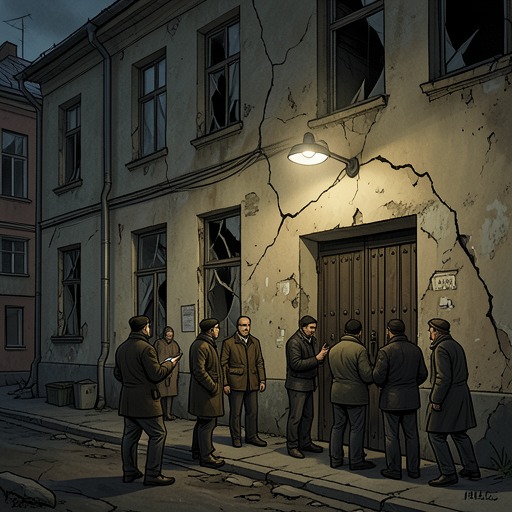
For ten years, Solzhenitsyn secretly assembled accounts from 227 former prisoners, writing in tiny script. He buried and microfilmed his manuscripts so they could be sent to the West. The scale and method of this work made the book more than a single author’s testimony: it gathered many survivors’ experiences into a record that Soviet authorities could neither safely contain nor easily dismiss as an isolated accusation.
The Gulag Archipelago was ultimately published in France and the United States. At the beginning of 1974, it was also read aloud on Radio Liberty, carrying its account beyond the printed page and across the Soviet Union’s borders. The combination of publication and broadcast made the work’s claims a public international challenge to the state’s authority over its own history.
The argument at the center of the crisis
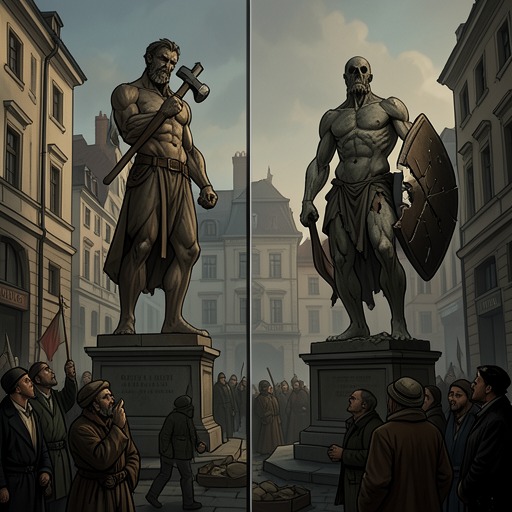
The narrative presents the book’s vital truth as the existence of the Gulag both before and after Joseph Stalin. In this interpretation, the camps were not simply a sickness confined to Stalin’s rule, but part of the Soviet system’s essence and purpose. The book’s force therefore lay not only in documenting suffering, but in contesting the comforting boundary between a supposedly aberrant past and the political order that followed it.
That challenge gave the publication a significance disproportionate to the physical book. The Committee for State Security’s director, Yuri Andropov, judged it more dangerous to the regime than the entire American arsenal. Its account threatened the state’s claim to define what had happened, while its reach into France, the United States, and Radio Liberty made the confrontation visible beyond Soviet borders.
The Politburo weighs its response
Andropov called an urgent meeting of the Politburo. The narrative stages the discussion as a drama among leaders who recognized the danger but differed over how to answer it. Leonid Brezhnev favored denouncing the work as bourgeois propaganda, yet expected the controversy to subside, much as protests over the invasion of Czechoslovakia had done. His response reflected the hope that public attention would pass without decisive action.
Podgorny, chairman of the Presidium, rejected that passivity. Furious at the system’s inability to use the most extreme remedy, he invoked Chile and argued for killing Solzhenitsyn. He acknowledged that Stalin’s repression had gone too far, but saw the current restraint as an opposite and dangerous excess. Kosygin offered a less openly lethal alternative: sending the writer beyond the Arctic Circle.
Andropov’s intervention narrowed the choices. In his judgment, the moment when Solzhenitsyn could have been killed had passed; the world was watching, making such an act impossible. The leadership therefore settled on expulsion as the only remaining option. Publication had not made Solzhenitsyn safe, but it had changed the political cost of silencing him inside the country.
Public record and historical significance
The Politburo meeting’s minutes became public in 1992, when Boris Yeltsin declassified the archives. That later disclosure revealed the leadership’s response in its own deliberations: denunciation, killing, internal exile, and ultimately expulsion had been weighed against the international attention the book had drawn.
The episode links the book’s documentary method to its political consequences. Accounts gathered in secrecy and carried abroad returned as a crisis the Soviet leadership could not resolve through its customary control of publication and memory. The decision to expel Solzhenitsyn marked the limits imposed by international scrutiny, while the declassified minutes later exposed how directly the publication had forced the regime to confront the record it sought to contain.