The 1832 Parliamentary Reform
MiddlemarchThe 1832 Parliamentary Reform is a national political change whose meaning in the novel emerges through local life. In Middlemarch and its neighboring parishes, reform becomes a language of electoral hopes, landlord accountability, and social change, while its uncertain progress reveals how unevenly political awareness and power are distributed.
National Politics in a Provincial Town
The political atmosphere is unsettled by the death of George IV, the dissolution of Parliament, and the weakened standing of Wellington and Peel. In the confusion, a Tory ministry is passing measures associated with the Liberals, while voters debate whether to support Liberal candidates or the ministers’ political allies. During agitation over the Catholic Question, some readers abandon the progressive-leaning Pioneer after it sides with Peel on the issue; others are dissatisfied with the anti-Roman Trumpet, whose political voice seems to have lost force. The competing newspapers show how national questions reach provincial readers through political allegiances that do not always align neatly with party labels.
Against this uncertainty, the Pioneer argues that the country’s urgent needs call men of experience into public action. The argument gives reform a practical local dimension: political participation should answer material needs, not remain an abstract contest between parties. Yet the novel also shows that an appeal to improvement does not itself settle who will benefit or whose judgment will prevail.
Electioneering and the Promise of Reform
Mr. Brooke presents himself as an opponent of the Tories’ electoral methods, accusing Hawley and his associates of treating voters, getting them drunk, and relying on corrupt influence. He promises that Middlemarch will not be allowed to remain politically backward: voters, he says, can be educated and brought forward. His confidence rests on the belief that the “best people” support his side, a claim that also exposes the paternalism in his view of political participation. Reform is both an argument for widening political influence and a project in which established figures presume to direct the people they hope to mobilize.
The novel connects electoral politics to obligations closer at hand. Dorothea presses Mr. Brooke to improve the farms and cottages on his own estate before advocating wider change. She points to Kit Downes’s crowded home and the Dagley family’s deteriorating farmhouse, arguing that public-minded reform must begin with evils a landlord can directly address. Her appeal makes local housing and estate management a test of political sincerity: reform rhetoric is incomplete if it avoids the conditions of laborers living under the speaker’s own authority.
Reform as a Tenant’s Warning
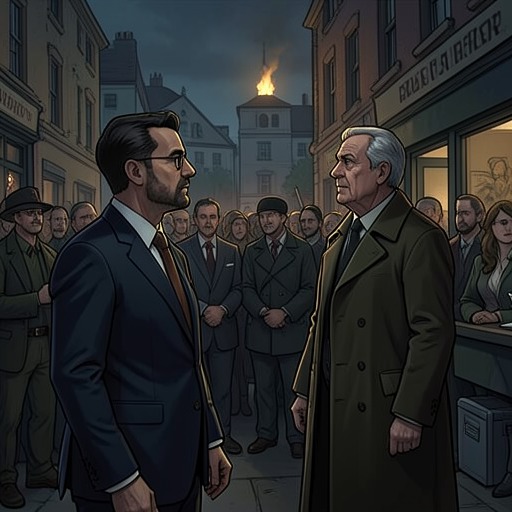
The language of reform reaches the countryside in fragmentary, distorted form. Dagley confronts Mr. Brooke on his land, rejects the suggestion that he is drunk, and says he has heard that reform will force landlords who have treated tenants badly to flee. He repeats what others have told him: that his landlord is close-fisted and that reform will come down on men like him. Driving a fork into the ground, Dagley warns Brooke to leave his son alone and look to himself before reform arrives.
The encounter exposes a sharp gap between reform as a political program and reform as a rumor among tenants. Dagley does not speak with precise knowledge of parliamentary measures, but his account registers anger about landlord conduct and a hope that political change might alter the balance of power. Brooke leaves in amazement at having been insulted on his own estate. The reversal unsettles his belief that his amiability has made him a general favorite and shows that the existing relations of landownership are already being judged from below.
Local Change and the Limits of Political Knowledge
The novel places reform within a broader movement that shifts social boundaries: people rise or fall in status, political and ecclesiastical currents regroup them, and town and parish acquire new connections. Such change is gradual and uneven rather than a single decisive break. Reform belongs to this wider remaking of provincial society, where people may be affected by political developments before they understand them clearly or share equal power to shape them.
That unevenness appears in the novel’s other local concerns as well. Railway construction is feared by landholders and residents as a threat to fields and customary movement, while sanitary policy becomes a public question after a cholera case prompts a Town-Hall meeting over how to secure a burial-ground. These matters are not interchangeable with parliamentary reform, but they show the same provincial world negotiating new institutions, public responsibilities, and claims upon land. Reform’s significance lies partly in this web of consequences: political change becomes real through the arguments, decisions, and conflicts of everyday Middlemarch.