Public Opinion and Reputation
MiddlemarchPublic Opinion and Reputation in Middlemarch operates less like a neutral account of facts than a judgment assembled from rumor, class prejudice, and selective inference. It can discredit a doctor for seeking knowledge, cast suspicion on a newcomer through his family ties, and condemn a man by association where evidence remains uncertain. Its reach is powerful precisely because it travels through ordinary conversation and respectable concern: people who consider themselves candid or charitable can help make another person’s life harder while imagining that they are serving truth or moral improvement.
Reputation as a Social Judgment
A small incident can become the basis for a much larger public story. After Tertius Lydgate asked the relatives of Mrs. Goby, a woman who had died with symptoms not clearly explained, for permission to examine her body, the request spread beyond the street where she had lived. His attempt to investigate a possible heart condition was recast as evidence that he treated respectable people recklessly and might conduct dangerous experiments on hospital patients. The fear that he would cut up the dead became part of the same rumor, even though it did not establish what he intended or what he had done. The gap between the medical question and the accusation shows how quickly an unfamiliar practice could be made legible as a threat.
Lydgate was not unaware that his success had helped provoke hostility, but understanding the source of resentment could not shield him from its effects. He told Camden Farebrother that he would not be driven out of Middlemarch: the town still offered the opportunity to pursue the medical work he cared about, and he expected to earn enough for his household. He meant to continue quietly, returning his attention to research on the common origin of the body’s tissues. His decision to stay sets professional purpose against the force of hostile opinion; the same town that gave him a field for work could make that work seem suspect.
Will Ladislaw’s reputation was shaped by a different mixture of connection and exclusion. People heard that he was related to Edward Casaubon, but also that Casaubon wanted nothing to do with him, and treated the estrangement as grounds for conjecture about Will’s character. John Hawley speculated that Casaubon must have had excellent reasons for turning against a young man whose upbringing he had paid for. The editor of the Trumpet went further, portraying Will as a possibly foreign political agent and a reckless speaker whose fluency concealed ignorance. These claims turned his uncertain social position and public advocacy for Reform into a discrediting story before they supplied any reliable account of him.
Publicity, Politics, and Belonging
Newspapers and political meetings give reputation an organized voice, but not necessarily a more reliable one. Will’s articles and speeches recommended him to Reform-minded households, while opponents used the same political activity to depict him as dangerous or unserious. The Pioneer and the Trumpet thus became rival settings in which public judgment could be reinforced rather than settled. When Lydgate observed that the Trumpet attacked Mr. Brooke as a reforming landlord, Will answered that readers of the two papers were not necessarily the same people. Public argument did not automatically persuade the public; it could instead circulate among audiences already divided by party.
Will’s manner and companionship also became material for social classification. He took children on excursions, made them a small feast, and staged a puppet show; in friendly houses he sometimes stretched out on the rug while talking. Such habits could be treated as signs of irregularity and used to support assumptions about his mixed background and social laxity. Yet the response to him varied from household to household. Harriet Bulstrode distrusted his way of speaking about Catholic countries, whereas at Farebrother’s home he was liked by the women and escorted Henrietta Noble on her errands. His acceptance was therefore neither universal nor simply a verdict on character: it shifted with the religious and political expectations of those watching him.
Lydgate and Will’s debate over working with imperfect allies exposes another way reputation governs action. Lydgate maintained that he cooperated with Nicholas Bulstrode only because Bulstrode had the judgment and resolve to advance medical reform, not from personal loyalty or private interest. Will took offense at the implication that his support for Brooke might be similarly compromised, since he did not welcome scrutiny of how his relationship with Brooke had developed. Both men distinguish a public cause from private advantage, but their exchange reveals how readily observers can suspect that political or professional cooperation conceals personal dependence.
Suspicion, Scandal, and the Cost of Association
Will’s position near Dorothea became especially vulnerable to social interpretation after Casaubon’s death. When Brooke began arranging for him to visit the Grange less often, Will understood the change as a response to Sir James Chettam’s objections and as evidence that Dorothea’s friends suspected him of seeking a rich widow’s favor. He rejected that imagined role, but the possibility of being judged in that way made the distance between himself and Dorothea feel newly decisive. He considered leaving the neighborhood rather than risk having his interest in her interpreted as opportunism. The episode shows reputation acting before an accusation is openly made: anticipated judgment can shape behavior as powerfully as explicit condemnation.
That concern became sharper when Sir James called Casaubon’s will codicil an insult that had unfairly compromised Dorothea. Brooke explained that Casaubon had disliked Will’s intellectual independence and the direction of his opinions; Sir James feared instead that the world would suppose Dorothea had given Casaubon reason to be jealous. The codicil therefore carried a social consequence beyond its effect on an inheritance. It could invite the very inference that would damage Dorothea’s name, regardless of what had actually passed between her and Will.
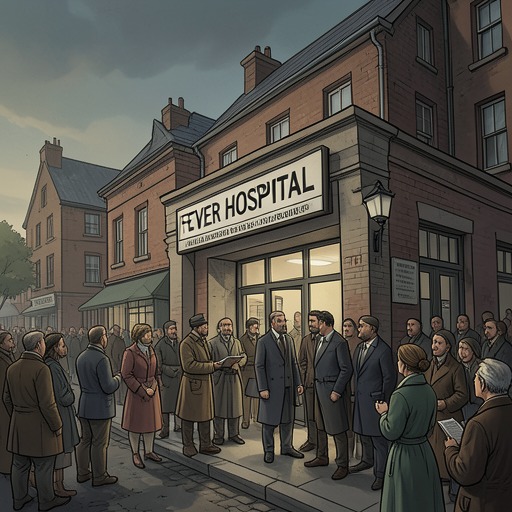
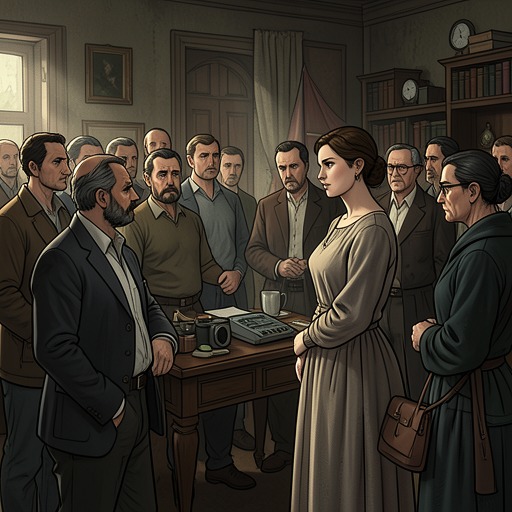
The later scandal involving Bulstrode and Lydgate shows reputation at its most destructive, when uncertain events are joined into a story of guilt. Before Lydgate knew why people were looking at him strangely, talk about Bulstrode had moved across social circles and reached the Vincy family, Lowick Parsonage, and Tipton Grange. At a public meeting, where the stated business concerned purchasing ground for a future general cemetery, Hawley interrupted Bulstrode before he could speak and called on him to resign public positions. Hawley argued that acts might escape legal punishment yet still justify other gentlemen in refusing a person’s company. The meeting thus made social exclusion explicit, turning rumor into a public demand without first resolving the disputed facts.
Lydgate recognized that Bulstrode’s earlier generosity could now look like a payment meant to bind him to silence. He could not rule out the possibility that Bulstrode had interfered with the treatment of John Raffles, but he also acknowledged that Bulstrode might have been innocent of criminal intent and that his suspicions could be wrong. Lydgate’s difficulty was not simply that he lacked a convincing defense: to explain how he had received the money innocently, he would also have to tell what he suspected about Bulstrode, potentially worsening suspicion against the man who had helped him. Circumstances seemed more persuasive to the town than Lydgate’s testimony about his own motives.
Proof, Conscience, and the Limits of Vindication
The scandal forces a distinction between legal or professional evidence and the moral meaning attached to association. Lydgate knew that the housekeeper had said she gave Raffles the opium from the phial he had left, along with brandy, but that this did not itself depart from ordinary prescriptions. He did not know why his orders had been disobeyed. The accusation against him instead rested on a chain of inference: he had taken Bulstrode’s money; Bulstrode had a motive to want Raffles dead; therefore the loan must have been a bribe, and Lydgate must have agreed to conceal wrongdoing. The facts did not answer every question, but public belief filled the gaps with a conclusion that was difficult to disprove because it rested on what people were already inclined to believe.
For Lydgate, the most serious uncertainty was inward as well as public. He asked whether the money had affected his professional inclination, and whether he would have investigated the case differently had he not accepted it. He believed a doctor’s duty was to do what seemed best for the life entrusted to him, and he had argued that science must keep conscience alert by contesting mistakes. Yet obligation to Bulstrode and concern for himself had complicated that standard. The town’s judgment could therefore be unfair without making Lydgate’s self-questioning meaningless: the public accusation and the private ethical doubt are related, but they are not identical.
Even if he made a full public statement, Lydgate believed, his own account would carry little weight against the surrounding circumstances. Patients had begun calling in other doctors; townspeople avoided him or looked at him strangely. He expected his practice and reputation to be ruined even if valid evidence cleared him. Rather than leave Middlemarch or try to purchase his acquittal by denouncing Bulstrode, he resolved to remain and explain nothing publicly. That choice reflected both defiance and obligation: he would not let public pressure erase the fact that he had accepted help from a man now facing disgrace, even as he feared the association had permanently damaged him.
The novel also examines the social performance of concern through the way women hear and transmit scandal. In Middlemarch, a friend might hesitate to state an unpleasant opinion plainly, yet invoke candor, truth, or a neighbor’s moral improvement as reasons to disclose it. Such talk could make a wife unhappy under the guise of helping her, and the narrator’s irony exposes the self-approval behind this supposed charity. Harriet Bulstrode and Rosamond Lydgate are particularly likely to become objects of this attention because their husbands’ reputations determine how others interpret their domestic lives. When Walter Vincy tells Harriet that the scandal reaches beyond proof, including the circumstances of Raffles’s death, he acknowledges that talk and insinuation can injure a person even where guilt has not been established. Public opinion in Middlemarch is thus not merely a verdict delivered after events; it is a social power that shapes what people fear, what they dare to say, and whose account is allowed to count as truth.