Wealth, debt, and moral obligation
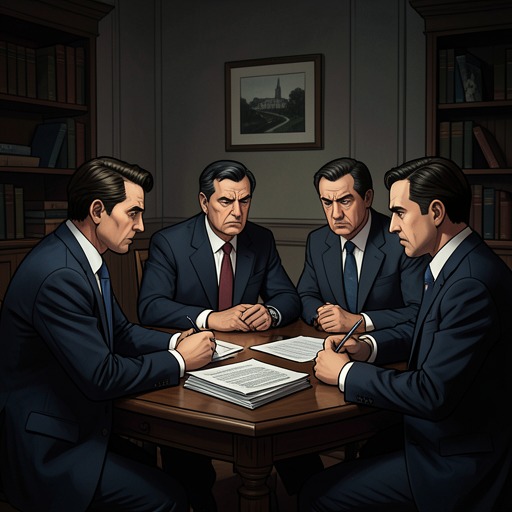
MiddlemarchWealth, debt, and moral obligation in Middlemarch form a connected system rather than separate concerns: money can enable care, but dependence can compromise judgment, narrow professional choices, and expose the gap between a person’s ideals and conduct. Lydgate’s loan from Bulstrode becomes morally fraught when the town suspects a bribe; Dorothea’s later offer of money presents a contrasting form of assistance, grounded in her wish to be useful and in her willingness to let Lydgate define the arrangement. The novel also links economic dependence to marriage, gendered expectations, and the ordinary habits of household expenditure.
Wealth and the Terms of Marriage
The account of Edward Casaubon’s marriage to Dorothea places economic and domestic expectations inside a conventional ideal of respectable matrimony. Casaubon has concluded that a man of his position should choose a young, virtuous wife of equal rank, make suitable financial settlements, and expect domestic happiness in return. He also imagines marriage as a means of leaving a family likeness behind. The narrator makes clear that these assumptions serve his own hopes: Casaubon sees Dorothea as a potentially invaluable assistant to his scholarship, someone whose admiration might spare him the need to hire a secretary, but does not seriously consider whether he can make her happy.
His idea of a wife combines emotional companionship with practical and intellectual service. Casaubon expects a modest woman whose abilities are appreciative rather than ambitious, and whose presence will confirm his sense of his own mind. The imbalance is not simply personal vanity: it reflects a social arrangement in which the husband’s plans define the marriage while the wife is expected to support them. His confidence that Providence has supplied him with the wife he needs contrasts with the absence of comparable attention to what Dorothea might need from a husband.
The courtship of Rosamond and Lydgate offers a related but distinct image of marriage as a source of support for male work. When Lydgate imagines his future wife, he expects her to admire his intellectual and professional ambitions, keep the household and accounts in order, and make domestic life harmonious without exceeding what he regards as a woman’s proper sphere. He takes this vision as evidence that marriage will further rather than obstruct his vocation. The ideal already contains a contradiction: he expects domestic order and comfort to be provided for him, while treating the labor and money required to sustain them as secondary considerations.
Household Spending and Financial Dependence
That contradiction becomes material after Lydgate and Rosamond establish their household. Their initial furnishings cost four or five hundred pounds more than Lydgate could pay from his capital. By the end of the first year, household expenses, horses, and other costs approach a thousand pounds, while income from his medical practice, once expected to yield eight hundred a year, has fallen to barely five hundred, much of it unpaid. His costs include a high rent for a house and garden, life insurance, and maintaining two horses; their spending is not balanced by reliable receipts.
The pressure grows from habits and assumptions rather than from a single exceptional purchase. Rosamond, accustomed to an extravagant household, regards ordering the best as the only kind of proper housekeeping. Lydgate likewise assumes that if something is done, it must be done properly; he dismisses the suggestion of cheaper alternatives as mean economy and does not see how they can live otherwise. He allows invitations and entertaining to continue, treating sociability as part of professional prudence even when the guests tire him. The narrator contrasts this spending with Lydgate’s knowledge of how carefully poor patients must adjust their diets to limited means: he can account for other people’s constraints without applying the same measure to his own household.
Debt therefore arrives not as an abstract shortfall but as an unwelcome demand for payment on goods already bought and used. Eighteen months earlier, Lydgate had never felt the urgent need for small sums and had looked down on those who compromised themselves to obtain them. Now financial pressure makes him confront the consequences of consumption he had treated as natural. The change exposes the limits of his self-image: he has not deliberately set out to live beyond his means, but neither has he practiced the scrutiny he once associated with independence and sound judgment.
The novel also shows how household resources and gendered expectations shape women’s choices. Rosamond’s domestic management and requests for fine goods are not detached from the material conditions of marriage; they help determine the scale of the couple’s expenses, while Lydgate’s income and professional prospects are expected to sustain the home. In another domestic scene, Rosamond rejects her mother’s suggestion that Fred’s disappointment should affect her own marriage, insists that his idleness is his problem, and turns to the practical matter of having sewing done. The moment sets sibling hardship beside her own priorities without making the two situations equivalent: family money, work, and marriage remain linked, but each character approaches those links from a different position.
The Loan and the Corruption of Judgment
Lydgate’s financial dependence becomes a moral problem when he recognizes the circumstances in which Bulstrode lent him money. After witnessing the public meeting, he reconstructs the likelihood that Bulstrode had feared disclosures by Raffles and wanted to bind him through an obligation. He cannot know with certainty whether Bulstrode interfered with the patient’s treatment, and he allows that the apparent change from hardness to generosity might have been genuine. The uncertainty matters: the moral difficulty is not resolved by proving a single motive, but by confronting how the loan alters the meaning of Lydgate’s actions.
Lydgate believes that a public account of the facts would not clear him. If he announced that he had not accepted a bribe, his own testimony would be weakened by the surrounding circumstances. To explain that he had sought money before knowing of Raffles would also reveal his dependence on Bulstrode and invite further suspicion about the lender. Even an honest defense could intensify the accusations against another person, whose motives Lydgate himself cannot confidently judge. Silence, disclosure, and self-exoneration each carry a cost.
His hardest question concerns the care owed to a patient. Lydgate asks himself whether, without the loan, he would have investigated suspected disobedience to his instructions and withdrawn from the case if his suspicions were confirmed. He recognizes that his dependence may have made him accept excuses he would otherwise have rejected. Earlier, he had insisted that medical uncertainty must not be turned into moral uncertainty and that a physician’s duty is to do what seems best for the patient’s life. Now he has allowed money, personal obligation, and concern for professional etiquette to weaken that standard. The loan has not established that he intentionally acted wrongly; rather, it forces him to examine whether dependence compromised the rigor of his response.
The town’s suspicion then attaches public meaning to a private financial transaction. Patients begin to seek other practitioners, and townspeople avoid Lydgate. He considers whether returning Bulstrode’s money and accepting poverty would be preferable to keeping assistance now stained by the appearance of a bribe. Yet he resolves not to disown Bulstrode merely to improve his own standing. He will not try to gain acquittal by denouncing the man whose help he accepted, even though he knows that this association has become damaging. His decision preserves one kind of obligation while leaving his reputation and livelihood exposed.
Assistance Without Control
Dorothea offers a contrasting use of wealth when she speaks with Lydgate after the scandal. She explains that she receives seven hundred pounds a year from her own fortune, nineteen hundred a year from Casaubon, and has between three and four thousand pounds in the bank. She had hoped to use her money to buy land and establish a village organized around industry, but Sir James Chettam and Mr. Brooke have persuaded her that the risk is too great. Her frustration is not simply that she lacks a project: she feels uneasy at possessing more money than she can use for the good she wants to do.
She proposes that the hospital continue under its existing plan and that financial support give Lydgate a chance to remain in Middlemarch and recover his professional standing. He is reluctant to let others invest in a plan whose success depends on him, since he no longer trusts his own prospects. He also refuses to be maintained for work he has not achieved. In his view, accepting a continuing income would risk turning support into a pension and leaving him indebted to others for an uncertain future. He expects instead to leave the town, seek income elsewhere, and adapt his work to what the public will reward.
Dorothea’s offer is not a demand that Lydgate submit to her judgment. She presents his recovery as a good use of resources and says that it would relieve her to put her money to work for other people. Lydgate nevertheless refuses the larger arrangement, distinguishing help from a commitment he cannot promise to repay through future achievement. The disagreement shows that generosity does not automatically erase the recipient’s concern for independence, dignity, and accountability.
Dorothea then finds a smaller form of assistance he might accept. She sends him a cheque for one thousand pounds, asking that he treat her as a creditor, or give the help whatever name he can accept, so that she can take Bulstrode’s place in the debt. She says she has more claim than Bulstrode to the satisfaction of having provided useful money and describes being Lydgate’s helper as a favor to herself. The form matters: rather than simply relieving the debt, she asks for a recognized position in relation to it. Her wealth becomes useful through a negotiated obligation, not through the power to dictate what Lydgate should do.
Moral Significance
Across these episodes, money tests the difference between formal responsibility and actual conduct. Casaubon treats marriage as a respectable arrangement that should deliver companionship, assistance, and a family future; Lydgate and Rosamond presume that an expensive domestic standard can coexist with a professional income they have not secured. Lydgate’s borrowing then reveals how financial dependence can enter professional judgment, even without proof of deliberate wrongdoing. His concern for Bulstrode and his duty to a patient pull in different directions, while the town’s judgment reduces that difficult uncertainty to suspicion.
Dorothea’s response does not solve every problem or make wealth innocent. Her resources derive partly from inheritance, and her earlier ambition to use them for a broader social project has been checked by others’ advice. But she treats money as a means of relieving difficulty, not as proof of superiority or a license to control its recipient. Her offer makes care concrete while preserving Lydgate’s choice about the terms on which he can receive it. The contrast between her flexible generosity and Lydgate’s compromised dependence gives the novel’s economic theme its moral force: resources matter not only in who possesses them, but in the relationships, obligations, and choices their transfer creates.