Debt and financial dependence
MiddlemarchDebt and financial dependence in Middlemarch work as both material pressure and a test of character. They arise from household arrangements, professional commitments, and expectations about marriage, then narrow what people can choose and how they can relate to one another. The novel contrasts financial need with ideals of independence and benevolence, showing that money troubles are never only a matter of accounts: they reshape intimacy, reputation, and the ability to pursue useful work.
Marriage and the expectation of support
Edward Casaubon’s view of marriage makes economic provision part of a wider, unequal arrangement. He expects to choose a young wife of suitable rank and character, make handsome settlements, and secure the domestic companionship he believes a man in his position should have. He also imagines that Dorothea Brooke might help with his scholarly work, allowing him to avoid hiring a secretary. In his understanding, Providence has supplied him with the wife he needs; he gives little thought to whether he is the husband she needs. The narrator’s account exposes how the conventional language of provision and domestic happiness can conceal an asymmetry: the wife’s abilities are valued in relation to her husband’s purposes.
Rosamond Vincy and Tertius Lydgate enter marriage with a different but equally consequential assumption about domestic life. During their courtship, Lydgate imagines an accomplished wife who will bring order to the home and accounts while admiring, rather than interrupting, his intellectual work. Rosamond, for her part, is accustomed to a household in which good management means ordering the best of everything. Their shared expectation that marriage will provide an elegant, supportive home does not prepare them to reckon with its cost. The economic arrangement that sustains their desired lifestyle becomes a source of conflict when Lydgate’s income cannot support it.
Household expenditure and debt
The scale of Lydgate’s financial trouble emerges from specific figures. Setting up house and preparing for marriage cost four to five hundred pounds more than his available capital. After a year, household expenses, horses, and other costs approached a thousand pounds, while practice that had been estimated at eight hundred pounds a year brought in barely five hundred, much of it still unpaid. Rent for a house and garden, life insurance, two horses, and a generously supplied table all added to the burden. What had appeared to him as the ordinary expense of doing things properly was accumulating faster than his receipts.
The contrast between the couple’s different habits gives those figures their domestic force. Rosamond equates good housekeeping with ordering the best, while Lydgate assumes that what is done should be done properly and dismisses individual economies as too small to matter. He has treated the household’s purchases as ordinary necessities rather than decisions whose cumulative cost could exceed his means. At the same time, he visits poor patients and adjusts their diets to what they can afford, yet does not readily apply the same economic scrutiny to his own household. The narrator makes that discrepancy central: expenditure changes meaning when it belongs to oneself, and Lydgate has learned the force of debt only when creditors demand payment.
The costs of dependence
As the bills come due, Lydgate’s financial predicament becomes a crisis of time and dignity. At Christmas, creditors expect payment; Dover threatens to enforce his claim against the furniture, and the handsome fees he received from Freshitt Hall and Lowick Manor have already been absorbed. He estimates that he needs a thousand pounds not only to clear his immediate obligations but to have enough left to regain a stable position. He cannot rely on the slow payments of patients without risking offense, and he fears that the practice on which the household depends is too weak to meet its costs.
The pressure also alters his relations with Rosamond. After disclosing the bill of sale, he tries to enlist her sympathy and proposes reducing expenses: they could manage with one servant and one horse. Rosamond regards a poorer style of living as a threat to his professional position. Lydgate answers that they have begun too expensively and admits that the mistake is his, but his practical proposals do not dissolve the difference between them. As money narrows his attention to creditors and immediate risks, his preoccupation widens Rosamond’s alienation. Financial dependence thus reaches beyond purchasing power: it makes shared life harder to imagine on shared terms.
Risk, assistance, and obligation
Lydgate resists asking for help because he has made independence part of his pride. He has repeatedly regarded himself as independent of Nicholas Bulstrode, whose plans he supports for what he sees as their professional and public value, not for personal advantage. When gambling at the Green Dragon briefly presents itself as an alternative, he loses and is left with disgust at the company he has kept and the risk he might have taken. The episode does not free him from debt; it sharpens his awareness that relying on luck is no answer to the pressure bearing down on him.
In March, Lydgate finally asks Bulstrode for an advance without other security. He explains that he has little family fortune to depend on, that marriage has made his expenses far greater than expected, and that a thousand pounds would prevent his largest creditor from taking his goods while also paying other debts and leaving a modest reserve. He speaks reluctantly but directly, because he sees no other way to escape the danger. The request marks a reversal: the man who had taken pride in his independence must make his future depend on another person’s willingness to trust him.
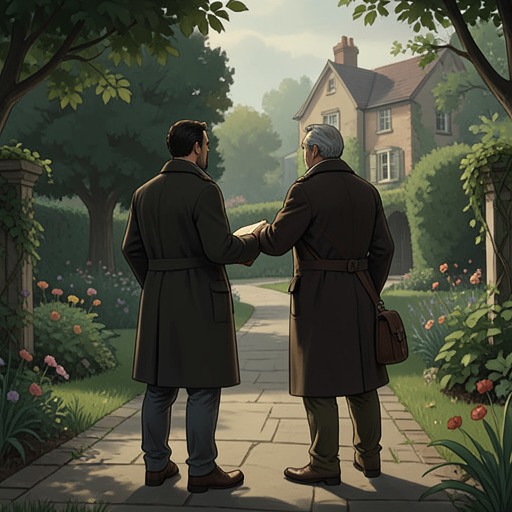
Bulstrode first refuses, but when Lydgate returns after execution has actually been put into his house, the banker reconsiders. He offers a thousand-pound cheque, asking for a note of hand and expressing the hope that Lydgate will gradually repay him. Lydgate experiences the decision as the restoration of a chance to work with some happiness and do good. Yet, on his way home to tell Rosamond and pay Dover’s agent, he recognizes the unwelcome contrast between his former position and his present joy at being personally obligated to Bulstrode. Assistance lifts the immediate burden without erasing dependence; the loan becomes both practical relief and a measure of how far Lydgate has been forced from his ideal of self-sufficiency.
Social meaning
The novel treats indebtedness as a pressure that works through ordinary arrangements rather than through extraordinary extravagance alone. Household standards, professional appearances, delayed fees, creditors’ claims, and reluctance to ask for help combine to turn private choices into public vulnerability. Lydgate’s debt is particularly painful because the anxieties it creates occupy the energy he wanted to give to thought and medical work. The distinction between his patients’ limited means and his household’s unexamined spending makes the crisis a moral as well as an economic one.
Across these episodes, financial provision and dependence also reveal the gendered assumptions built into domestic life. Casaubon expects a wife’s assistance to serve his scholarly purposes; Lydgate imagines that a wife will make home and accounts orderly while leaving his work undisturbed; Rosamond’s standard of good housekeeping helps sustain expenditure beyond the household’s means. These are not interchangeable situations, but each ties women’s expected domestic role to a man’s ambitions and resources. Debt makes the limits of those expectations visible, showing how ideals of marriage and independence can falter when income, labor, and household demands do not align.