Debt and household consumption
MiddlemarchDebt and household consumption in Middlemarch are not merely a matter of careless bookkeeping: they show how marriage, gender expectations, professional standing, and everyday purchases combine to shape people’s choices. Lydgate’s mounting liabilities emerge from a household built around standards neither spouse has adequately reckoned against income. When he finally tells Rosamond that he owes £380 in Brassing, debt becomes a test of the partnership they each imagined: he asks her to think with him, while she struggles to understand what she can do and what their retrenchment will mean.
Household Expectations and Marriage
The novel places Lydgate’s financial trouble alongside contrasting assumptions about what marriage is supposed to provide. Casaubon expects that a young wife of modest and appreciative disposition will help him, perhaps even replacing a secretary, and assumes that she will recognize his intellect as powerful. The narrator exposes the asymmetry in this expectation: Casaubon gives little thought to whether he is qualified to make his wife happy. Marriage is imagined as a household arrangement that furnishes a husband with assistance, family pleasures, and continuity, while the wife’s own needs and prospects receive less consideration.
Rosamond’s assumptions about household management also carry material consequences. She has been accustomed to an extravagant household and treats ordering the best as the proper way to keep house; Lydgate, for his part, assumes that if something is done at all, it must be done properly. These ideas reinforce one another. Neither naturally regards the household’s established standard as a discretionary choice that can be adjusted to income, and the costs of domestic respectability therefore become a shared but insufficiently examined commitment.
The engagement scenes show how readily love and domestic expectation become entangled. Rosamond and Lydgate each imagine that marriage will fulfill the other’s desires: she believes herself deeply in love, while he pictures an accomplished wife who will admire his scientific work, manage the home and accounts, and leave his professional purposes undisturbed. He even buys an expensive dinner service after deciding that marriage will further rather than obstruct his life. That confidence is sharply at odds with the later discovery that the household cannot sustain its chosen scale of expenditure.
How the Debt Accumulates
Lydgate’s difficulty is not simply that his income is low. When setting up house and preparing for marriage, his furniture and other initial expenses exceed the capital available by £400 to £500. After a year, household costs, horses, and related expenses approach £1,000, while the practice, once reckoned from old accounts at £800 a year, yields barely £500, much of it in unpaid bills. The figures make the mechanism plain: expenditure is immediate and pressing, while expected professional income proves uncertain and partly unrealized.
The spending is sustained by habits that seem individually reasonable to Lydgate and Rosamond. He thinks two horses are necessary, maintains a plentiful table, pays life insurance and high rent for a house and garden, and does not interfere with invitations that he considers part of professional prudence. He expects suitable entertainment and an abundance of fresh clothes as ordinary requirements. Rosamond’s preference for the best supports the same level of consumption. Each expense can seem too small or too necessary to challenge in isolation; together they make the household’s outgoings more than the practice can meet.
That contrast is especially revealing because Lydgate visits poor households and adapts dietary prescriptions to what their inhabitants can afford. Yet he does not readily compare those constraints with his own household’s expenditure. The narrator presents this not as a lack of knowledge about poverty, but as a failure to apply knowledge across the boundary between other people’s circumstances and one’s own. Expenditure becomes newly visible when it belongs to oneself and must be measured against personal obligations.
Debt as a Professional and Personal Crisis
Eighteen months earlier, Lydgate was poor but had not experienced the urgent need for small sums; he even felt contempt for people who lowered themselves to obtain them. Now creditors press for payment on goods he bought and used, including goods that could have been done without. Two Brassing tradesmen repeatedly write to him about bills incurred before his marriage. His practice is not becoming more lucrative, and he expects that, without a change, the debt will deepen. For a man proud of his independence and reluctant to ask favors, the letters make an economic problem an affront to his self-image as well as a distraction from scientific work.
Lydgate’s resistance to borrowing compounds the difficulty. He has no money or prospect of money and regards asking friends for help as a hardship he would rather avoid. He also knows indirectly that Mr. Vincy’s own finances are not flourishing and that assistance from him would likely be unwelcome. The limits of available support leave Lydgate with little room to maneuver: his household’s expenses continue, his receipts disappoint, and his pride discourages the ordinary recourse of seeking help.
He eventually arranges security with Mr. Dover, a silversmith and jeweller who agrees to take on the upholsterer’s credit as well. The proposed bill of sale on the household furniture would make the creditor secure for a time against a debt of less than £400; Dover also offers to take back some of the plate and other nearly new goods. Among the possible returns are purple amethysts that Lydgate bought Rosamond as a bridal present for £30. A gift once chosen as an appropriate adornment of married life has become part of the property that might have to be returned to manage the consequences of earlier spending.
Disclosure and Marital Negotiation
Lydgate has kept the financial problem from Rosamond while she was unwell, but as she recovers he recognizes that changing their habits will require her agreement. He tells her that he is short of money and that the Brassing debt is £380, adding that they are getting deeper into it because patients do not pay more quickly simply because his own creditors need payment. His request is not only for her to know the facts: he says they must think about them together and that she must help him.
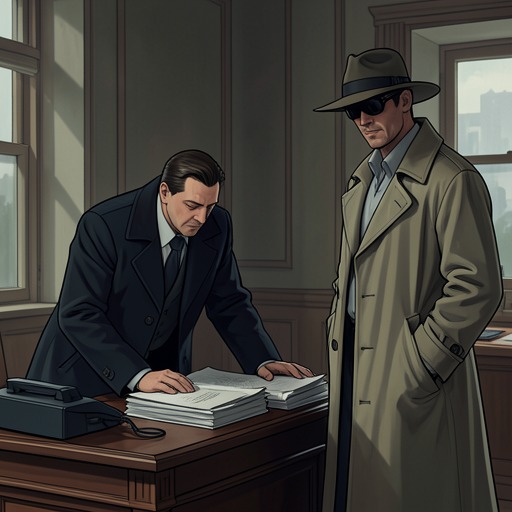
Rosamond’s first response leaves him uncertain whether she understands the urgency. When she asks what she can do, the narrator observes that the same words could express anything from helplessness to committed fellowship; in this exchange, her tone sounds neutral to Lydgate. He then explains the immediate consequence: he has to give security for a time, and someone must come to make an inventory of the furniture. The inventory makes the household’s financial position tangible, converting an abstract deficit into the possible inspection and surrender of domestic possessions.
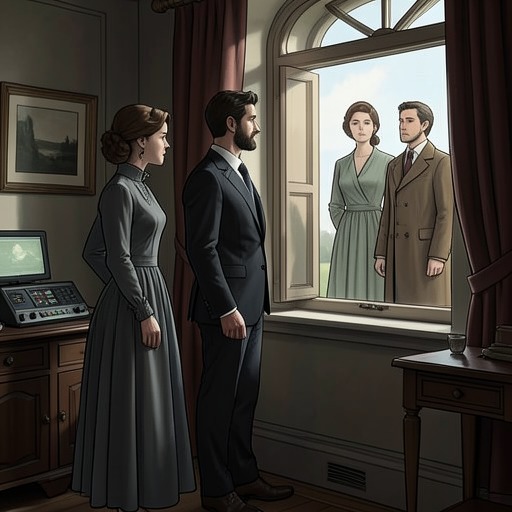
Rosamond asks whether Lydgate has sought money from her father. He says that he has not asked friends for anything and insists that he has made necessary arrangements. He tries to bring her into the practical decisions by showing her Dover’s account and explaining that some plate and jewellery can be returned. Yet the request is difficult because the jewellery includes a gift he chose for her: he cannot bring himself to single out the amethysts and ask that she give them back. Instead, he shows her which goods could reduce the debt by more than £30, leaving the decision open to her. The scene reveals a marriage in which financial facts have at last been spoken, but shared decision-making remains strained by pride, unspoken expectations, and the meaning attached to possessions.
Significance
The novel treats debt as a consequence of more than extravagance in the abstract. It takes shape through specific expectations about a home, professional respectability, hospitality, furniture, clothing, horses, and gifts. These are ordinary goods and social practices, but their combined cost can exceed uncertain earnings. The household’s apparent comfort thus depends on credit and on assumptions about future income that fail to hold.
The contrast between Lydgate’s ideals and his domestic life gives the crisis its particular force. He wants to devote himself to scientific and professional work, yet daily bills press him toward the immediate need to secure release from debt. His awareness of other people’s poverty has not protected him from the habits of his own household, and his pride makes it harder to seek help or acknowledge dependence. Financial responsibility therefore becomes a moral and relational question: not simply what can be purchased, but who recognizes the cost, who can decide what to relinquish, and whether spouses can make a common plan before creditors force the issue.