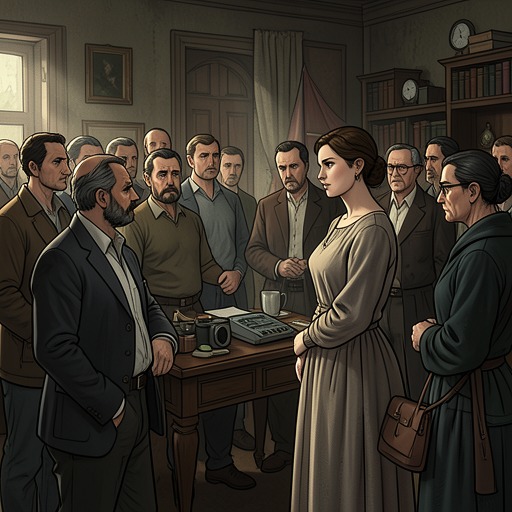
Personal honor and the stigma of birth
MiddlemarchPersonal honor and the stigma of birth become inseparable for Will Ladislaw after he learns that his maternal family history is entangled with Nicholas Bulstrode’s fortune. Will cannot undo the stain he believes has been imposed on his origins, but he can refuse to profit from it: rejecting Bulstrode’s offer turns honor from a matter of inherited reputation into a choice he must make for himself, with Dorothea Brooke’s trust and his own independence at stake.
Inherited stigma and self-respect
Will reflects that his mother had separated herself from her family despite the hardship involved. If Dorothea’s friends, including the Chettams, knew the family story, he fears, they could use it to support their suspicions that he was unfit to approach her. His response is defiant: he insists inwardly that his character is not made mean by his blood, and that those who judge him by the story will be wrong. The tension is not simply between a respectable family and an outsider; it is between a stigma Will cannot prevent others from attaching to him and the moral worth he claims through his own conduct.
The discovery also changes how Will understands his earlier farewell to Dorothea. He had not known about her private fortune and had assumed that marrying him would leave her penniless under Edward Casaubon’s arrangements. He had also imagined that he might return after years of making himself personally worthy of her wealth and position. The newly exposed family history makes that hope seem less attainable: he believes it will give Dorothea’s friends an additional reason to regard him as beneath her. His later explanation to Dorothea makes clear that he fears not only social disdain but the possibility of being mistaken for a man who seeks money under cover of affection.
Bulstrode’s offer and Will’s refusal
Bulstrode presents financial restitution as an attempt to make amends for the deprivation suffered by Will’s mother. He proposes an allowance of five hundred pounds a year during his lifetime, followed by a proportional capital sum at his death, and offers to do more if Will needs it for a worthy undertaking. The scale and terms of the offer make the moral difficulty concrete: accepting would provide Will with substantial security, but it would also mean taking money from a fortune connected to the very wrong he has come to recognize.
Before answering, Will asks whether Bulstrode was connected with the business by which the fortune was originally made, then presses him on whether that business was dishonorable and might, if exposed, have associated those involved with thieves and convicts. Bulstrode acknowledges his connection but protests that the business was established before he joined it and that Will has no right to question him. Will rejects that boundary. Because he must decide whether to enter into transactions with Bulstrode, he insists, the inquiry is his to make.
Will refuses the money, declaring that his honor and the absence of a stain on his birth and connections matter to him. He says that his mother tried to keep clear of the family taint and that he will do likewise. He would rather remain without a fortune than accept money whose origins compromise his standing. His refusal is therefore both an ethical judgment on the source of the wealth and an assertion of personal agency: he does not let financial need decide what he will accept.
Honor, Dorothea, and the limits of restitution
The narrator explains that Will’s rebuff is intensified by what the stigma means for his relationship with Dorothea and for Edward Casaubon’s treatment of him. The offer cannot be separated from the social conditions under which Will imagines Dorothea’s friends judging him. He also cannot imagine telling her that he had accepted Bulstrode’s money. The refusal protects a self-respect that he understands as essential to approaching her without the suspicion that his motives are financial.
Will’s later account to Dorothea turns that private conflict into an appeal for recognition. He tells her that he has been insulted in her eyes and in the eyes of others by an implication against his character, and insists that under no circumstances would he have lowered himself by seeking money under another pretext. Dorothea responds with sympathy and tries to assure him that she never attributed meanness to him. Their exchange shows the limits of restitution: Bulstrode can offer money, but money cannot erase the past, settle the meaning of Will’s origins, or substitute for Dorothea’s understanding. Will’s honor rests on what he chooses not to take, while the stigma remains a source of vulnerability within the social world around them.
Significance
The concept brings together inheritance, reputation, and moral choice. Will is made to confront a family history he did not create, while Bulstrode’s wealth makes that history materially consequential. The offer turns an abstract question of birth into a present decision: whether security gained through compromised money is worth the injury Will believes it would do to his self-respect and his relation to Dorothea.
The contrast also exposes the inadequacy of social status as a measure of character. Will fears that established families will treat his origins as evidence against him, yet he judges himself by whether he will accept a benefit rooted in dishonor. His answer does not remove the stigma or guarantee acceptance; it establishes the terms on which he will live with it. Personal honor emerges not as freedom from a compromised past, but as a refusal to let that past dictate his conduct.