Hanna Flat Campground
NomadlandHanna Flat Campground is a seasonal campground in the San Bernardino National Forest, northwest of Big Bear Lake. In the book, it becomes both Linda May’s summer home and the setting for her work as a campground host: a place where a forest recreation site’s ordinary amenities depend on the often low-paid labor of people who live on the grounds. Its altitude, fire history, limited host quarters, and round-the-clock demands all shape the experience of staying there.
Setting and Access
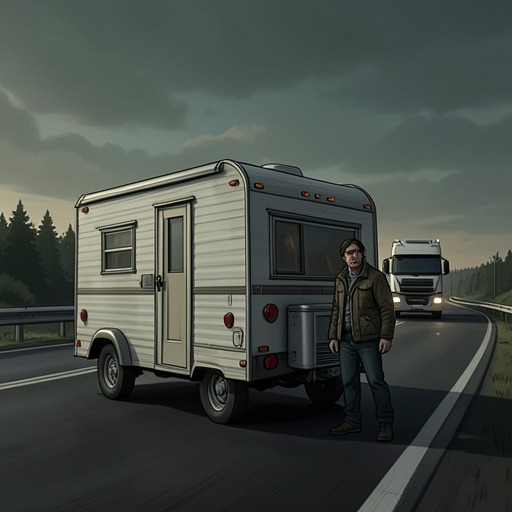
Linda arrives in May, towing the Squeeze Inn behind her Jeep from Mission Viejo. The campground is about seven thousand feet above sea level, more than a mile higher than the place she set out from, and she reaches its entrance at around six in the evening. The final approach is along Coxey Truck Trail, where asphalt gives way to rough dirt. Ruts slow her progress, and the small trailer bounces and clatters behind the Jeep. The journey establishes that the campground is not simply a convenient stop for a visitor: reaching it is the first part of Linda’s seasonal move to a remote worksite.
The landscape bears marks of an earlier fire. The 2007 Butler II wildfire burned more than fourteen thousand acres, including Hanna Flat, which remained closed for repairs until 2009. Charred tree trunks still stand among the surrounding vegetation. At the entrance, notices warn visitors about snakes, require campfires to be completely extinguished, and caution against bringing in firewood that may carry invasive insects or plant diseases. These warnings make fire and ecological protection part of the site’s everyday management, not just background to its scenery.
Layout and Facilities
A large map at the entrance lays out a road looping through eighty-eight numbered campsites, each available to rent for twenty-six dollars a night. Nearby is a separate, unnumbered tract reserved for the camp host. Its facilities include a paved parking pad, water and power hookups, and a picnic area with a table and campfire ring. A sign identifies the space as the camp host’s site. The arrangement provides practical necessities for someone living at the campground, while keeping that person conspicuously close to the entrance and the visitors they are expected to assist.
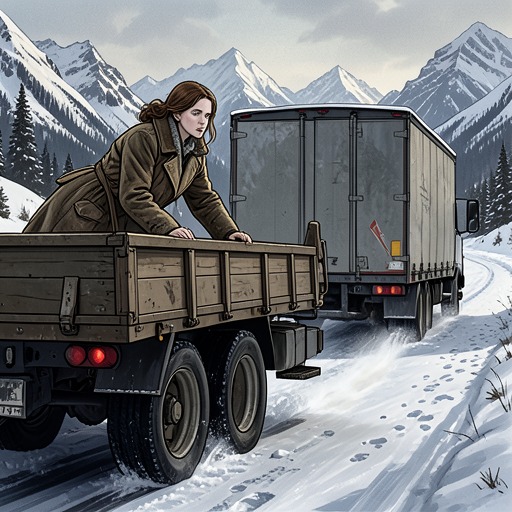
Linda’s accommodation is the Squeeze Inn, a compact trailer that she has towed up the rough track. She plans to stay at Hanna Flat from May through September, and the campground is her home for the next four months. The book also depicts the trailer under snow, a reminder that the host’s living conditions remain tied to the mountain’s changing weather. The host tract’s hookups and parking pad offer a place to settle, but they do not separate domestic life from the campground’s operation.
A Seasonal Workplace
This is Linda’s third summer as a campground host. Her job combines janitorial work, fee collection, groundskeeping, security, and welcoming visitors. At orientation, held at Big Bear Discovery Center, hosts receive a 350-page operations manual and instructions about details that can easily escape a visitor’s notice: small pieces of litter and hazards such as large cones fallen from the pines. The training also includes accounts of workplace mishaps. Linda recognizes herself in one story about a host who broke a rib while climbing onto a dumpster to reconnect its bear-proofing chain; the accident had happened to her the previous summer while she worked in Mammoth Lakes.
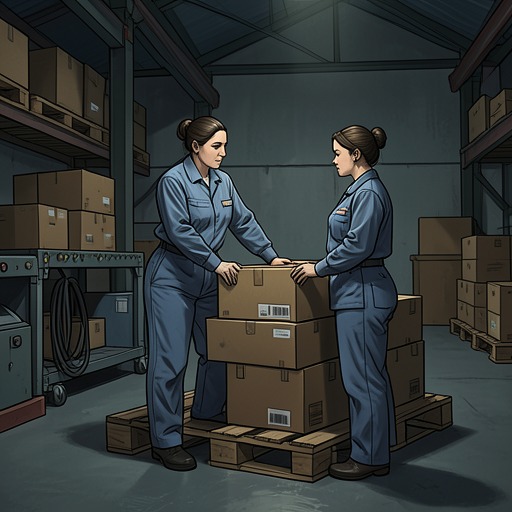
At Hanna Flat, Linda and Silvianne Delmars are responsible for all the campground twice a week. On the other three days, they share the territory with another host. Their regular work includes cleaning eighteen toilets and eighty-eight campsites, checking in visitors, collecting fees, placing reservation tags, offering hiking advice, resolving minor disputes, clearing fire pits, and completing paperwork. They also sell firewood kept in a locked cage at the host site. When campers ask where to find wood without buying a bundle, the hosts direct them toward fallen material that is already dead, down, and detached. After making their rounds, Linda can be so winded that she needs a nap.
The campground’s daily upkeep includes fire safety. At one site, Linda and Silvianne find a cooking fire still burning after its users have left. They douse it with water and stir the ashes to check for hidden sparks. When the campers return and try to relight the soaked fire pit, Linda explains the standard for leaving a campfire safe. The encounter illustrates how the hosts’ work includes both intervention and instruction: they prevent a hazard, then help visitors understand what they should have done before leaving.
Living on the Job
The camp host’s site is also a point of contact after ordinary working hours. The sign at the entrance marks the hosts as available, and visitors may approach them whenever a need arises. One night, two trucks arrive at 11:30 and wake Silvianne in the Queen María Esmeralda so she can check the campers in. Hosts are also expected to enforce quiet hours and respond to noise complaints. Linda tries to head off conflict without turning every exchange into a confrontation: she reminds likely late-night revelers to keep their fun quiet after ten, and offers trash bags to campers whose site is littered with beer bottles.
The promised schedule does not protect the hosts’ income from changes in demand. Linda and Silvianne are hired with the expectation of full forty-hour weeks, but about half a month into the job their supervisor says reservations are down and costs must be cut. For the following two weeks, they are put on a three-quarter schedule. Linda’s weekly pay falls below $290; Silvianne’s is lower still because she has not received the returning-worker raises Linda has earned. Linda’s hourly rate, after her annual increase, is $9.35—twenty cents more than the year before, when California’s minimum wage was $9.00. Their employment is at will, meaning the company’s written policy allows dismissal at any time, with or without cause or notice.
Narrative Significance
Hanna Flat makes visible the overlap between work, shelter, and access to recreation. Visitors encounter numbered sites, toilets, fire rings, and a managed forest; the hosts’ labor keeps those facilities usable and helps protect the surrounding land. Yet the people doing that work live within the same service environment, close enough to be summoned at night and expected to take on tasks when work remains. The location’s role in the narrative is therefore not limited to its mountain setting: it is where a seasonal job becomes a living arrangement, and where the boundary between paid hours and personal time proves difficult to maintain.