Yosemite National Park
NomadlandYosemite National Park enters the account through Linda May’s first season as a workamper. At Junction Campground, two miles from the park’s eastern entrance, she found a way to earn money while living at her workplace. The setting offered a sharp contrast with the retail and service jobs she had held before, but the arrangement depended on modest wages, limited facilities, and the practical support that made life in an unhooked RV possible.
Setting and Seasonal Work
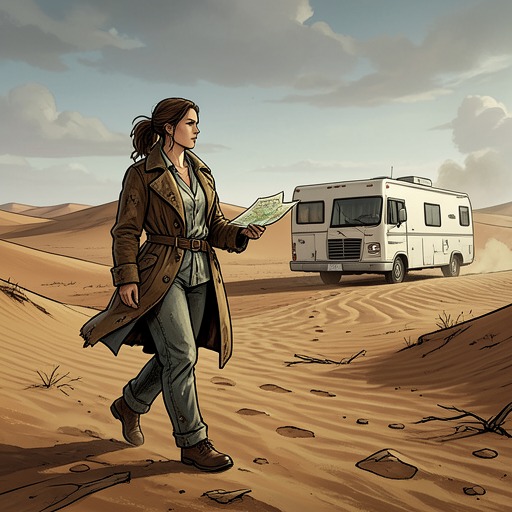
In June 2013, at sixty-three, Linda drove the El Dorado RV she had bought on Craigslist to Junction Campground and began work as a camp host for California Land Management. The campground sat amid meadows, creeks, and pine stands, with views of the Sierra peaks. Linda worked thirty hours a week for $8.50 an hour. Even a full forty-hour schedule maintained throughout the year, without vacation and with no benefits, would have brought her only $17,680 annually.
The job nevertheless changed her day-to-day expenses. Linda lived rent-free at the campground, though her site had no utility hookups. Her supervisor lent her a generator, and a water truck arrived each Tuesday to fill the RV’s fifty-five-gallon tank. With her costs pared down to groceries, generator diesel, and stove propane, she was elated by the arrangement. The campground was two miles from Yosemite’s eastern entrance, yet only a half-day’s drive from the Home Depot in Lake Elsinore where she had worked as a cashier; the physical distance was less striking than the difference between the wilderness job and a checkout line under big-box-store lights.
Campground Life and Its People
Junction Campground had thirteen first-come, first-served sites and only two outhouse toilets to clean. The absence of reservations reduced paperwork, and the work was undemanding enough that Linda also agreed, for part of her stay, to take care of nearby Tioga Lake. The location brought her into conversation with vacationers, a social part of the job she especially enjoyed.
One visitor she remembered was Mr. Brown, a solitary sixty-nine-year-old rock climber. For fifteen years, he had climbed routes around Yosemite and replaced corroded fixed anchors, the hardware that secures climbers’ safety ropes. Linda admired his stamina and generosity but worried about the danger of the work. Her exchanges with him show how campground hosting put her alongside visitors whose time in the mountains involved commitments quite different from hers.
The campground also brought together workers with different expectations of the job. Linda described a coworker, a former border patrolman, who insisted on carrying a firearm during his daily rounds. Because camp hosts could not carry guns in a National Forest, his employer let him go. The episode made clear that even a modest seasonal post was governed by rules about how its workers could perform their duties.
The Rim Fire and the Regional Setting
Linda’s summer near Yosemite proceeded smoothly until mid-August, when investigators believed a bow hunter had started an illegal small campfire in the remote Clavey River Canyon of Stanislaus National Forest, about fifty miles west of Junction Campground. Embers spread into dry brush, starting the Rim Fire. Over the following two months, the blaze burned an area more than seventeen times the size of Manhattan and became the third-largest fire in California history.
The account places the fire in the landscape around Linda’s workplace, not in Yosemite National Park itself, and does not claim that the campground was damaged. Its timing nevertheless changed the character of an otherwise uneventful summer: the forested region that framed her new working life was also exposed to the consequences of a fire spreading through dry brush. Yosemite’s significance here is thus both practical and environmental—a destination near which Linda began workamping, and part of a wider mountain landscape whose conditions could shift dramatically during her season.