Shishogi
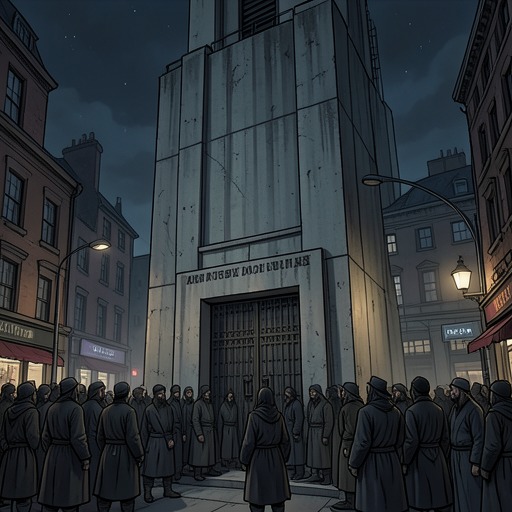
PeacemakerShishogi is the Assassins’ Guild official called the Strategist, a decades-long architect of political change whose power lay in paperwork, personnel, and patience rather than command or combat. From the Office of Assignments, he could place people where they might matter years later; when the world changed beyond the limits of his original design, that same influence became a trap. His death ended the possibility of questioning him, but surviving records and later revelations connected his work to a coup, the Guild’s internal disorder, and the danger surrounding Damiri’s family.
Identity and Method
Shishogi belonged to the Ajuri clan and worked in a clerical office of the Assassins’ Guild. The Strategist was described as a genius, perhaps, but not as someone disposed to rule. Unlike Haikuti, he had no combat skills for striking a target inside an opposing security force. His strength was the distant, indirect move: he could shape where people served and let time and circumstance turn an appointment into political force.
For forty-two years, Shishogi recommended both short- and long-term Guild assignments. Short-term recommendations included units hired for a private citizen’s Filing or assigned to take the defensive side of a dispute. Long-term placements could put an Assassin into a unit that had lost a member, or send a high-level unit to guard a lord, a house, or an institution such as the Bujavid, where the legislature met. He also recommended temporary or permanent plain-clothes assignments in the households of lords, placing Assassins in roles such as valets, cooks, and doorkeepers, officially on defensive duties.
His influence extended to the Guild’s own scrutiny of these decisions. Shishogi appointed the investigators who served the Guild Council and examined whether a Filing had merit. The Council approved other assignments, but the recommendations, placements, and investigations formed an interconnected system in which Shishogi could affect both the distribution of Guild personnel and the information used to assess claims. He killed with paper and ink: not by striking a target himself, but by arranging the conditions under which people, units, and institutions would later meet.
A Design Outgrown by Events
Shishogi’s maneuvers began forty-two years before the crisis in which his role became visible. The design he had envisioned had long since become impractical, even impossible. The political landscape and the wider world changed, while his original scheme lost the circumstances that might once have made it workable. The account leaves open whether there had ever been one coherent plan at the center of all the later developments, or whether the initial design had gradually been overwhelmed by change.
That uncertainty does not make Shishogi’s influence small. It makes it difficult to distinguish deliberate architecture from a system that kept producing consequences after its designer could no longer control them. He was not suited to govern, yet he could not simply step aside. He could not emotionally accept the changed world or physically restore the one he had known. Nor could he safely resign: the machinery he had guided might turn against him, expose what he had done, and make him its target. His isolation was part of the danger. Over time, the number of people he could trust had dwindled to none.
The Guild Crisis and the Strategist’s Reach
After Murini’s coup ended, senior Guild members who had gone underground remained at odds with the current leadership. Some had been recorded as dead while continuing to act; others maintained the appearance of retirement or stayed dead in the records. Members of this exiled group had helped bring Tabini back, but they had refused repeated orders from the present Guild leadership to return to duty. Their conflict with the Council persisted after the coup, and personal disagreements compounded their refusal.
Jago described the current Guild Council as three individuals: one compliant with the other two, and the other pair pursuing a pattern of action that the exiled members questioned. The Council had rapidly approved recommendations from the Office of Assignments, including assignments of chief officers in Dojisigin Marid. During trouble in the west, it moved forces so slowly that Tabini took the field himself. Later, when assistance was requested for action in the south, the Guild diverted its effort to arresting the two senior retirees. The operation became an extended distraction, left one unit dead, and resulted in the retirees being formally outlawed. The outlawry had little practical force where no other Guild was present, but it could provide a pretext for the Shadow Guild to pursue them.
The exiled Guild members had nevertheless been in contact with Jago’s side since the Council’s attempt to arrest them. They would not deal with Cenedi, who belonged to the Eastern Guild, but they had promised to return, investigate the records, and restore the law. They did not favor humans, and their earlier work to restore order under Murini had involved humans on Mospheira. Their stated reason for returning was the law, not support for Tabini’s association with humans. The need to prove the Council itself had broken the law made the state of the records crucial: without evidence, Tabini might have to uphold the challenge by decree and the power of the aijinate, damaging the Guild’s legitimacy.
Against that background, Shishogi’s control of the Office of Assignments and his knowledge of the records made his continued presence consequential. Jago warned that he might destroy records if he judged himself about to be dismissed. The threatened loss was not merely archival: without proof, the case against the Council could fail before the Guild membership, and the institution’s claim to enforce law would be weakened. When a new administration took shape, it proposed arguing for computers in Assignments and Records. The incoming administrator also wanted to hold the Assignments post for at least a year and keep the records under her supervision, a direct response to the risks of a paper-based system and to the power concentrated in that office.
Death, Records, and the Revelations to Damiri
Shishogi died when his office was firebombed. Nawari reported that there had been some burning and that Shishogi was apparently a suicide; although badly burned, his body was recognizable. The records suffered but were not destroyed, and a man carrying several notebooks from the office was intercepted. In a later report on the Guild operation, Cenedi confirmed Shishogi’s death and said that some records had been lost. The fire-suppression system had preserved his body and certain books where he had fallen; fallen shelving had protected other books. The office was sealed for expert examination, and investigators began reconstructing its final hours of operation, going back to the previous dawn. The notebooks were to be examined carefully, since it was not yet clear whether their interception had been intended or was genuine.
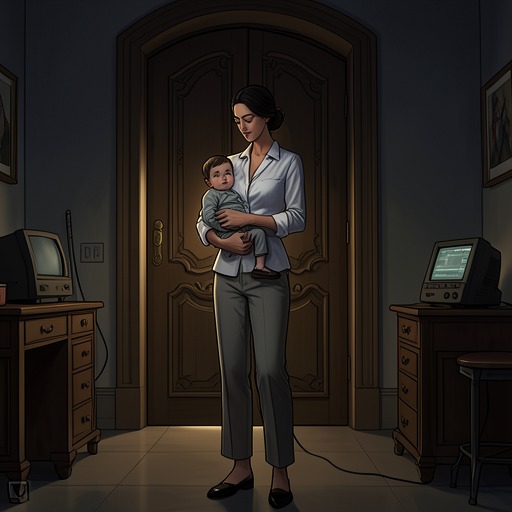
Shishogi’s death left his actions to be reconstructed from evidence and testimony. At Cajeiri’s Investiture, Bren told Damiri that he believed Shishogi, her great-uncle, had ordered her father’s assassination. Bren’s account identified Tirnamardi as the place her father was likely trying to reach, and Shishogi as the person most likely to have prevented him from getting there. He further believed Shishogi had plotted a coup from the time Cajeiri was born. When Tabini sent Cajeiri to the space station and placed him in Ilisidi’s keeping, Shishogi’s plans were disrupted; Bren suggested that the coup may have been intended to remove Tabini and place Damiri in a regency until the succession could be settled. Damiri said no one had ever approached her with such a proposal, and Bren acknowledged that some of his reconstruction remained an opinion.
Bren also connected Shishogi’s work to broader attempts to seize the aijinate. He said Shishogi had supported, with others, a Kadagidi with southern ties, while the subversion of the Guild had helped create disorder between regions, kept Tabini under pursuit, and led to an attempt to seize Cajeiri. Bren traced withheld information and political danger on the west coast back to the Guild in Shejidan, where the heads of the Guild had put Damiri’s household at risk and withheld information from Bren’s aishid as well. Shishogi was dead, Bren said, but he did not believe all his agents in the field were dead.
The revelations also clarified why Tabini had barred Damiri from taking the Ajuri lordship and had questioned her clan’s man’chi: those decisions were presented as protection, not proof that she had joined her great-uncle’s scheme. Tabini had rejected suggestions that his marriage to Damiri be dissolved for political convenience, insisting she was not complicit. Bren advised her that power might still come into her hands and that ambitious clans might one day press both Cajeiri and Seimiro. Shishogi’s surviving significance thus outlasted his own capacity to act: his hidden arrangements had endangered a family, unsettled the Guild, and left others to decide how to restore lawful authority without repeating the methods that had corrupted it.