Artur
PeacemakerArtur is a human child among Cajeiri’s close friends, and his place in the story is defined by two kinds of adjustment: learning the formal customs of Atevi society and holding fast to a friendship that began when the children first met aboard a ship. He is often nervous in courtly settings, but he keeps showing up, trying the right words and gestures, and joining Cajeiri in making their bond visible across cultural lines.
Identity and Introduction
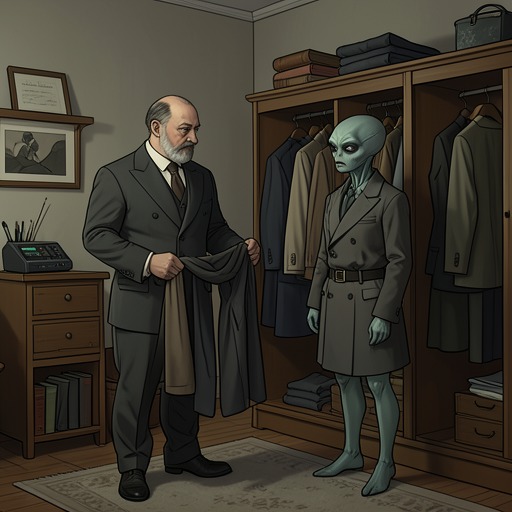
Artur arrives as one of Cajeiri’s young human guests, alongside Gene and Irene. The court tailor’s ready-made clothes are selected with the children’s different builds in mind: Gene is tall, strong, and broad-shouldered, while Artur’s arms are described as almost the same size around as Irene’s. The clothes can be adjusted quickly, and the tailor also proposes taking measurements for formal court dress. The practical attention to fit places Artur among guests whose presence requires preparation, not merely a passing welcome.
The new clothes become one of the children’s lasting impressions of their stay. Irene later says that she and the others love them, and also mentions receiving cards. Artur’s experience of court life thus includes its material forms of welcome—the tailored wardrobe and carefully presented tokens—as well as the demands of its etiquette.
Learning the Court’s Manners
Artur’s adjustment is shown through small, exposed moments in formal company. At a meal, he bumps his water glass and nearly tips it over. He turns bright red, then delivers the apology he has memorized, including the appropriate formal address. The adults accept it, and the meal proceeds. Cajeiri catches Artur’s eye and gives him a small sign of approval; Artur answers with an unhappy face, a private acknowledgment that their exchange is not meant for the whole table.
The moment matters because the children’s preparation has practical consequences. Madam Saidin had taught the guests a phrase suited to the situation, complete with the correct honorific, and Irene had grimly predicted that she would be the one to make a mistake. Instead, Artur is the one who needs the phrase. His performance is not effortless, but it is correct, and Cajeiri’s discreet signal lets him know that his effort has been noticed without turning his embarrassment into a public spectacle.
At another formal dinner, Artur moves a dish to make room for a servant, nearly sending a water goblet over. Conversation stops; he blushes and apologizes quietly, while the servant bows in embarrassment. Jase reassures him, and Lord Maidin draws the youngsters into kind conversation so the meal can continue. Cajeiri, seated nearer the head of the table, relaxes as the moment passes. Artur remains nervous and quiet, but the near accident does not become a disaster. The episode echoes the earlier glass mishap: his good intentions can become awkward in a setting with unfamiliar rules, yet the people around him help restore ease rather than leave him isolated in his mistake.
Artur’s responses also show him participating rather than merely observing. When Cajeiri’s mother asks whether Gene and Artur’s families approve of their being there, both boys answer yes and bow. Their brief replies are part of the same careful work: they must make their welcome legible in the forms the household expects.
Friendship with Cajeiri
Cajeiri and Artur’s friendship reaches back to their first meeting in the ship corridors. When Cajeiri repeats the solemn gesture with which he once introduced himself, Gene recognizes the moment and names the children again; Cajeiri responds by naming the Atevi side of their difference. The exchange recreates their first encounter, but now as a deliberate affirmation. Gene says there has been no change between them, and Cajeiri declares them friends in ship-speech in front of the adults and household staff. Artur says the word too. The children touch hands in the human manner and laugh together.
Their shared understanding does not require them to pretend that every social rule is the same. Irene points out that they are not supposed to say they are friends, and Cajeiri answers that they still can—at least until they grow up. Artur’s participation makes the moment more than a private recollection between Cajeiri and Gene: he joins in the affirmation while the room around them makes the cultural boundary visible. Their friendship is asserted openly, even as Cajeiri acknowledges that adulthood may change what the children are permitted to call it.
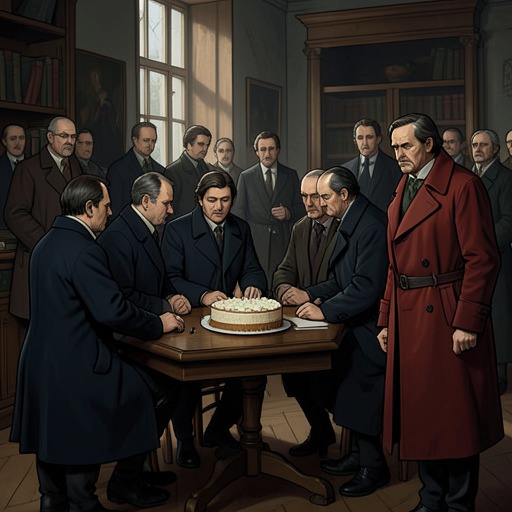
Artur also has a place in the birthday customs being introduced to Cajeiri. He explains that a human birthday cake is large and layered, with sweet filling between the layers, and that the custom includes fruit drink. He remembers that such cakes were not available to them at Reunion Station after he was little, though they were part of life on the station. The explanation gives Cajeiri a concrete account of a human celebration and connects the children’s shared past to the customs they bring into his present.
Questions, Gifts, and Keepsakes
Artur’s curiosity reaches beyond ceremonial manners. After seeing Cajeiri’s damaged letter, he asks whether the Parid’ji are related to the Atevi, a question Cajeiri says has upset some people. Cajeiri offers a qualified answer and describes where the Parid’ji once lived, the forests that formerly stretched across regions now cleared, and the distant changes associated with volcanic eruptions. Artur follows up by asking whether volcanoes mean mountains and fire. His questions prompt Cajeiri to explain history and landscape in terms that can be understood between children from different worlds; the exchange also shows that Artur is willing to ask about a difficult subject rather than treating the unfamiliar as beyond discussion.
At Cajeiri’s birthday celebration, their friendship takes the form of exchanged objects. Artur gives him a clear, shiny marble that lights up and recharges when left in any light. Gene gives Cajeiri a pocket tool that unfolds into screwdrivers, picks, and a magnifying glass, while Irene gives him a handwritten notebook of useful words and pronunciation rules. The gifts are distinct, but each brings something from the human children’s knowledge and experience into Cajeiri’s world.
Cajeiri, in turn, signs a card for Artur and explains that the cards are meant to be kept as reminders. Artur thanks him formally. The card is an unusually deliberate keepsake: its value lies not only in the birthday ceremony but in Cajeiri’s stated wish that his friends remember. Artur receives a matching record of the bond he had earlier helped affirm in words.
Narrative Role and Significance
Artur’s scenes make cultural adaptation concrete through objects and gestures: clothes selected to fit him, a memorized apology, a glass nearly overturned, a bow, a shared hand-touch, and gifts chosen for a friend. The recurring mishaps do not erase his care or his progress. Instead, they show how easily courtesy can falter when a child is learning rules whose details matter, and how reassurance, discreet signals, and welcoming conversation can keep an error from becoming exclusion.
His friendship with Cajeiri also gives the cultural encounter a personal scale. Artur can ask questions that lead to explanations, learn the protocols expected of a guest, and still join in saying that the children are friends. The birthday gifts and signed cards carry that connection beyond the moment: one object lights again when exposed to light, while another is kept to remember. Artur’s role is not to resolve the differences between the children’s societies, but to help show how friendship persists amid them—earnestly, sometimes awkwardly, and with a clear wish to be understood.