Cenedi
PeacemakerCenedi serves Ilisidi as a senior Guild officer and commands a regional Guild, placing him at the junction of her political authority and the Assassins’ Guild’s divided loyalties. His work ranges from managing prisoners and arranging a safe return to Bujavid to confronting compromised Guild leadership and helping preserve its records. Yet his authority has limits: regional distrust keeps some of the Guild’s most important exiles from dealing with him, and even Cenedi cannot obtain every clearance the Guild controls.
Identity and Position
Cenedi is introduced in the return journey from the Padi Valley as the Guild senior responsible for the prisoners traveling with Ilisidi’s party. The decision to disclose the group’s identities to the Bujavid station office belongs to him. He must judge whether the office is operating safely, whom to inform, and how to arrange a discreet arrival without exposing the party to waiting passengers or an untrusted work crew. The success of that transition depends on his judgment rather than Bren’s; Cenedi may already have contacted the station as the train joined the Bujavid spur.
His authority is practical as well as formal. At the station, the train arrives on track one, nose to nose with the Red Train, rather than on the usual provincial track. The station has evidently received the warning and diverted the party to a reserved platform, reducing the exposed walk Ilisidi and Lord Tatiseigi would otherwise have had to make. At the lifts, Cenedi uses a Guild key to open a car and temporarily remove it from service, bringing it under a senior bodyguard’s control. The moment demonstrates how deeply Guild access reaches into Bujavid systems—and how much the people who rely on that access ordinarily trust its operators without knowing its full technical reach.
Custody and the Return to Bujavid
Cenedi’s responsibility extends beyond securing the principal travelers. The party brings back three prisoners: Lord Aseida and two Dojisigi Assassins. The two Dojisigi men are regarded as honorable and sensible, and Bren considers a bare detention cell inappropriate for them. Lord Aseida, by contrast, is a politically sensitive case whose conflict with Ilisidi and Lord Tatiseigi makes ordinary custody unsuitable. The uncertainty over what Ilisidi will do with all three underlines the difference between transporting prisoners and deciding their eventual disposition; the latter is not Cenedi’s decision alone.
The journey also involves unusual cargo and competing logistical priorities. Two large crates of personal belongings travel separately with Lord Tatiseigi’s staff and security, because delaying the party’s departure or keeping the train at the local station would increase exposure. Boji, Cajeiri’s rare, black-furred parid’ja, travels in an antique cage with staff baggage in the car ahead, alongside Cenedi and some of Ilisidi’s men. The noisy, escape-prone animal is difficult to manage, but the party has resolved not to leave Cajeiri’s pet behind. Boji and Cajeiri’s valets must use the freight elevator, while the prisoners and additional armed personnel occupy another car. These arrangements make the return a carefully managed movement of people, security, and baggage, not simply a journey home.
Once the party reaches safety, Ilisidi announces that everyone will rest and that a briefing will follow, with information from her junior bodyguard and from Bren. Cenedi’s earlier role in getting them into the Bujavid is part of a wider division of responsibilities: Ilisidi’s staff can continue to report and receive instructions through separate channels, while the political consequences of the group’s arrival remain unsettled.
A Regional Officer in a Divided Guild
Cenedi’s regional identity complicates his usefulness as a bridge to the senior Guild members living beyond the Council’s authority. Jago explains that the current Guild Council has pushed Office of Assignments recommendations through too quickly, delayed assistance during the western trouble, and diverted a requested mission into an attempt to arrest two senior retirees. That operation ended with one unit dead and the retirees formally outlawed, a ruling with little force where no other Guild is present but one that could give the Shadow Guild grounds to pursue them.
Cenedi and Ilisidi have maintained contact with those retirees since returning from Najida. A message sent in Bren’s name requested a boat to Najida; the request was code, and a later meeting took place face to face in the lower corridors. The exiles would deal with Ilisidi but not with Cenedi. Their objection is specifically tied to his position in the Eastern Guild: they do not want to appear dependent on a regional Guild they distrust. Their refusal is not presented as a personal quarrel with Cenedi; it exposes a structural divide that limits even a senior officer’s ability to unite the Guild.
That divide forms part of a larger crisis over the Guild’s neutrality and rules. The exiles believe the Council has tolerated unFiled attacks on civilians, breaches of code, and failures to bring charges, including in Haikuti’s case. They also oppose the space program and fear Lord Geigi. They have reconstructed how appointments placed particular people in offices that helped arrange the coup establishing Murini’s rule. In that account, Cenedi is a contact and a possible operational partner, but not a substitute for the trust the exiles withhold from the Eastern Guild.
The Headquarters Operation
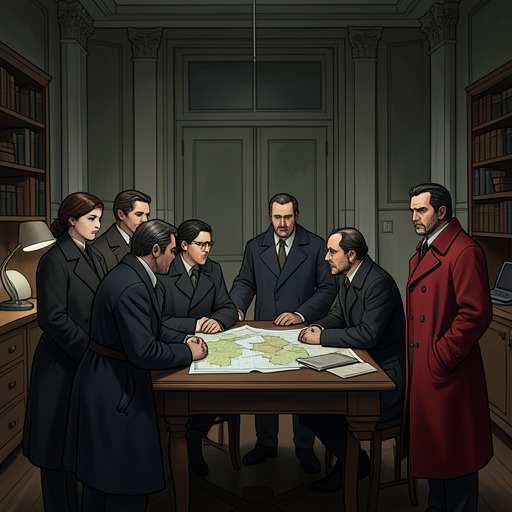
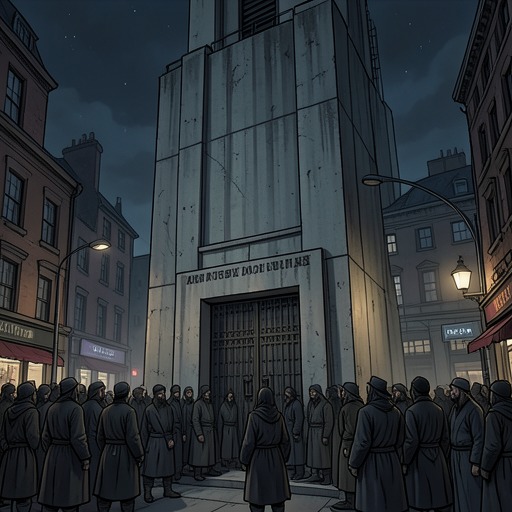
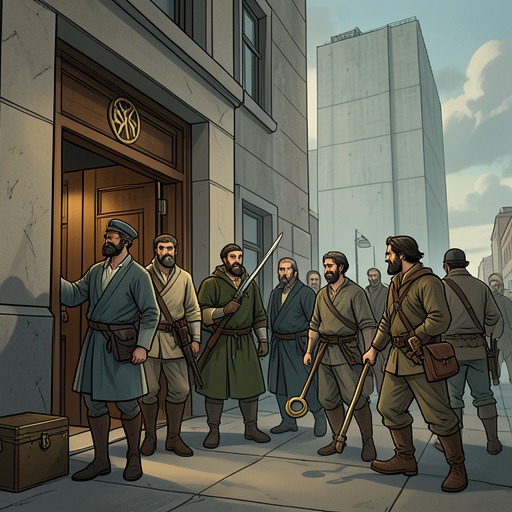
Cenedi becomes central to a proposed effort to enter Guild Headquarters and prevent the destruction of records. Bren’s aishid suggests that if Bren can enter through the front doors officially, the others can accompany him. Cenedi could also enter on Ilisidi’s business with a small group of her men, while other active units arrive on separate business on the floor above. The plan depends on opening the building from several points at once. Cenedi’s standing as a regional Guild head supplies a legitimate route into the building, while the coordinated entries are meant to preserve evidence before it can be destroyed.
The wider campaign also reaches the Guild Council’s leadership. In Tabini’s presence, Cenedi identifies Ditema of the Paigeni and Segita of the Remiandi as two of the Council’s problems, and says that both must resign. He also questions the qualifications of the third figure presiding over the Council. The exchange makes his role more than tactical: Cenedi carries an assessment of institutional failure directly to the aiji and names the officers whose continued authority is at issue.
After the fighting at Headquarters, Cenedi reports the result to Bren. Shishogi is dead, and the office has been firebombed. Some records are certainly lost, but the fire-suppression system has preserved Shishogi’s body and books on which he fell; fallen shelves have protected other material. Cenedi says the office has been sealed and experts will examine the records. He also confirms that intercepted notebooks are under scrutiny, without assuming whether their interception was intended or whether the material is authentic. The team has secured the hall and is reconstructing the office’s last hours of activity back to the previous dawn. The investigation therefore proceeds through both surviving documents and a timeline of what happened before the fire.
Continuing Work and Limits
Cenedi’s responsibilities do not end with the immediate operation. Tabini later tells Bren that Cenedi will pursue business of his own while the aiji meets with the Assassins’ Guild. A subsequent meeting among Ilisidi’s, Bren’s, and Lord Tatiseigi’s security circles is understood by Bren as a chance for the bodyguards to stay in close contact. When Algini prepares to visit Headquarters, Banichi directs him to inform Cenedi and take four of Cenedi’s men rather than approach alone. Even with communications resources reduced and units needing to return to street duty, Cenedi remains a necessary point of coordination.
That authority is not unlimited. When Cajeiri’s party seeks clearance and codes for Taro, Veijico reports that the Guild has refused them and has been stubborn about it. Even Cenedi has tried without success. The refusal marks a boundary between Cenedi’s rank and the Guild’s control of access: he can organize people, invoke established authority, and negotiate across political lines, but he cannot simply command the institution to release what it withholds.
Cenedi’s significance lies in this combination of reach and constraint. He can redirect a lift, oversee a sensitive prisoner transfer, enter Guild Headquarters on legitimate business, and help expose compromised leadership. But regional identity weakens his access to the exiles whose cooperation matters, while the institution itself can deny him codes. His work shows that the Guild’s crisis is not only a contest over who holds office; it is also a struggle over whether its divided members can trust one another enough to act together.