Komaji
PeacemakerKomaji was the lord of the Ajuri clan, a minor clan whose influence extended beyond its size through its leadership of the Ajuri-led Northern Association. His political importance was bound up with family ties: a marriage intended to strengthen Ajuri’s standing connected him to the Atageini clan, while his daughter Damiri’s later departure for Atageini left her relationship with her father strained. Komaji’s assassination made that private fracture part of a larger succession crisis, leaving Ajuri lordless and uncertainty about the danger surrounding his final movements.
Identity and Political Position
The lord of Ajuri arranged the marriage of a young relative, Komaji, to a substantially older woman of the Atageini clan. The match promised political value. At the time, the Atageini lord, Lord Tatiseigi, was a close ally of Ilisidi and was involved in a dispute with Kadagidi. Ajuri’s marriage could therefore connect a smaller clan to an influential house and its political relationships.
Komaji later became lord of Ajuri, succeeding his uncle. His rise took place against a background of unsettled clan and regional alliances. Clans formed temporary associations around trade and shared interests, but these arrangements could dissolve into conflict; Ajuri’s position at the head of the Ajuri-led Northern Association gave its lord a wider political role. The family’s marriage strategy was consequently more than a private arrangement: it offered a route into the influence of the Atageini house.
Marriage, Damiri, and the Atageini Connection
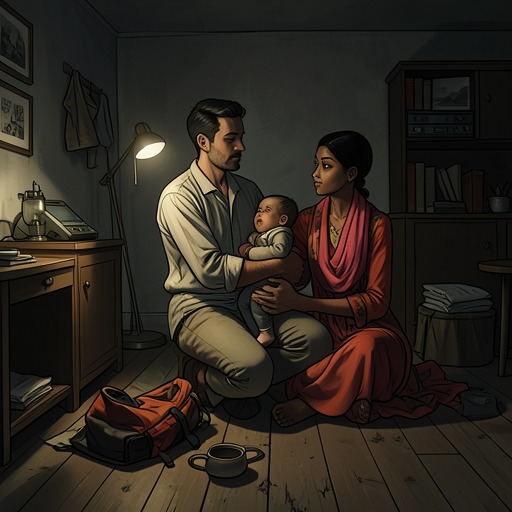
The marriage ended in loss soon after the birth of a daughter, Damiri. The circumstances of her mother’s death were considered suspicious by some, although the account does not identify a cause or establish responsibility. In a heated confrontation with Komaji, Lord Tatiseigi handed the baby over to her father. The gesture ended Ajuri’s hope of keeping a relative within the influential Atageini household and broke the association created by the marriage.
Damiri grew up in Ajuri but became disaffected from her father. During the Winter Festivity in Shejidan, she left a family outing and asked Lord Tatiseigi to take her into the Atageini clan. He described her departure to Komaji as a crisis of man’chi and offered to keep her with him, while privately recognizing that she was his blood relative and that he needed an heir. This episode reveals the continuing political value of Damiri’s parentage: the daughter Komaji had raised could become a point of connection between Ajuri and Atageini, even as her own affiliation shifted away from her father.
Later, when Tabini sought a formal marriage with Damiri, he wrote not only to her but also to Komaji and Lord Tatiseigi. His proposal included a wish for Damiri to live with him in Shejidan and for reconciliation between Ajuri and her uncle. Advisors objected to the political risks of an alliance with the small, faction-prone Northern Association and to the appearance that Tabini was yielding to Ilisidi’s influence. The proposal nevertheless shows that Komaji remained a relevant family and political interlocutor in discussions about Damiri, Ajuri, and the Atageini connection.
Succession and Political Upheaval
Valasi helped repair the quarrel between the Atageini and Kadagidi and prevented Lord Tatiseigi from filing an Intent against Komaji. He also kept the southwest coast from passing into Marid hands and restored control of the Aishidi’tat to western interests. These actions place Komaji’s family history within a broader effort to manage rivalries without turning every dispute into open conflict; they do not, however, establish what Komaji himself did in the Atageini-Kadagidi dispute.
Valasi’s unexpected death, before his heir had reached the minimum age for election as aiji, was followed by a period of political change. Much later, Komaji’s death left Ajuri without a lord at the same time that Kadagidi also needed new leadership. Damiri recognized the danger in the paired vacancies and anticipated further trouble in the north. Her reaction underscores how Komaji’s assassination had consequences beyond her bereavement: it removed the head of a clan whose leadership mattered to regional alignments.
Final Movements and Unresolved Questions
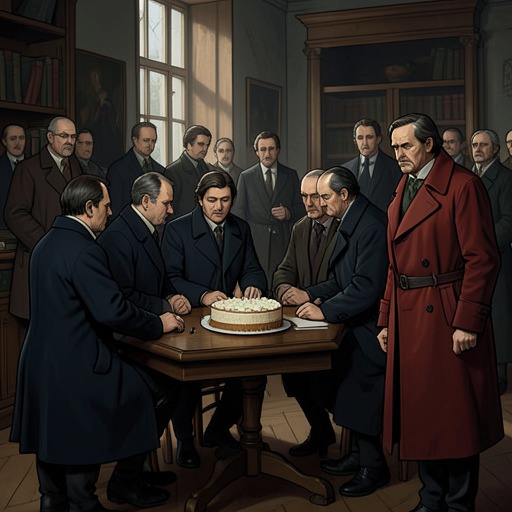
Komaji was moving toward Lord Tatiseigi’s estate when he was killed. Lord Tatiseigi and Komaji were not on good terms, but Bren later explained that Ilisidi and her uncle had known of Komaji’s movement and had given no order to stop him. They had been uncertain about what he intended and were shocked by the outcome. One possibility considered at the time was that Komaji, unaware that Ilisidi and Cajeiri were at Tirnamardi, meant to seek refuge with Lord Tatiseigi because of an imminent threat inside Ajuri. The account presents this as a possibility, not a confirmed explanation for his journey.
Bren also wondered whether Komaji intended to deliver particular intelligence to Lord Tatiseigi—information someone did not want shared. He acknowledged that questions had surrounded Komaji’s replacement of his uncle as lord, though he did not claim to know what those questions were or what Komaji himself knew. The evidence therefore leaves both his purpose and the precise circumstances behind his assassination unresolved. It does establish that his death was not ordered by Ilisidi or her uncle, and that the possible threat within Ajuri gave his journey a significance beyond a visit to a political rival.
Legacy
Komaji’s story is reconstructed through consequences that outlast him: a marriage alliance that failed to secure a lasting Atageini connection, a daughter who sought a different clan affiliation, and a lordship left vacant by assassination. His death also belongs to a larger crisis in which information was withheld within the Assassins’ Guild and political households were placed at risk. Bren later traced the inquiry into those failures back to the Guild in Shejidan, but the evidence does not establish that Komaji’s assassination was caused by the same conspiracy. Instead, his case remains an unresolved point where family succession, regional politics, and possible hidden intelligence meet.