Jago
PeacemakerJago is a Guild bodyguard, intelligence channel, and close operational partner to Bren Cameron. Her work moves between intimate acts of care and decisions with political consequences: she helps Bren understand a hidden conflict in the Guild, prepares him to enter danger, fights at his side, and later helps manage both a delicate diplomatic meeting and an emergency birth. Her authority is expressed less through display than through judgment, timing, and dependable presence.
Identity and Place in the Unit
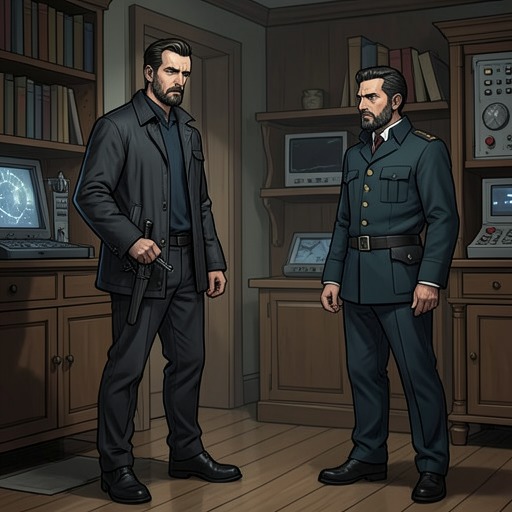
Jago serves on Banichi’s team alongside Tano and Algini, and is among Bren’s bodyguards. The unit’s loyalty is practical and unsentimental on its surface. After a dangerous morning, Banichi is wounded, exhausted, and refusing a sling; Jago and the others accept his stubbornness without argument while watching out for him. Their attention makes plain that care within the team is not separate from duty. They keep one another safe even when an injured senior member resists being treated as injured.
Bren understands the team’s attachment through the distinction its members make between love and man’chi, the loyalty for which a person might die. He recognizes that their feelings for him do not fit neatly into that distinction, and that the mismatch runs both ways. Jago’s conduct gives this observation a concrete form: she is professionally responsible for his safety, but her concern also appears as personal solicitude and reluctance to expose him to danger.
The unit contains a private family fact that its members do not acknowledge openly. Jago is Banichi’s daughter, a relationship Bren took years to learn. Even she does not ask him probing questions after he has killed a former teammate with whom he shared a bitter history. Her silence is not indifference: the team lets Banichi recover without demanding that he explain what happened, while its members remain close enough to monitor him. Jago’s restraint belongs to the same protective discipline as her more visible actions.
Intelligence and the Guild Crisis
Jago brings Bren confidential information about the Assassins’ Guild after a meeting between his security team and Cenedi’s people. She explains that senior Guild members went underground when Murini took power. Some who were recorded as dead had survived; some had helped organize the network that restored Tabini. The oldest among them claimed retirement, while others remained officially dead. They had watched the Guild purge itself repeatedly and refused the current leadership’s orders to return to duty. Jago presents their refusal as part of an ongoing conflict of wills, shaped by personal grievances and disagreement with the leadership.
Her report identifies a problem at the center of the Guild Council. Three people head the Council: one follows the other two, while Jago considers those two’s conduct a troubling pattern. They have rapidly approved recommendations from the Office of Assignments without meaningful debate, including chief-officer appointments in Dojisigin Marid. When help was needed during unrest in the west, the Guild moved so slowly that Tabini had to take the field himself. At another critical moment, when retired Guild members might have helped Tabini’s action in the south, the Guild instead diverted forces to arrest two senior retirees. That operation distracted it from the requested support, left one unit dead, and ended with the retirees officially outlawed.
The outlawry, Jago explains, has little immediate force where the retirees are, since no other Guild operates there. Its danger lies in the record: it could eventually give the Shadow Guild grounds to reach them. The missing retirees still ignore the Council, but they do not ignore Jago’s group. Jago and Cenedi have been in contact with them since returning from Najida, and the contact is carefully controlled. A message sent in Bren’s name, requesting a boat to Najida, was code; the group has since met them face to face in the lower corridors. The retirees will not deal with Cenedi because he belongs to the Eastern Guild, which makes Jago’s role in maintaining the channel especially important.
Jago tells Bren that even Tabini has not heard what she is about to disclose and must not hear it. Bren promises to keep the information from him. The exchange establishes Jago as more than a messenger: she judges who needs to know, protects a sensitive line of communication, and trusts Bren with a secret whose implications touch the ruler and the Guild’s legitimacy.
Preparing for Danger and Fighting Beside Bren
The information Jago shares leads toward a narrow opportunity to reach records. She tells Bren that he must learn how to move with her team and will wear a protective vest. Their coordination depends on precise movement even without communications: with a known distance and rate of travel, the group can keep together by counting, though it must avoid looking as if it is doing so. Jago undertakes to practise this with him. She does not treat Bren’s willingness as proof that he is prepared; she gives him a specific method and insists on the equipment and discipline the operation requires.
The danger weighs on her. After Narani takes a letter to Tabini, Jago returns to Bren and reports that the team approved it. She pauses, apparently wanting to ask something, but refrains. Bren recognizes her concern that he may not understand what could happen and tells her he does. Jago answers that deliberately bringing him into extreme danger is difficult for the team. Her admission exposes the cost of the plan without weakening her commitment to it: she helps him proceed while making clear that his safety is not an abstract operational consideration to her.
When the train stops in Shejidan’s old muster ground, Jago and Banichi rise and take the lead position ahead of Bren. The team’s route is measured in exact stages: once they reach a particular street lamp, it is sixty-one paces to the steps and seven steps to the doors. The procedure turns Jago’s earlier lesson about coordinated movement into action. She operates within a team in which pace, position, and timing are calculated rather than improvised.
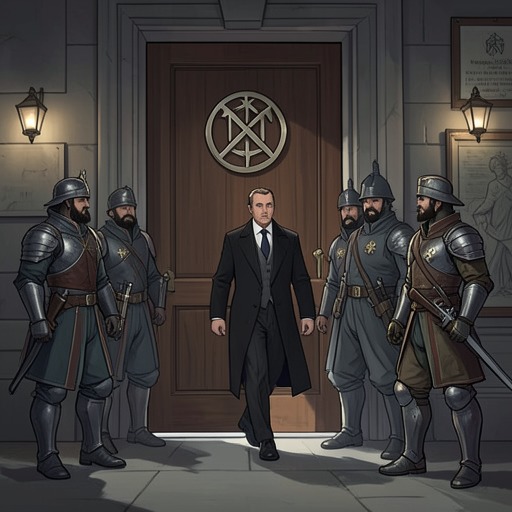
At the Guild Council doors, the confrontation becomes a firefight. Banichi orders the units facing them to shut down their equipment and obey the orders of Tabini, Daimano, Cenedi, and himself, but not all comply. When Banichi calls for Bren, Jago moves with him around Banichi’s wounded side as the attack unfolds. A flashbang goes into the inner hall; Tano slams the massive door, which rebounds under rifle fire and bursts open again amid flying splinters. Jago and Algini have already moved against the outer guards, who end up down along the corridor wall while automatic fire continues over them. As the firing from inside briefly lags, Jago throws another flashbang across the polished floor. The sequence shows her acting as a combatant and as part of a coordinated team, not merely accompanying Bren into danger.
Care, Judgment, and Diplomacy
Jago’s work also encompasses the routines that make political life possible. She brings Bren messages from Tabini about a festivity schedule and relays a security report from Ilisidi, which she and Algini have heard. When Lord Topari is due to meet Bren, she checks whether to object to his bodyguard or allow the escort entry for the sake of the meeting. Bren chooses cordiality and directs that Topari not be alarmed; Jago proposes adding two of Tabini’s guards to cover any concern. The exchange shows her translating hospitality into a security plan rather than treating the two as competing duties.
She helps stage the meeting by operating the viewer. When the image appears on the wall, Algini dims the room; the recording begins with the moment Jase’s guards put on their helmets. After the discussion, Jago opens the way for Topari and escorts him and his bodyguard out. The lift system makes that assistance necessary: without it, they could not get downstairs, and the situation might tip toward war. Her attention to an exit route therefore has diplomatic weight. The meeting’s substance may be uncertain, but she helps ensure that its ending does not become a provocation.
Her care is just as direct in private. When Bren is pale and insists he has already taken a painkiller, Jago notices his condition and tells him to sit down. Later, at a crowded celebration, she signals him toward a dim service corridor where chairs are available and Banichi can rest. She recognizes that the main ceremony is over, that Damiri is occupied with well-wishers, and that the passage can provide a quiet break without disrupting the hall. These interventions are small in scale but precise in their reading of people, fatigue, and surroundings.
When Damiri suddenly catches Bren’s arm and says she thinks the baby is coming, Jago immediately helps hold her upright. Banichi calls for the service passage and Tano alerts security and Tabini; Jago identifies what she can contribute, saying she can provide communications even though she is not the person best placed to assist with the birth itself. Bren tells her to go and stay with Damiri. Later, Jago reports that the baby is named Seimiro, that Damiri had no trouble, and that they hurried in time: the child arrived before Lord Tatiseigi. The report closes the emergency with concrete news and confirms Jago’s presence among those who supported Damiri through it.
Change and Narrative Significance
Jago’s role is defined by the joining of tactical competence and personal attention. She can explain why the Guild Council’s conduct threatens both retired members and the ruler’s ability to act; she can teach Bren to keep pace in a dangerous operation; and she can throw a flashbang in the middle of a firefight. The same character notices when a colleague needs rest, when Bren is unwell, when a guest’s escort might complicate a meeting, and when a new mother needs communications and support.
That range gives her loyalty a political as well as bodily dimension. Jago protects individuals, but she also protects channels of trust: a confidential approach to the missing retirees, the team’s coordination under communications silence, and the carefully managed departure of a potential diplomatic adversary. Her reserve is part of that work. She can withhold a question when Banichi is recovering, disclose dangerous information when Bren needs it, and express distress when the team must deliberately risk him. Across these scenes, Jago’s steadiness is not passivity; it is the active judgment that lets a tightly bound unit function under strain.